9 August 2005

An evening for photography

After the disappointment of a quiet patch walk on Saturday I took refuge at Brandon Marsh, a local reserve near Coventry where something of interest is almost guaranteed. I was not disappointed.

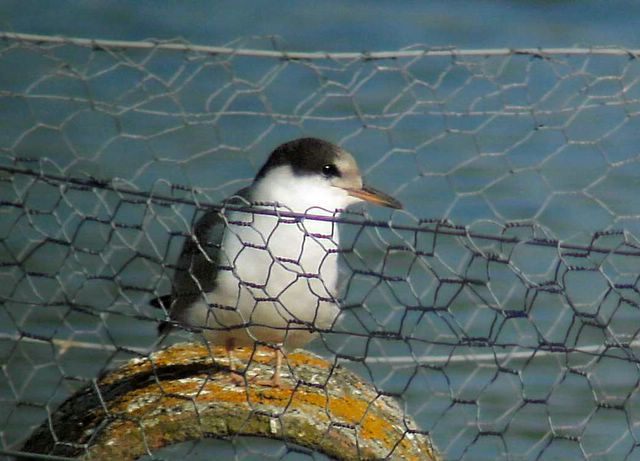
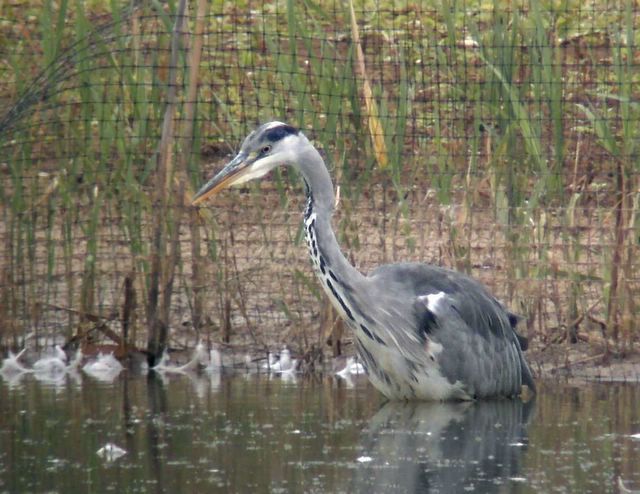
Of a recently recorded Common Scoter there was no sight, but I was soon enjoying watching the Lapwing (more than 270 in all), a Common Tern pair feeding a plump little chick, plenty of Grey Heron, assorted wildfowl, Coot and Moorhen (most with chicks), juvenile Willow Warbler and Chiffchaff feeding in the willow scrub, and best of all, two Green Sandpiper down on the Newlands scrape.

With good light and my new digiscoping gear to hand, this was an evening for photography. First up were the terns, adult and juvenile.

Posted by Picasa Posted by Picasa

Then I turned by attention to the Green Sandpipers, lovely little birds with brilliant white underparts and rumps, and a distinctive bobbing action as they walk.

Posted by Picasa

And finally, to set the seal on a lovely evening, a Kingfisher flew into a nearby perch to pose for me. The light had faded a little by then, but I was still able to take my best-ever pictures of this fabulous little ball of colour.

Posted by Picasa

8 August 2005

Over the garden

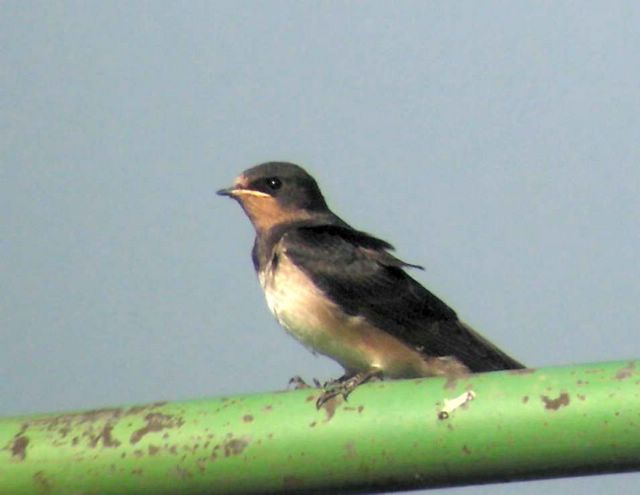
Another night of flying ants. The sun came out, and with the blue skies so did the ants. That of course meant open season for the birds - first House Martins (perhaps 20 or more), then Swallows (fewer, no more than 6), Black-headed Gulls (a large flock of a dozen or more) and finally a few Starlings getting in on the act (sadly it seems the Swifts have pretty much left the village already).

Some are better adapted to flycatching than others, but all were determined not to miss out on this annual harvest.

7 August 2005

And all was quiet

I've always said that no matter how quiet the birding, there is always something magical that makes it worthwhile.

Today was the exception to prove that rule.

Posted by Picasa Posted by Picasa

A three-hour walk around Leam Valley, Welches Meadow and Newbold Comyn turned up just about nothing. Highlights? I wish. Perhaps three Grey Heron on the scrape, and having the time and opportunity to take my first decent pictures of a Wood Pigeon (one of the most common birds in this part of the world, so I've never bothered before).

Still, bring on autumn passage.

31 July 2005

A quick Sunday morning at Brandon

Managed 90 minutes at Brandon Marsh this morning, partly birding and partly giving a new self-made digiscoping adaptor the once over.

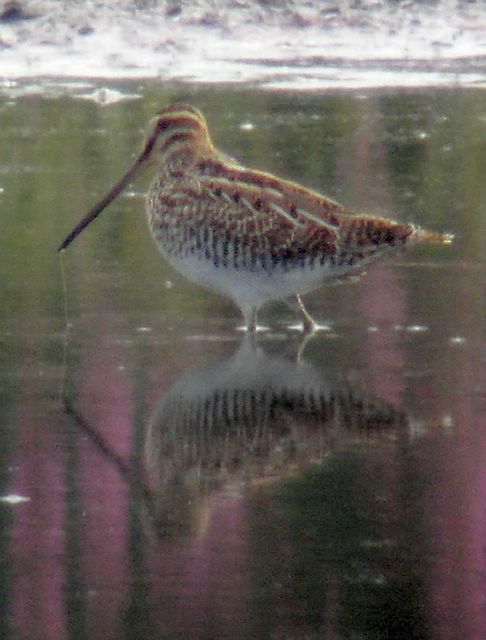
The adaptor worked brilliantly, but sadly the light wasn't all that it could have been. Still, I managed some reasonable pictures of a Great Crested Grebe chick, a male Ruddy Duck (one of two on site, with a female), and two Snipe, feeding on East Marsh Pool.

Posted by PicasaPosted by Picasa

Apart from these birds it was a quiet morning, but I did linger to enjoy good numbers of Lapwing, a Lesser Black-Backed Gull pair with two juveniles, a few Green Woodpecker, and a family of Kestrels (male, female and juvenile) playing together near the Carlton Hide.

30 July 2005

Corn Bunting and more local 'treeps'

A morning walk in and around Cubbington Wood turned up some nice birds this morning. On my way there I stopped off near another local village, Long Itchington, to look for Corn Bunting. Although these are basically brown birds with few distinguishing features (apart from a nice 'jangling keys' call), they are a good sighting for most birders because their numbers have plummeted over recent years - a victim of changing agricultural practices. It is probable that the bird only managed to establish itself in NW Europe thanks to new farming practices introduced way back (ie centuries ago). Now farming practices are changing again and they are in serious trouble in the UK.

Because of this I was delighted to see two birds, and hear several more calling. One thing that you can't accuse the Corn Bunting of doing is skulking - they have a preference for high, obvious song posts - telegraph wires in this case.

On to Cubbington, where the wood itself was deathly quiet - none of the usual woodland suspects.

The hedges and fields around it threw up better birds - a family of 8 or more Tree Sparrows (including juveniles, and my first 'treeps' in this area), various warblers (Chiffchaff including young, Whitethroat and a female Blackcap with a juvenile), at least four Buzzards at a nearby site (three flying low out of woods calling loudly and another calling from within), Yellowhammer and Green Woodpecker.

Good butterflies too, with Painted Lady, Peacock, Red Admiral and Gatekeeper among the few I was able to identify.

28 July 2005

They're flying tonight

The sky over my garden was buzzing with House Martin (and a few Swift) tonight, all performing the same strange flight patterns. And the reason? Well, a quick look at my records from this time last year provides the clue.

Last year it was Starlings not House Martins but they were doing exactly the same thing - catching the large number of flying ants which have evidently just hatched. Due to the slow airspeed of these insects, the birds catching them behave in an unusual manner, slowing right down to pluck them from the sky, almost stalling as they hover for a few micro seconds to feed. And it is not just Starlings and martins that behave in this manner - I have seen House Sparrows do likewise on other occasions (also when the Mayflys first appear over the nearby River Leam, a month or so earlier).

The similarity of habit between these very different birds species is amazing, as is the coincidence of date. Last year I noted the Starling behaviour over my garden on July 27th, and today's display was of course on July 28th.

24 July 2005

Local 'treeps'

A good local birding walk today, two hours on a slightly overcast Saturday morning (which made a pleasant change from the recent blast-furnace heat we have been 'enjoying').

I walked all around the fields of Radford Semele, a combination of arable and sheep farming land with some areas of scrub, good shaggy hedges and a couple of farm ponds. Just about everything I was hoping for turned up - Linnet, Sky Lark (despite the iffy weather), Buzzard, Whitethroat, a Great Spotted Woodpecker, loads of Yellowhammer (more than 20 in all), a male Sparrowhawk gliding into some scrubby woodland near the village pond, and perhaps best of all, half a dozen or more Tree Sparrow (also know as 'treeps' by some), including some youngsters. These are much much rarer than they should be, and to see them so close to home is a real treat.

22 July 2005

Egrets? I've had a few (sorry)

Amazingly, another Little Egret turned up tonight, and this time even closer to home. Leam Valley is my local nature reserve, a stretch of water with woodland, parks, arable farmland and a 'scrape', an area of shallow open water overlooked by a hide. This can often be completely devoid of birdlife, but has also provided me with much local birding pleasure (the scrape is less than a mile from my house).

Tonight we arrived to find a Little Egret patrolling the margins, a wonderful bird giving great views.

Posted by Picasa

One of its most notable characteristics is that although its long legs are black, its feet are bright yellow (when they are not covered with mud!). The overall impression is of a skinny ballerina in yellow socks. This is quite striking and fascinating to look at, as is the birds habit of agitating the mud with his feet to stir up food items. I could watch them for hours, and tonight I did.

18 July 2005

South by South West

The latest stage of our holidays around the British coast took us from the New Forest in Hampshire to St Ive's in Cornwall. Last year's trip down the east and across part of the south coast was a birding bonanza, taking in hotspots such as the Farne Islands, Bempton Cliffs, Titchwell, Minsmere and Dungeoness.

This year, for whatever reason, we managed to miss out on most of the birdlife, but enjoyed our holiday nevertheless. There were some birding highlights however - Redstart in the New Forest, Sand Martin and Little Egret at Poole Harbour, a brief glimpse of Pied Flycatcher in Yarner Wood, Devon, and plenty of Wheatear on nearby Dartmoor.

Posted by Picasa Posted by Picasa

These Swallows on our Devon campsite were also wonderful to watch, swooping low around the tent and perching on a nearby farm gate.

17 July 2005

The first returners

A quick trip to nearby Brandon Marsh today, and a chance to catch up with my first early returning migrants.

Green Sandpiper have been breeding in the far north and east for the last few months (Arctic Circle? Siberia? too lazy to look it up I'm afraid). Now they are on their way south again and there is every chance of finding them in shallow water across the UK. There were two today on the Teal Pool, although I'm sure there are more around - Brandon is a well-known spot for them.

Less expected was the Little Egret that first perched high in a tree overlooking East Marsh Pool, and then flew down to feed. These wonderful white heron-like birds disperse widely after breeding, and there are a fair few around on inland freshwater sites at the moment. But even so, this is far from a common bird in these parts - only my second ever in Warwickshire.

There's more to life than birds

While July sends everyone else into summer rapture (particularly if the weather is as splendid as it has been of late) for birders it is a time of restricted interest. We are between migration, spring a distant memory and autumn a month or two away. Our resident breeders have bred, and parent and offspring alike are lying low in the heat. Everywhere is the eerie sound of silence, perhaps broken every now and again by the call of a wren or chiffchaff.

To deal with this, some birders go abroad for their kicks. Some make summer their season of DIY (in order to build up credit with him / her in doors and earn more free time during the excitement of autumn migration). And others turn their attention to non-avian natural history.

Sadly, my knowledge of wider flora and fauna is limited, but I am trying to tackle this with enthusiasm if not ability. A couple of quick pictures to show the marvels that are out there if you look properly.

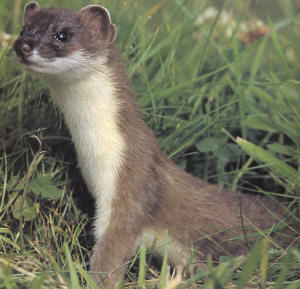
First a stoat - I found a family of these playing in nearby woods a few weeks ago, a thrilling find that captivated me totally for the few minutes they were in view.

Posted by Picasa Posted by Picasa

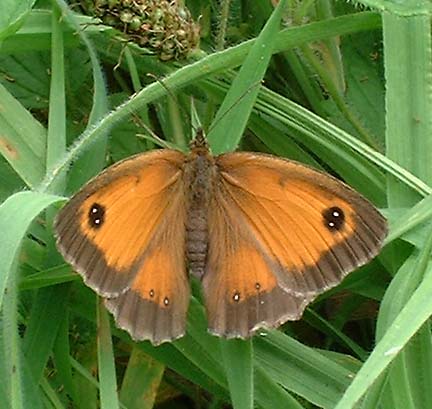
Second, a Gatekeeper, not a rare butterfly, but the first one I have taken to the trouble to look at seriously and identify. There are plenty in my garden at the moment, confirmation perhaps that my wildlife garden is finally taking proper shape!

14 June 2005

Hidden treasures

One of the delights of local birding is that it encourages you to haul out the OS map and scour the local area for likely places to find birds. It's amazing what you can find virtually on your own doorstep when you do.

The first place I found is a little patch of field, covered with wildflowers and surrounded by hawthorn scrub, a small wood and a farm pond, all within 150 yards of my back garden. I was faintly aware of it already, but I was encouraged to explore it a bit better when I heard one night from my garden the sound of a Cuckoo. Sadly I couldn't track down this distinctive summer visitor (all too rare these days) but I did enjoy a lovely half hour stroll finding Whitethroat, Willow Warbler and Swallows in abundance, plus a nesting Moorhen on the pond.

Secondly I took a short trip to Cubbington Wood, a small but attractive area of mature woodland not five miles from my house. It appears to be maintained for nature by far-sighted private owners, and they also allow public access. Again, nothing spectacular or rare emerged, but Buzzards, Yellowhammer and Swallows filled the fields around it, while inside the wood itself we found a good range of woodland birds including Chiffchaff, Treecreeper and a Nuthatch feeding a juvenile bird.

ps. An additional note. I returned to Cubbington Wood a few week's later with a very experienced birder of my acquaintance. I thought I had given it a pretty good going over, but the list of birds he helped me find was phenomenal. Those that I had missed on my own visits included: Lesser Whitethoat (a lifer), Spotted Flycatcher (5 of these uncommon birds in all, I've only ever seen 1 before!), and Marsh Tit.

30 May 2005

Three seasons?

Birdwatcher's have different calendars to normal folk (with all the dawn starts they tend to have different body clocks as well, but that's a different post). For us and the birds we watch, spring starts early, often in January or February. Then, in what for other folk is the dead of winter, we hear the first stirrings - Song Thrush singing or Great Tits with their distinctive "teacher, teacher" call. Meanwhile, thousands of miles away, our Swallows and warblers are getting ready for their marathon journey back to Britain.

By April they're back (the earliest of them since March), and the breeding season is in full swing. By the end of May, there are chicks everywhere, and while spring isn't quite over, it is drawing to a close. And after spring? Why, autumn of course!

This is an interesting view on how birds view the passing year, one I have just discovered hidden in the pages of Simon Barnes' book How to Be a Bad Birdwatcher. The theory goes that birds have just three seasons. First you have spring, with its breeding and the raising of young. Then follows autumn, in which strength is gathered and reserves built up - and possibly a migration is made to wintering grounds. And then winter, a battle for survival through to spring, when breeding can start again.

Posted by Hello
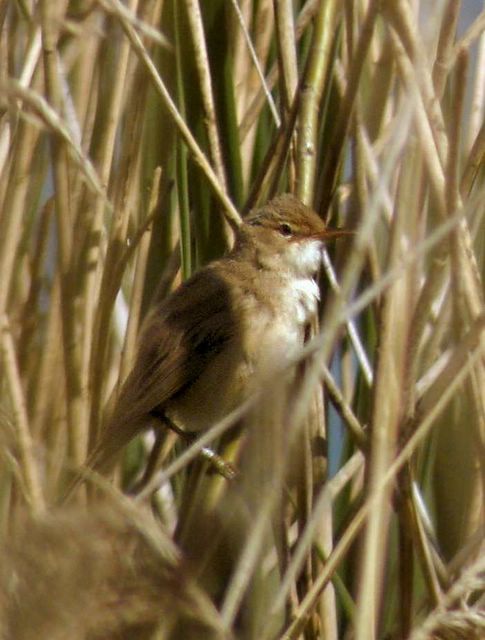
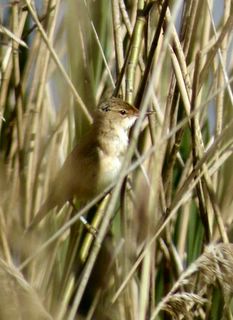
Well, I don't know how birds view the world or the seasons, but I do know that in common with most birders, spring (however defined) remains my favourite time of year. There have been no posts here since April because whenever I have had spare time, I have birded. I have seen Dippers, oh-so-elusive Wood Warblers and (my first ever) Tree Pipits in Yorkshire. I have found my first patch wader, a Common Sandpiper along Leam Valley, and I have enjoyed almost daily all of our spring visitors - including some favourites such as Willow Warbler, Chiffchaff, Cuckoo, Swift, Swallow and House Martin, Whitethroat, Garden Warbler, and, as photographed above, Reed Warblers, wonderfully elusive little birds of reed beds with endless chirping little songs that always remind me of summer - because actualy, no matter what birds or Simon Barnes may think of the seaons, for me at least, summer is just about here.

30 April 2005

April is a splendid month

Whatever T.S Eliot may have believed, April is a truly splendid month. In March, we are still so close to winter, with every day carrying the threat of cold, wet or both. Each and every sign of spring is greeted with delight, as if we can't quite believe it is all going to happen again. By April, we are much more relaxed about everything. The bulbs are up, the migrants are returning, and the cricket season has started again (although that, ironically, is when the snow tends to come back for one last appearance).

Sadly, I've been working through most of it. There has been birding of course - Leam Valley has its Chiffchaffs back, Draycote Reservoir is awash (or so it seems) with passing Little Gulls, and at Minsmere, the internationally renowned RSPB reserve, I enjoyed Sand Martin, Whinchat, Sedge Warbler and Avocet - all signs that summer is on her way back.

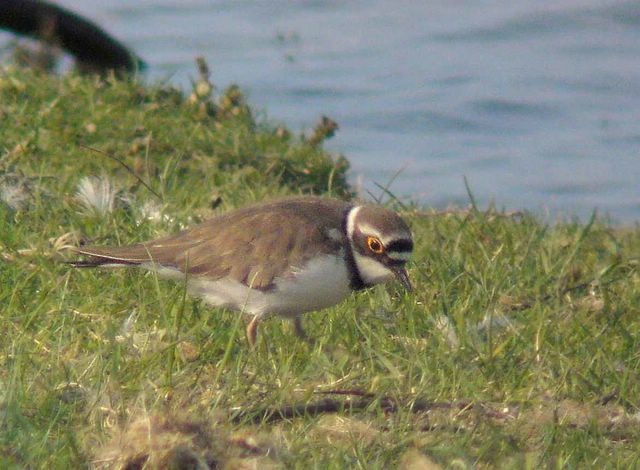
For dull and technical reaons, I haven't done much photography of late, but this little smasher was one of two Little Ringed Plover at Draycote on April 24th. The picture may not be the finest, but the bird is undeniably beautiful.


ps. If any birders are reading, it would be remiss of me to mention the Minsmere trip without mentioning Dartford Warbler and Med Gulls - both lifers for me - and Cetti's Warblers - not lifers, but the first time I have enjoyed uninterupted and close-to views of this little smasher.
Posted by Hello

29 March 2005

Spring update

Just a quick update on the progress of spring birds in Warwickshire. I popped out yesterday to Brandon Marsh, a well-known local reserve, and spent a few hours soaking in the sights and sounds.

Chiffchaff sang loudly from everywhere - I estimate six in all. A few migrants waders had dropped in - Redshank and Oystercatcher were there yesterday (hopefully the latter will breed there successfully like they did last year). And last, but definitely not least, 15 or more Sand Martins fluttered quite high overhead, hoovering up the first of the spring insects.

If you're reading this in Britain and it's still spring, go for a walk in the woods. I insist. I promise you won't regret it.

27 March 2005

The arrival of Spring

Now is undoubtedly my favourite time of year bar none. By Easter weekend there are signs of Spring everywhere - bird song, buds on trees, daffodils and crocuses, a hundred lawnmowers going in every street. The only difficulty is being torn between the garden and birding - happily this weekend I have managed to fit in a lot of both.

In the garden, the beds have been dug through, plants moved, new beds dug out and planted, the veg is in, the lawn scarified, and everything looks ship-shape ready for the growing season.

With birding, I am a little less up to date. Already the first return migrants are in the country (and indeed in this county) but I am yet to connect. Chiffchaffs, Sand Martins, Wheatear and assorted waders have come back from Africa and are being reported all over the place, but here on my patch of semi-rural land near Leamington Spa, Spring is breaking out in infinitely more subtle ways.

Sky Lark and Meadow Pipit are trilling their songs high above the farmland. Cock Yellowhammer are singing in all their mustard finery. And everywhere birds go two by two - my best sighting of yesterday being two Tree Sparrow within a kilometre of my home. These wonderful little farmland birds seem sadly to be in long-term decline, so any sighting these days is enough to warm the heart. These were my first ever in Warwickshire, so fingers crossed for a successful, and fruitful, pairing.

20 March 2005

Birds are like buses?

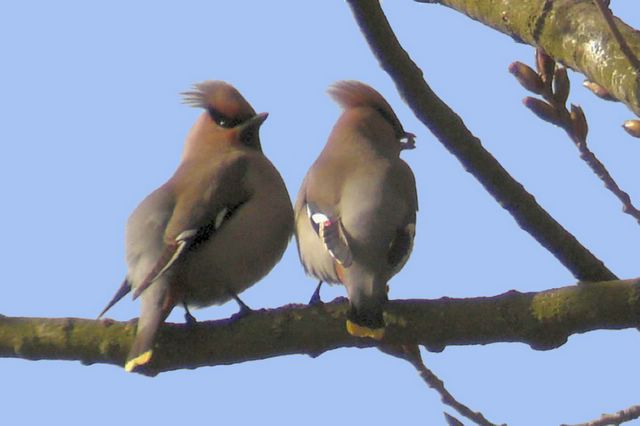
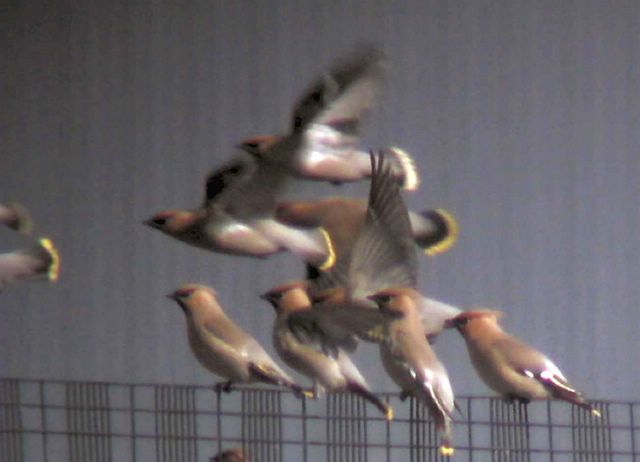
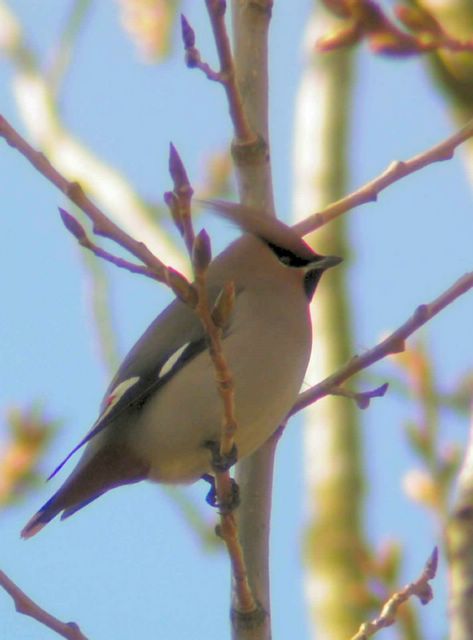
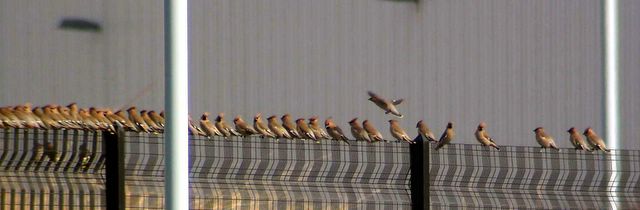
Typical. I run around like a madman for three months trying to find Waxwing. When I finally find some (see below) I have a fab day photographing and enjoying these little marvels.

And then, just two days later, I'm just about to get into my car after a client meeting in Lichfield when I'm struck by a familiar sound. I look up, locate the source of the sound, and there are 25 Waxwing staring back at me.

Like so many things in life (such as waiting for buses), therein lies the mystery of it all. Often you'll not see a bird for weeks, months or even years. And then, once you've seen the first one, you'll be bumping into them for weeks to come.

Mind you, no complaints where Waxwing are concerned. Here's a couple more photographs to enjoy while I'm on the subject.


17 March 2005

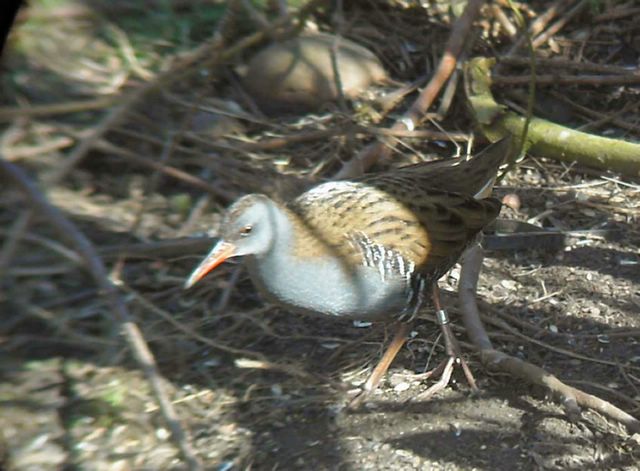
The elusive Water Rail

The Water Rail dwells in reed beds, making it elusive at the best of times. Unlike the (perhaps a little similar) Moorhen or Coot, it generally eschews human beings, making it a hard to find bird unless you know the right spots.


One such spot is at a local nature reserve in Coleshill. Having not caught up with a single Water Rail for more than 18 months, I finally found this 'bogey' bird there last weekend. Not as hard as it sounds, mind you, because this bold bird is rather partial to feeding off scraps beneath a bird table.

Perhaps not as satisfying as watching one creep tentatively out of the reeds, but after so long without one, beggars really can't be choosers.

Waxwing in Warwickshire


This is a bit of a technology experiment, as well as being a post about some very exciting birds.

The birds? Well, after weeks of 'dipping' (a twitchers term for going looking for a specific bird and not finding it) I finally found Waxwing - loads of them in fact. A flock of this Siberian winter invader were at a nature reserve near Coleshill and at last afforded me the chance to take some pictures and simply enjoy the spectacle of these pink, crested and utterly unique birds.

And the technology? Well, this is the first time I've managed to get two photos into the same post. Probably won't mean much to you, but it's a major triumph for me and should help streamline the site in future.

14 March 2005


Waxwing in Warwickshire 2 Posted by Hello

Grey Heron Posted by Hello

Grey Heron - photography

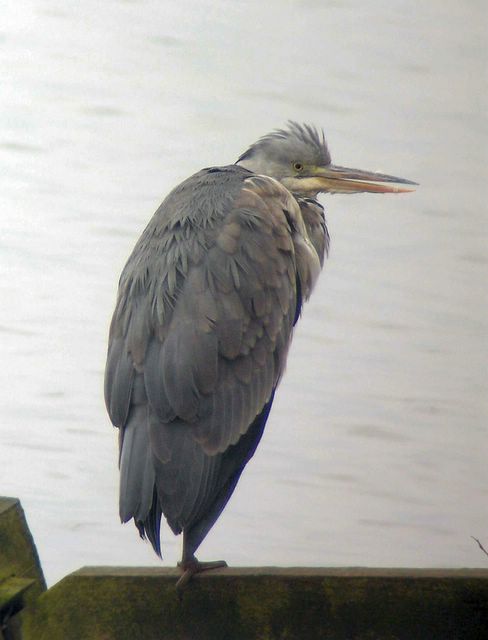
OK, so this is starting to look like an obsession. That's three times I've posted on the subject of Grey Herons this month. But although I don't actually have an obession, there is plenty to be said in favour of the humble Grey Heron.

First, they are relatively common. Second, they are relatively large and easy to photograph. And third, when you get it right, they are absolutely stunning.

I think this is the first time I've got it right.

11 March 2005

Not just birds

The enduring appeal of birdwatching for those who love nature and natural history is partly that birds are so visible. Brightly coloured, reasonably sized and present just about everywhere you go, bird are easy to watch (at least in principle - try telling that to a birder who's just spent six fruitless hours in sub-zero temperatures trying to find a rare warbler or other LBJ (little brown job) lurking in the undergrowth!)

But once you spend any time birding, you begin, albeit slowly at first, to notice the other natural phenomenon around you. The trees, the wildflowers, the insects (whether biting you or not!) and , of course, the mammals. Mammal are endlessly fascinating to watch, as the enduring popularity of Big Cat Wildlife on One type programmes proves. Sadly, in Britain at least, they tend to be small, secretive and often nocturnal.

So each mammal encounter is special, and I have been lucky enough to have some wonderful moments watching them when out birding. Hares can be found near my house and at this time of year they are particulary exciting - breathless chases across fields, tumbling fights, lunacy of the highest order (Mad March Hares in fact). Watching an otter walk across a frozen pool at Minsmere in Suffolk is a particularly cherished memory.

And then, a few days ago, while enjoying a stolen moment or two out birding on my local patch, I came across a fox at closer range than ever before. As I watched a Moorhen on the local river, I moved by binoculars slowly upwards and there, staring back at me was the fox, just 10m or so away. I froze and we watched each other intently. As he looked away, I moved my tired arms, but froze again as he turned back. We continued this performance for five minutes or more before he finally got bored and trotted away into the undergrowth. Throughout the whole encounter I was staring deep into black eyes, watching that gently curving white patch around the mouth, and thinking to myself that this animal had a face which looked much more bear-like than its canine ancestory would suggest! Whatever it looked like, and from whatever it descended, it was part of yet another magic moment while out birding.

2 March 2005

Winter on a Scottish coast

A trip to Edinburgh presented a perfect opportunity to catch up on a few seabirds at nearby Musselburgh. The snow had almost vanished, the north wind dropped and the sun even came out as we enjoyed a genuinely thrilling day birding.


Alongside a whole host of wading bird (such as Curlew, Oystercatcher, Bar-tailed Godwit, Redshank, Dunlin, Grey Plover and Turnstone) I also encountered several 'firsts' for me. These were a Red-throated Diver, several Slavonian Grebe, a flock of Velvet Scoter and some spectacular Long-tailed Ducks.

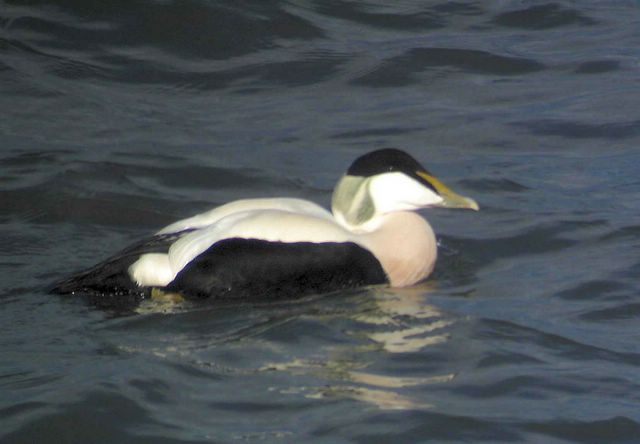
So much in fact, that I barely knew where to look first, and I was so busy that photography was the last thing on my mind for much of the time. Having said that, I did manage the odd shot. Above is a male Eider duck, a thing of real beauty. There is much to be said for local patch birding, but the occasional long-distance trip can expand one's birding horizons like nothing else.
Posted by Hello

The Grey Heron - familiar magnificence


The Grey Heron is a familiar bird on most kinds of water - whether it be river, stream, pond or lake. As with so many birds though, don't let its familarity blind you to its magnificence. As the following photo montage shows, not only is it a huge bird, but as it takes flight it takes a whole new form - am I alone in thinking dragon-like?
Posted by Hello


Grey Heron taking wing Posted by Hello

21 February 2005

Patch birding - some photos

These are a few of the birds I saw on my local patch over the weekend. Not the actual birds I should stress, because I didn't have a camera with me. But rather photos of the same species I have taken over the previous few weeks.

Clockwise from top left are a female Sparrowhawk, a Long-tailed Tit, and three Goosander (although these are 'redheads', females or juveniles, as opposed to the adult male I found on the River Leam on Sunday). Posted by Hello

20 February 2005

Great patch birding

Although I do a lot of my birding by travelling to well-known nature reserves, I spend more and more time these days exploring my local patch - the area of land to the East of Leamington Spa in which I happen to live. It's a good patch with a nice mix of habitats - the River Leam, some flood meadows, woods (although not much mature woodland), mixed farmland, a canal, open parkland and some other open areas.

By focusing on watching my own county, and my own patch in particular, I have a much better chance of finding 'my own' birds, as opposed to joining many other birdwatchers seeing the same birds at a small number of very well watched reserves. I find that prospect quite exciting.

By staying away from local reserves and focusing my efforts elsewhere, in the last week I have seen 56 species in all, including the following: Pintail, a Peregine Falcon, Jack Snipe and Common Snipe, Red-Legged Partridge, Goosander (on the River Leam!), Green Sandpiper, Yellowhammer, Sky Lark, Willow Tit, Nuthatch and Kingfisher. Not all of these arerare by any means, but they were all a joy because it was me who found them (albeit with a very experienced companion on one trip - thanks Jon), and no one already knew they were there.

And that's what patch birding is all about for me.

8 February 2005

Chaffinch - February at Draycote

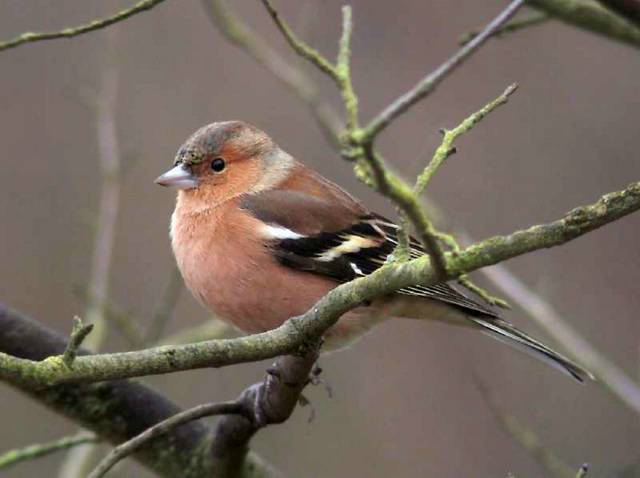
This is a Chaffinch, a photograph I took last weekend at my local reservoir Draycote.


Sometimes I post because I have something to say. Sometimes I do it because the bird in question might be a little unusual. In this case it's a very common bird indeed - along with the Wren it is almost certainly our most common resident. I posted this simply because I love the photo - and I'm sure it doesn't do any harm to be proud once in a while. Does it?
Posted by Hello

Slimbridge - One man's vision

Slimbridge is owned and managed by the Wildfowl and Wetlands Trust, the creation of Sir Peter Scott. Sir Peter, the son of 'Scott of the Antarctic', was a visionary naturalist and conservationist who devoted his whole life to the cause. Slimbridge in winter stand testimony to that cause.


It is a wonderful place, full of waders, raptors, wild geese and swans, raptors and wildfowl - such as this Pintail, captured in all its glory with a Pochard (itself quite beautiful) in the foreground. I commend Slimbridge to anyone with an interest in nature - armed with a pair of binoculars I defy anyone not to love it.
Posted by Hello

Not always finding what you're looking for

One of the joys of birdwatching is that although you don't always find what you might have been looking for, you nearly always find something else wonderful. This day at nearby Draycote Reservoir was a case in point.


There had been all kind of rare(ish) birds reported - divers, Smew, Scaup and Scoter to name just a few. I went in search of them, but of course found none. But while sitting there in silence at the water's edge, this Wren popped up on the rocks, allowing me the few minutes required to sort out my camera gear and get an all too rare snap of this common, but elusive, little bird. Brilliant. Oh, and I found the drake Smew shortly afterwards - even better. Sadly, too far away for a decent photo, but take it from me - absolutely exquisite. Posted by Hello

10 January 2005

Birding in January - cold but colourful

Birding in winter is far more exciting and interesting than bird photography in winter. For the photography you have to contend with cold, wind and darkness - that's my excuse and I'm sticking to it (and I won't be posting any bad photos to prove it).

For the birding however, it is a splendid time of year. Find one of two places - either a spot of coastline or a large manmade reservoir - and simply scan with your binoculars. You will be amazed at the variety and splendour, particularly of the wildfowl (ducks). From Wigeon to Goldeneye, Teal to Goosander, the water at this time of year is alive with colour and noise. And always remember, most of these birds are a strictly winter treat. Come April most of them will be well on their way to Scandanavia and beyond to breed .

Enjoy them while you can.Posted by Hello

6 January 2005

A search for the exotic!

A Post Christmas Birding Trip - Lea Valley, December 28th.


OK, so this is the normal story of my birding life. December 28th and we set off to Lea Valley in Hertfordshire to find something a little unusual. A Bittern, a drake Smew, perhaps the Water Rail that has eluded me all year. Success? None. No one has seen a Bittern from the Bittern Hide for about six weeks, not a Smew in sight (male or female), and although the Water Rail had apparently been parading around all morning, it obviously got shy once I turned up.

Still, nil desperandum. We saw plenty, enjoyed a fantastic day of fresh air and sunshine and got lovely shots of this extremely friendly Robin. Normally I use a telescope attached to a camera to get close to my subject. With this one, I could barely get the camera far enough away from the bird (ie a metre or so) to get a focus lock.

That's next year's Christmas card photo taken care of then.Posted by Hello