27 August 2006

Elephant Hawk Moth

This monster turned up on my drive today - the 8cm long larvae of the Elephant Hawk Moth.


So-called because of the perceived similarity between its head and a (slightly short) elephant trunk, this is a very large caterpillar indeed, with two false eyes designed to frighten off predators. When disturbed it retracts its head into its body, and it can also swell up, enlarging the false eyes. It will also raise its head and move from side to side to deter the predator. Posted by Picasa

26 August 2006

Mighty Midget 2 ED - A quick review

Birding is a hobby you can enjoy for virtually no cost - £50 will buy you a perfectly reasonable pair of binoculars, £10 a field guide, and perhaps £2 for a notebook.

Unfortunately, there are also many many ways in which you can spend hundreds if not thousands of pounds, and I, like so many birders of my acquaintance, am weak.

So the latest bit of kit is an Opticron Mighty Midget 2 ED travelscope, a small scope designed to fit into a pocket or shoulder bag as I walk around the patch (my main scope, plus tripod, weight about 4kg and so don't tend to get brought out on longish patch walks).

I use an hdf zoom eyepiece on it and together they provide a very impressive optical set up. Bright and distortion-free up to 30x or so, getting darker after that but still perfectly usable up to 36x. A Cullman shoulder pod is almost an essential accessory, making the MM2 an absolute pleasure to use (no more panicking to pull down tripod legs).


I have used the MM2 for some handheld digiscoping - the best so far is this Chaffinch, taken at Draycote Reservoir. With adaptor, shutter release and so on I am sure I could get better pictures, but that is not the point - this is a lightweight take anywhere bit of kit, so handheld is the way to go - record shots and stuff for The Hornet's Nest mainly.

The only problem I have is with cases and lens covers. The eyepiece cover was abysmal - cheap plastic, loose fitting, and I lost it this morning as I knew I soon would. There is also no stay on case available, just a 'grippa' case which doesn't cover the lens hood or eyepiece. My only solution for now is to employ the grippa case with a baby's sock pressed into service as an eyepiece cover.

It might be a great bit of kit, but I don't half look a 'nana now! Posted by Picasa

20 August 2006

All purple at Ufton, Napton and Brandon

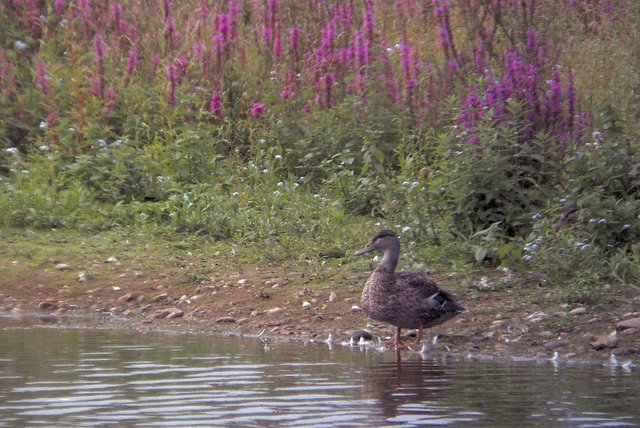
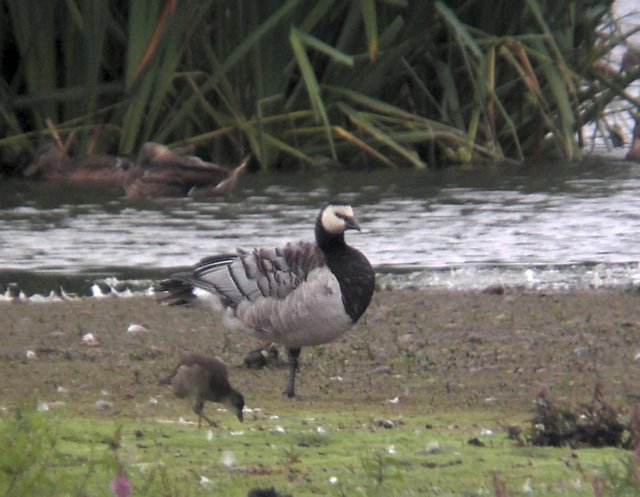
I took some of my own advice this morning and again broke my normal patch routine. Having awoken reasonably early (6.20am being, in my book, not a bad effort for a Sunday), I decided to go to Ufton Fields and see if the early-ness of the hour helped me fare better than generally of late. And lo and behold, it did. I'm not claiming that the place was stuffed to the gills with rare warblers, passage waders and the like, but it was certainly livelier than I had seen it for a while. Ufton is a difficult place to bird anyway, largely comprising dense woodland and pools with a shortage of obvious viewpoints, as well as a path that follows the circumference of the site, leaving a large interior area in which the birds can remain endlessly hidden. However, today was pretty good, with 80 or more House Martins twittering high over the site when I arrived, and trees seemingly dripping with young Goldcrest. I was also delighted to find my first ever family party of Bullfinches - two adults and two juveniles, issuing strange wheezing calls which made me think more of grebes than finches. A Marsh Tit, three Jays and a Kingfisher were among the other high points. I then moved on to Napton, which apart from demonstrating once more how windy it can be, offered little of note. Time, I figured, for a man of action such as myself to head off in search of... a huge breakfast. So to Brandon, which, like Ufton Fields earlier this morning, had gone purple - with purple loosestrife in fact. This spiky purple flower is covering anywhere with a bit of moisture at the moment, and splendid it looks to - as this Mallard photos show. As for the birds, this was a quick visit after my (excellent) breakfast - two Green Sandpipers on Carlton Pool, along with two Little Grebes, 30 Lapwing on East Marsh Pool, the regular Barnacle Goose (below), a Kingfisher flashing across Goose Pool, and great views of a Great Spotted Woodpecker. My final sighting of the day was a toad, sitting on the East Marsh track next to a huge dead slug. After last month's frog photos, this was at least a great opportunity to increase my amphibian photographic portfolio. Posted by Picasa

18 August 2006

Leam Valley - a new perspective

If you are a regular patch birder, may I be so bold as to suggest an idea?

If you've got into a bit of a rut or routine on your patch, as indeed I have, try to do something a little different. Walk a different way round, or follow a different route altogether. Or, as I did tonight, visit a favourite spot at a different time of day. It really does bring a new perpective to somewhere very familiar.

I've got into the habit of seeing Leam Valley as an early morning site. I nearly always try to be there before seven if I can, and hate being late. Perhaps I'm getting old and grumpy, but I love the peace and quiet before the dog walkers arrive. I've also seen some cracking birds there at the crack of dawn.

For evening walks I tend to favour Ufton Fields, which is close to home, has good paths and is easier to walk around. Perhaps this is why I have such a hard time finding good birds at Ufton - I must try a really early start there.

However - back to tonight. Tonight I went for an after work walk around Leam Valley and saw a very different place to the one I thought I knew. The hedges and woods were quieter, with just a few Blue and Great Tits, a few juvenile Chiffchaffs moving noisily through and the occasional song from a Robin or a Wren.

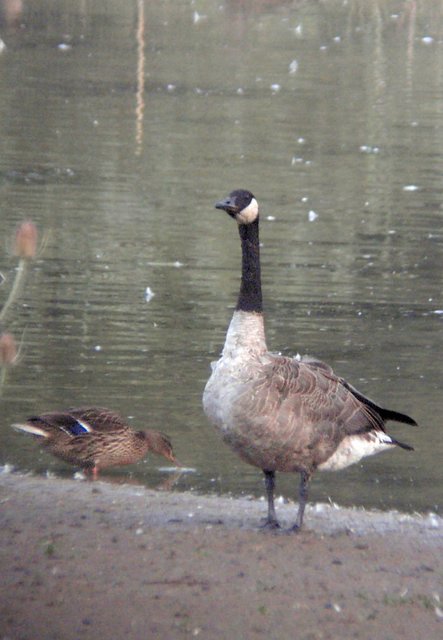
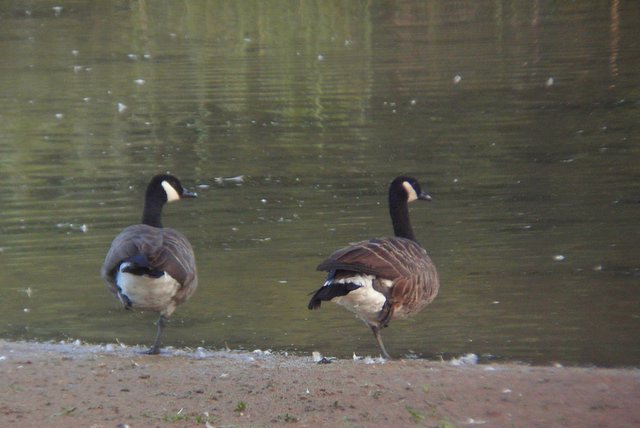
The scrape was alive, more than 70 Mallards or Mallard-hybrids being joined by 30 Canada Geese, a pair of juvenile Moorhens and a Grey Heron. As I made my way back to the car, four Jays flew past one by one, a Green Woodpecker called loudly, and Wood Pigeons, Carrions Crows and Rooks returned to local roosts.


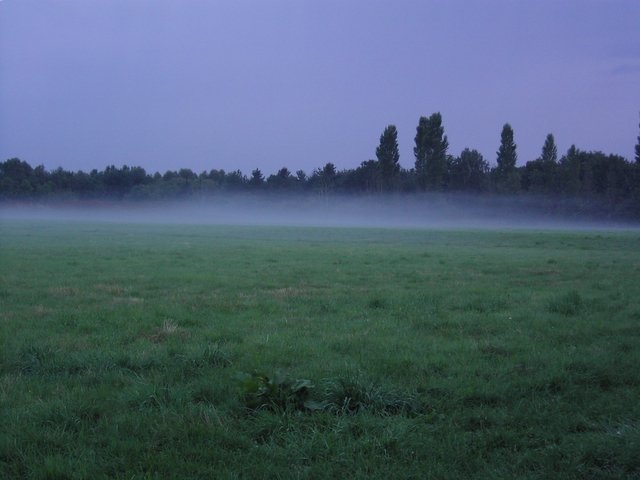
As a final reminder that I was seeing a different side to this favoured part of my patch, a soft mist began to rise off the fields at about 7.30pm, creating an eerie atmosphere in the fading light. A Barn Owl would have suited the occasion marvellously - sadly, it never appeared.

13 August 2006

Napton Reservoir

The weekend has been decidely autumnal, with high winds and constant rain.

I made a quick trip to Napton Reservoir during a break in the rain this afternoon, and was delighted to find the place abuzz with House Martins, Sand Martins and Swallows.

They were all low, some flying past me at waist or even knee height. The Swallows, many of them young, patrolled the grass edges or sat on nearby fences.

The House Martins tended to be over the water, but also flew along the banks at high speed. The Sand Martins, perhaps a dozen on more among the 100+ birds in total, were patrolling the water - but even they came extremely close to me, giving best-ever views of these delicate little birds.

Out on the water, a pair of Great Crested Grebes were notable for the lateness of their nest building - I hope that the weather improves in the coming weeks if they are aiming to raise a late brood.

12 August 2006

House and Sand Martins at Brandon

Made an early morning visit to Brandon Marsh today, and found the place swarming with House Martins, particularly over East Marsh Pool, but also down to River Pool.

Closer inspection revealed a few Sand Martins among them, always a nice find because of their general scarcity round here. The conservation team at Brandon built some years ago an artificial sandbank, hoping to attract them to nest, but sadly no joy yet.

Among other highlights were a Little Egret flying overhead, a couple of Green Sandpipers, hedgerows full of juvenile Chiffchaffs and a Reed Warbler which perched right in front of the hide for a minute or so.

More Yellow Wagtails

I found more Yellow Wagtails tonight, this time at Ufton Fields. So after four years without any Yellow Wags on the patch, two lots have now turned up within five days of each other.

These birds were by the IBM Hide - I heard one and saw a second on top of a hawthorn bush by the path. This enlivened a generally quiet after-work stroll, as did the Green Woodpecker which exploded noisily out of the grass near my feet and scared the bejesus out of me at one point.

5 August 2006

'Treeps' and 'Yellow Wags' on the doorstep

Two classic, but sadly scare, farmland birds this morning - and both within 1.5km of my house.

In a field of sheep and horses, not far outside Radford Semele, I found my first ever patch Yellow Wagtails, three juveniles with two adults close by. They were running around in the short grass with some Pied Wagtails, sharing the rich pickings of insects drawn by animal droppings.

Closer still to my home were a party of Tree Sparrows, including a juvenile. These are charming little birds which I see only occasionally in this area.

Sadly both species have been in serious decline, probably due to changing agricultural practices. The Tree Sparrow is on the RSPB's red list for conservation concern, having declined by more than 90% since the 1980s, and the Yellow Wagtail is on the amber list with numbers having fallen by 80% over the same period.

Although these bald statistics don't tell the whole story (see here for evidence of long-term historical fluctuations in Tree Sparrow numbers, for example) I am sure it is right for us to be concerned and to see what we can do to help. This part of Warwickshire is something of a stronghold for these beleaguered species, and all of the landowners who provide suitable habitat in which the birds can live and thrive, whether intentionally or inadvertently, have my thanks.

1 August 2006

Black-tailed Godwits at Brandon

My good run of late summer birding continued tonight, with 10 Black-tailed Godwits circling above me at Brandon Marsh.

These large waders are easily identified in the air by their long, straight bills and wide white wing bars. They had evidently been feeding on East Marsh Pool for much of the day, and were leaving as I arrived.


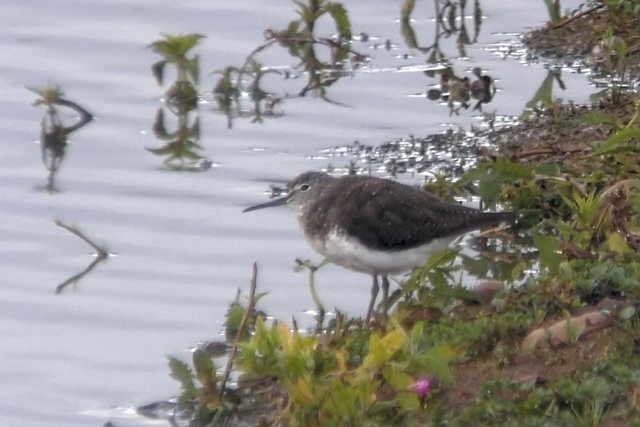
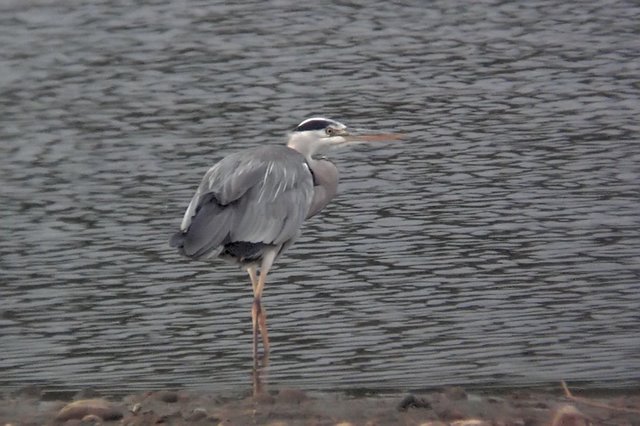
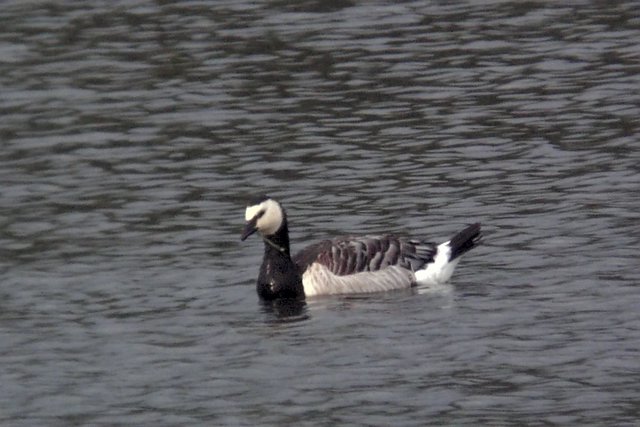
Along with the 'Blackwits' I found eight Green Sandpipers (one pictured top left), a Kingfisher, a Barnacle Goose (pictured above bottom, an irregular visitor to Brandon, almost certainly an escapee rather than a true wild bird), Great Spotted and Green Woodpeckers, and plenty of Lapwing and Grey Herons (above right) among the other regulars.

I also gave my new scope, an Opticron Mighty Midget ED, a good run out. Small enough to fit in my pocket, but with a clear wide 18x magnification, it is the perfect lightweight bit of birding kit. It also allows me to take snapshots without lugging loads of camera gear around - just a little Contax pocket camera held up to the eyepiece. Given the poor light, I'm very pleased with the efforts above. Posted by Picasa

30 July 2006

Spotted Flycatcher at Ufton Fields

After a successful early morning at Leam Valley, I pressed on to Ufton.

A good move indeed, because although things started quietly, I soon found a Spotted Flycatcher perched on a hawthorn bush near the IBM Hide.

This little grey bird is pretty non-descript in appearance, but somehow manages to convey bags of character. They are not at all easy to find in Warwickshire these days, so I have been fortunate to locate them in several parts of my patch in the last year or so - here at Ufton, at Offchurch, and in and around Cubbington Woods.

Little Ringed Plover at Leam Valley

Perfect patch birding - this morning I found three Little Ringed Plover on the scrape at Leam Valley.


This is by no means a common bird, and certainly not one I have found here on my many previous visits. In fact, like the Little Egret I reported on a few days ago, it is a species I have only previously found in Warwickshire's major bird reserves - Brandon (where pairs have successfully bred in recent years), Kingsbury and Draycote.

Now here, at 7am on the outskirts of Leamington Spa, were three more. One female with two juveniles - a few days if not more apart in age, with one moving into adulthood and the other still bedecked in downy feathers. The female was every inch the concerned mother, calling constantly to ensure her youngsters stayed in close proximity. They, children through and through, remained content to feed non-stop, ignoring her rising-falling calls, and even failing to notice when she flew away all together. She was, of course, back within moments, unable or unwilling to leave these two little birds alone just yet.

These plovers were of course the result of a successful breeding attempt, perhaps somewhere else in the county, and were now starting to move on, preparing for the long journey south (because the Little Ringed Plover is a migratory bird, a summer visitors only to these shores).

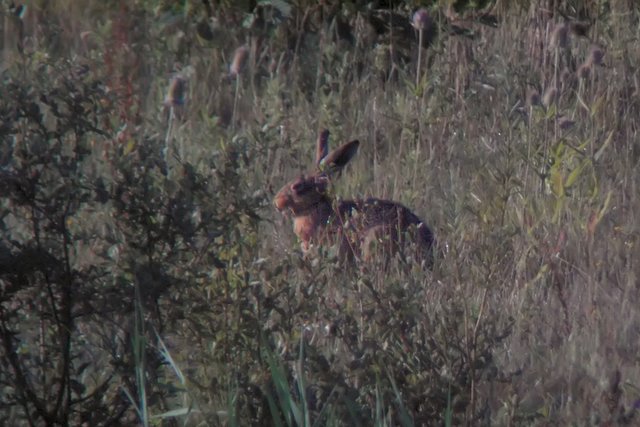
These beautiful little birds were of course the highlight of the morning, but an honoury mention should also go to a Brown Hare I spotted at the far side of the scrape at the same time - I am always fascinated by these mammals, and delighted to see them.

Posted by Picasa

27 July 2006

Little Egret at Wootten Wawen

A lunchtime stroll in Wootten Wawen (a Warwickshire village just outside Henley-in-Arden) found a Little Egret busily feeding on the edge of the manor house pond.

While still quite an unusual sight in Warwickshire, this elegant white heron-like bird is certainly becoming more common across the UK, even breeding in a number of coastal locations (I think Poole Harbour may have been the first). Over the last decade or so, the warmer climate seems to have helped this species to spread north from its former southern European strongholds.

It is still rare enough, however, to make it a rare lunchtime treat, with Wootten Wawen now only the fourth Warwickshire site in which I have seen a Little Egret (after Ladywalk, Brandon Marsh and Leam Valley).

24 July 2006

Garden action from the Swallows and Starlings

There has been much frantic activity of late in the skies over Chez Hornet.

As the flying ants take to the air, so do the Starlings, post-breeding flocks of 200 or more birds determined not to miss out on a feast and convinced they are at least the equal of any flycatcher. It's an annual favourite of mine to watch them launch into the air, hover for a few frantic seconds while snapping at the ants, and then descend for a brief rest before repeating the whole process.


Meanwhile, the Swallows from the nearby farm have also bred successfully, and the skies over the house are filled with adults and juveniles alike. They often rest on the wires outside the front of the house, affording great views and generous photo opportunities.

With Swifts screaming overhead, House Martins chattering among them, and a persistent Wren or two in the garden, there's a veritable orchestra to enjoy at this time of year in the garden. Posted by Picasa

23 July 2006

Napton and Ufton - neglected corners

My local patch is basically defined by two waterways - the River Leam which snakes first north and then east from my home, and the Grand Union Canal, which runs directly east. Along the river to the north are some familar villages, such as Offchurch and Cubbington, and also the great Warwickshire woodlands of Princethorpe, Wappenbury and Ryton. The canal route makes its more direct route towards two outlying and much neglected treasures in my patch - Napton Reservoir and Ufton Fields.

Napton today was alive with fishermen, perhaps a dozen in all around this small body of water. Coot and Mallards aplenty were to be found, along with eight Great Crested Grebe and a couple of Common Terns - firsts for the patch. My favourite bird of the morning (a 6am start no less) was a Common Sandpiper which flew low from bank to bank, doing its best to avoid me but still proving unmistakeable, even at distance.


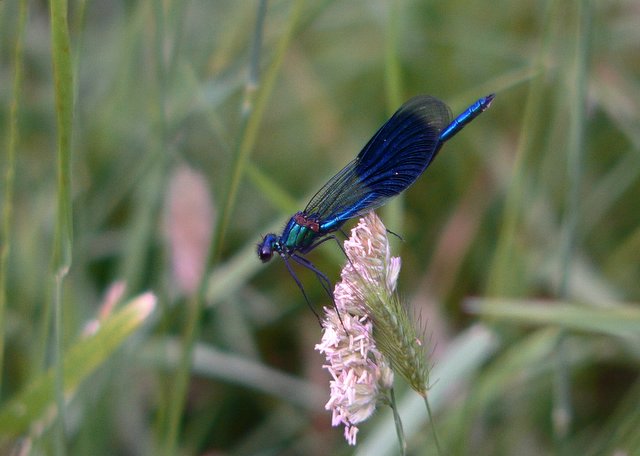
Ufton is a funny place, often quiet and yet so full of potential. Today there were few birds - some Mallards, a couple of Coot and Moorhen, but finally three Bullfinch and a Green Woodpecker to enliven the walk. But what magnificent dragonflies the place has - brilliant blue and huge like birds. The picture is a cheat - it's of an Emporer Dragonfly and I haven't got a clue if they have these at Ufton. But it looks right, and it certainly conveys the beauty of these creatures. Posted by Picasa

21 July 2006

A hobby at Brandon

The Eurasian Hobby, Falco subbuteo, is one of my favourite birds - a slender-winged aerial acrobat which can twist and turn like a guided missile in pursuit of dragonflies, swallows, house martins and even swifts. It has brilliant yellow talons which stand out like neon lights against distinctive red 'trousers', and an equally prominant facial 'moustache'.


I've been lucky enough to see these beautiful creatures flying high over my garden, and also hawking for insects across lakes and reservoirs. But tonight I had the all-too-rare opportunity to study one at rest, sitting in a dead tree across from the Carlton Hide at Brandon Marsh. Only a few moments, but priceless nevertheless.

Not having my camera was an added advantage, because it meant I didn't spend those precious few moments fumbling for lenses or shutter release cables - instead I was able to just sit and enjoy. Instead of a photo, I think the picture above does a much better job of showing the beauty of this spectacular bird. Posted by Picasa

19 July 2006

Good butterfly intentions

For a second year running I intended to find more out about butterflies - and failed.

Not enough time, blah de blah de blah - usual rubbish excuses. However, I'm pretty sure this is a Red Admiral, sitting on a teasel.

 Posted by Picasa

Frog Attack

No birds in July, but loads of frogs!

The garden pond is now in just its third year, but already it looks pretty natural. A lot of self seeding plants have started to appear, and reedmace, sedge and other introduced plants are starting to spread.

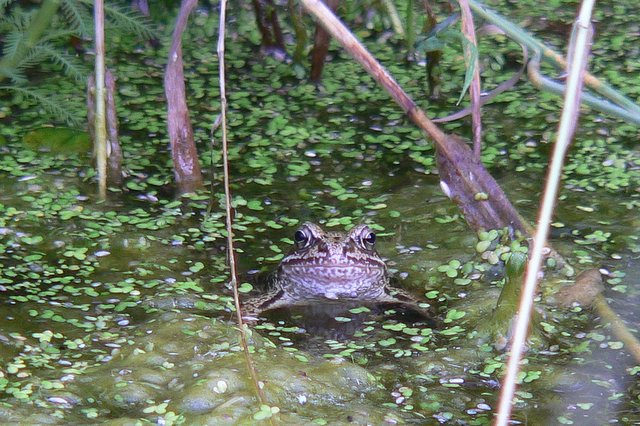
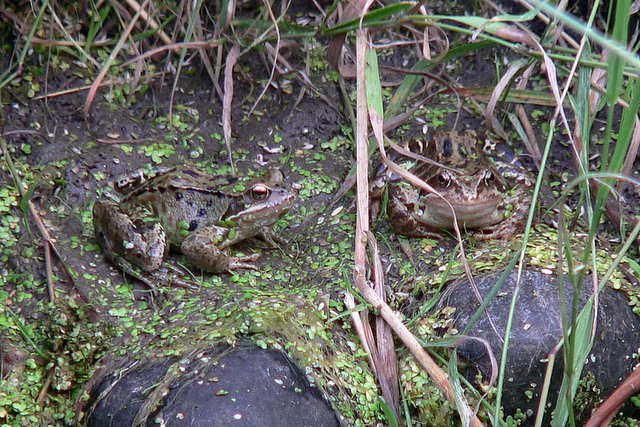
Tonight I sat and watched half a dozen large frogs lounge in and around the margins, enjoying whatever shade they could find as shelter from the oppressive heat. The variety of their colouring is amazing - from light green to really dark browns and greens, all superbly camoflaged against the rocks, mud and grass.


16 July 2006

All quiet on the birding front

After yesterday's birdless walk around Brandon, today I thought I'd try a walk around Leam Valley.

Hmmm, some people never learn. Not totally birdless, but about as close as it gets. Plenty of Whitethroat, Wren and Wood Pigeon around, a couple of Chiffchaffs, and a pair of Kestrels over Offchurch Bury were among those birds I did find.

But the Reed Warblers were again the highlight, five or six birds singing and perhaps 20 in all (including juveniles) along an 80m stretch of the river.

Can winter start in July?

Took an early(ish) morning trip to Brandon Marsh today. As expected in July, the birding was quiet.

On the Carlton Pool were the highlights of the morning - four Green Sandpipers, something of a speciality at Brandon in recent years. These little waders are among our earliest return migrants. They have already bred in the far north of mainland Europe and are now on their way south again to wintering grounds in Southern Europe / North Africa (although in recent years, some have actually wintered in the UK).

Which all begs the question - is summer already over?

2 July 2006

Leam Valley scorcher

The forecasters got it right - it was a scorcher. 30 degrees plus by lunchtime, so I planned on beating that kind of heat with an early start. It turned out to be not as early as scheduled (alarm at 5.50am, up by 6.30am), but not a bad effort.

Without a car for the weekend, I planned a complete circuit from my house, down to Leam Valley, around the scrape, then right across the Offchurch Bury Estate to Offchurch itself and back via the Millennium Cycleway. A much-needed downpour at first light seemed to have sent insects and birds alike into a frenzy of activity, so all looked set fair.

And indeed it proved to be so, the walk uncovering plenty of uncommon, if not actually rare, sights. Along various stretches of the River Leam I found perhaps ten Reed Warblers (where previously I had only found a single bird in three years), a dozen or more Whitethroat (including great views of a newly fledged juvenile), a quarrelling family of five Great Spotted Woodpeckers, a Grey Wagtail picking his way over the lily pads, and several Moorhens including a juvenile.

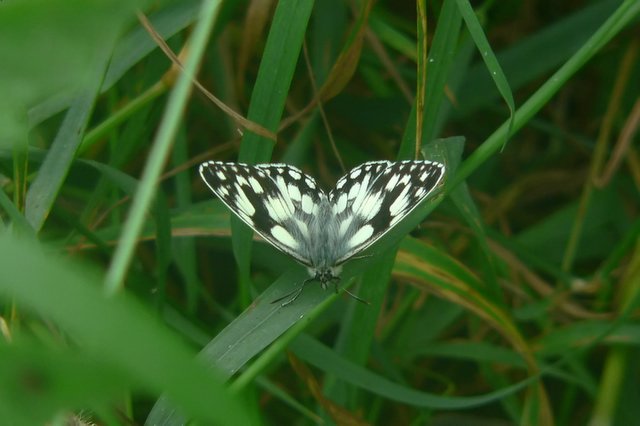
Other than the birds, I was thrilled to observe a grass snake swimming a short stretch of river before disappearing under a weeping willow. I also noticed a couple of beautiful Marbled White butterflies as I crossed the estate.

Posted by Picasa
Posted by Picasa
In the Leam Valley woods I found some real favourites of mine, several Jays, a pair of Bullfinches (I got even better views on the return leg when I found another pair on the cycleway near Offchurch), a Song Thrush, two Goldcrest (one a juvenile) and a probable pair of Marsh Tits (sadly they made no sound, so I cannot confirm 100% whether they were Marsh or Willow).

Chiffchaffs sang on the Leam / Offchurch leg of the journey, and Willow Warblers on the Offchurch / Radford Semele return (I have no idea why this should be, but the difference was marked). Swallows swooped over the scrape, while a pair of Grey Heron fished. Skylarks and Yellowhammers sang over farmland throughout the walk, their sounds accompanying me through the last mile or so as the temperature soared and I wilted, staggering back into the village after nearly four hours out and about. 40 species of bird recorded and a cooked breakfast in prospect - that's how to start a Sunday.

24 June 2006

Birding back home again

I made the usual mistake I afraid - I came back from holiday and threw myself into work, exams, DIY, more work etc etc. And the result? A very stressed hornet indeed.

As usual, the antidote was an early Sunday morning and a walk around the local patch.

Leam Valley was quiet at 6.30am, just the way I like it. Chaffinches and Wrens called out everywhere, joined by a Sedge Warbler as I moved along the River Leam and several Chiffchaffs. A Great Spotted Woodpecker near the river was nice, but a Green Woodpecker drinking from the scrape right in front of me was better.

Skylarks sang high over Offchurch Bury, the land turned blue with flax (also known as linseed). Jackdaws called vigourously, and a lone Swallow flew past. The weir was quiet, all wintering Cormorants long since gone, but male Banded Demoiselles erupted from the riverside grasses, a lovely sight.

Posted by Picasa

A quiet morning by the standards of many birders, but a perfect one for me.

23 May 2006

Some more holiday photos

Having progressed from digiscoping (fun, but quite hard work) to more conventional photography, I am really enjoying the new found freedom. I took nearly a thousand photos on holiday (edited down to a modest 50 or so with which to bore friends) - including some of my favourite bird photos to date.

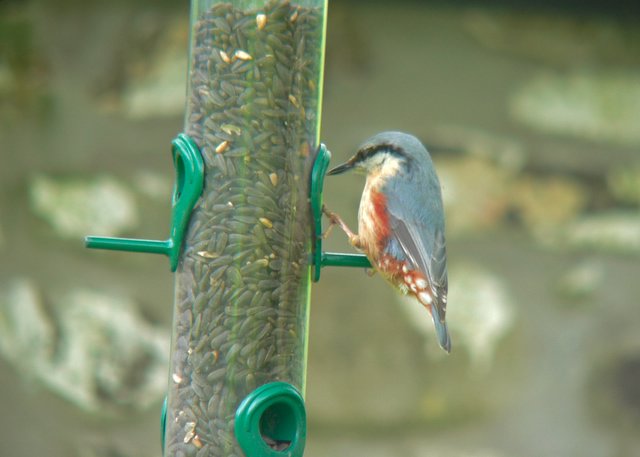
Here is a small selection of those bird photos in addition to those already published - a Skylark on Skomer with a Chough in flight overhead, a female House Sparrow at WWT, and a Nuthatch at Dinas.


16 May 2006

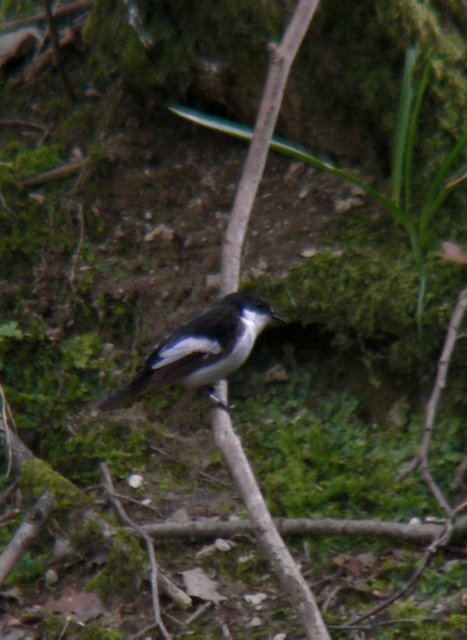
Dinas - Lesser Spot and Pied Fly

What a day. Dinas is an RSPB reserve located in hilly woodland to the north of Llandeilo, and plenty of birders on Skomer had recommended it to me. I arrived with high hopes, but our eventual haul exceeded every expectation.

The car park had Siskin (20 or more around the feeders) along with a very friendly Nuthatch. Along a boardwalk we found the promised Pied Flycatchers, with Spotted Flycatchers, Willow Warblers and plenty of more common woodland birds (tits, Robins, Blackbirds and so on). We moved on and found another Nuthatch, Treecreepers, a Redstart, and a Tree Pipit along with many Meadow Pipits.

Posted by Picasa

Along the cliff faces we found one of the nesting Ravens, although sadly not the local Peregrines. However, it was once I went back to photograph the nesting Pied Flycatchers that the day hit its real high point. Unusually for me, I had a feeling I knew what it was as soon as I saw the dark shape fly into some nearby trees.

A few minutes waiting and it finally showed itself – great views of a Lesser Spotted Woodpecker. This tiny, rare and perfect little bird only let me glimpse it for perhaps 10 seconds, but that may still be my birding highlight of this year.

15 May 2006

Around the Cabin

The small estate on which our cabin is located, plus the surrounding countryside, are themselves packed with wildlife. Day one saw several Spotted Flycatcher outside the window, and we are awakened by a Song Thrush or two every morning.

On the road outside we found a Red-legged Partridge, and today our first Red Kite soared in a nearby field (fortunately there was nothing behind me as I slammed excitedly on the brakes).

Swallows are everywhere, as are some of the more common warblers such as Willow Warbler and Chiffchaff.

14 May 2006

Skomer - an island paradise

Skomer is perhaps the best known of the islands off the Pembrokeshire coast. Just 15 minutes away by boat, it is home to a wonderful array of seabirds. Almost certainly the most notable of these is the Manx Shearwater - the island is in fact home to half the world's population of this nocturnal marvel.


With our good weather continuing, I stole a day away from the family to enjoy the island and all it had to offer - and what a day it was. As we made the short crossing we were surrounded by Puffins, Guillemots and Razorbills - there were plenty more on the island itself to photograph and enjoy. Grey seals basked on the rocks as we arrived at low tide, and before long I was watching a Peregrine Falcon hunting along a rocky outcrop full of gulls, Guillemots and even a few Chough.

12 May 2006

Welsh WWT - unexpected lifers

Close to our cabin is the Welsh home of the Wildfowl and Wetlands Trust (owners of Slimbridge and many other highly regarded reserves). So along with some beautiful castles and gardens (of which I won't bore you in a birding blog) this seemed like an obvious destination.

Posted by Picasa

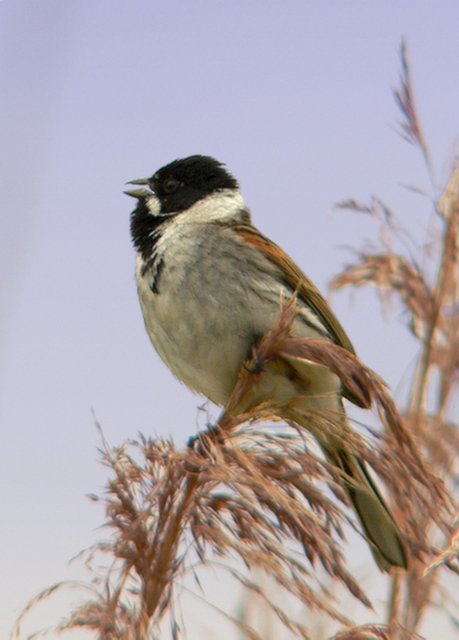
The reserve is in a format familiar to all WWT visitors - first the wildfowl collection, captive birds that form part of the WWT's conservation and research work. Second is the wild bird reserve, a series of scrapes, pools, reedbeds (see Reed Bunting photo above) and scrublands overlooking the estuary.

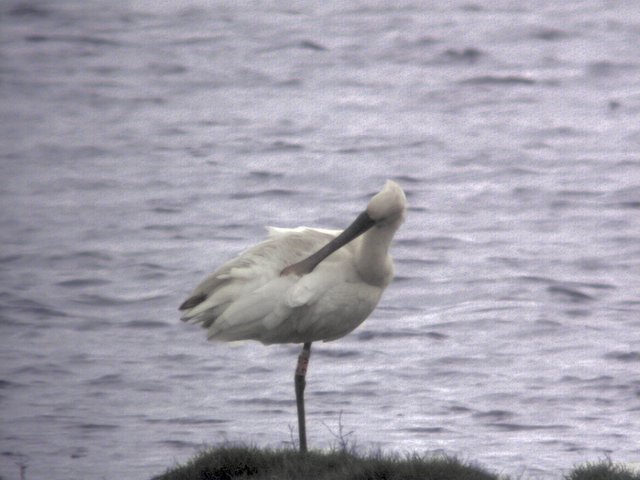
Charlie seemed to enjoy the wonderful wildfowl collection, but probably not as much as I enjoyed the wild areas - in a brief 15 minute visit my first thrill was a Spoonbill (photo below), and my second a drake Garganey. Both are pretty spectacular birds, and both were lifers. Unexpected and thrilling.

Posted by Picasa

10 May 2006

Our first family holiday

Ravens, Peregrine Falcons, Spotted and Pied Flycatchers, Redstarts, Choughs, Puffins, Red Kite, Wood Warblers and Lesser Spotted Woodpecker - and I thought I'd have no time for birding on a family holiday in Wales!

We are staying in a log cabin tucked away in woodlands near Llandeilo, a lovely little market town in Carmarthenshire. This is the first time I have been able to spend a decent amount of time with Charlie since he was born some four-and-a-bit months ago, so that was always my main priority. However, if birding opportunities arises... who am I to turn them down?

3 April 2006

Leam Valley firsts - and spring is here

Now is the time that birders feel the sap rising - it's early spring and the migrants are coming back.

Sadly, while other birders were enjoying untold riches elsewhere, I was confined to a couple of hours at my local reserve, Leam Valley on the edge of Leamington Spa. Sadly because for the first hour or so, my return migrants were confined to a couple of (heard only) Chiffchaffs - until things picked up a little.

The first sign of an upturn was what appeared to be a female Pochard - nothing unusual you might think, except I've never seen one of these diving ducks on the shallow waters of Leam Valley scrape before. A patch tick in fact.

Even more excitement followed as I sat and waited for this sonambulent bird to confirm its identity by lifting its head - in flew two Sand Martins. Famously early returners, these were my first real signs of spring. They did a couple of circuits over the shallow pool, caught a couple of insect, and were gone.

Another patch first, and something to stir the blood for the month ahead. Not bad for 90 minutes local birding.

5 March 2006

A few Leam Valley moments

As you might expect, since the birth of my son I've done less and less birding. However, what I have realised is that I get correspondingly more and more out of the few moments I do get to snatch for birding.

Today at Leam Valley was no exception. Average weather (a bit cold), nothing really novel on the bird front, but huge pleasure nevertheless.

A Meadow Pipit (my first on the north side of my patch), Bullfinch, Yellowhammer, drumming Great Spotted Woodpeckers and a Song Thrush - these are a few of my favourite things.

23 February 2006

Shelduck and Ringed Plover at Brandon

A Sunday trip to Brandon to try out Charlie's new three-wheel off-road pushchair. It performed brilliantly, and could be one of the best bits of birding kit I've bought in a long time!

Relatively quiet on the birdwatching front, but a few nice birds to warm the heart on a cold, grey day. A Shelduck was unusual, though not totally unexpected - my records for the last few years show they tend to turn up here in ones or twos, although only in February through April.

A Ringed Plover was an early surprise, the only wader apart from two Lapwing. Good numbers of Gadwall (12), Pochard (10) and Shoveller (9) were also in evidence, along with a dozen Cormorant. We glimpsed Great Spotted Woodpecker and Song Thrush on the way back to the tearoom, and from the comfort of a cooked breakfast we watched perhaps half-a-dozen Reed Buntings fighting over food on the bird table.

Spring is springing in my garden

Although the weather hasn't been great of late, there have been definite sights of spring in and around my garden.

Alongside the bulbs (daffodils, crocuses and snowdrops) bursting out of the ground, a couple of familiar heralds have been in full song - well, sort of.


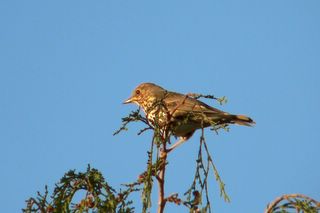
The Song Thrush has definitely been singing, loud and clear using a tall conifer in our garden as a song post. The Great Spotted Woodpecker hasn't been singing as such, but has been much in evidence with his drumming sounds reverberating around the neighbourhood.

15 February 2006

The majestic Hen Harrier

A magic moment, surely one of my best ever birding experiences - watching an adult male Hen Harrier sweeping along the coast, up and across the salt flats and through a flock of startled Golden Plover. Lazily this large, pale grey raptor with distinctive black wingtips floated through the plovers until SNAP - with a quick twist and burst of acceleration he grabbed one out of the air and forced it to the ground.

All was not as it seemed however - after a moment he rose again, empty-clawed, and instead of feeding was forced to carry on gliding along the coast. Successful or not, it was a wonderful thing to watch.

The action happened at Fingeringhoe, a wonderful location on the coast of Essex where tidal marshes combine with mature woodland and several other types of habitat to ensure a rich birding experience. The Hen Harrier (my first) was a highlight, but it was a marvellous day all round. Thousands of Dunlin, Golden and Grey Plover, Shelduck, Redshank, Black-tailed Godwit, Wigeon, and Oystercatcher were joined by other birds throughout the morning - such as three Red-breasted Merganser, a Buzzard, and 400 beautiful glittering Avocet which swept up the tidal channel just a few feet above the water.


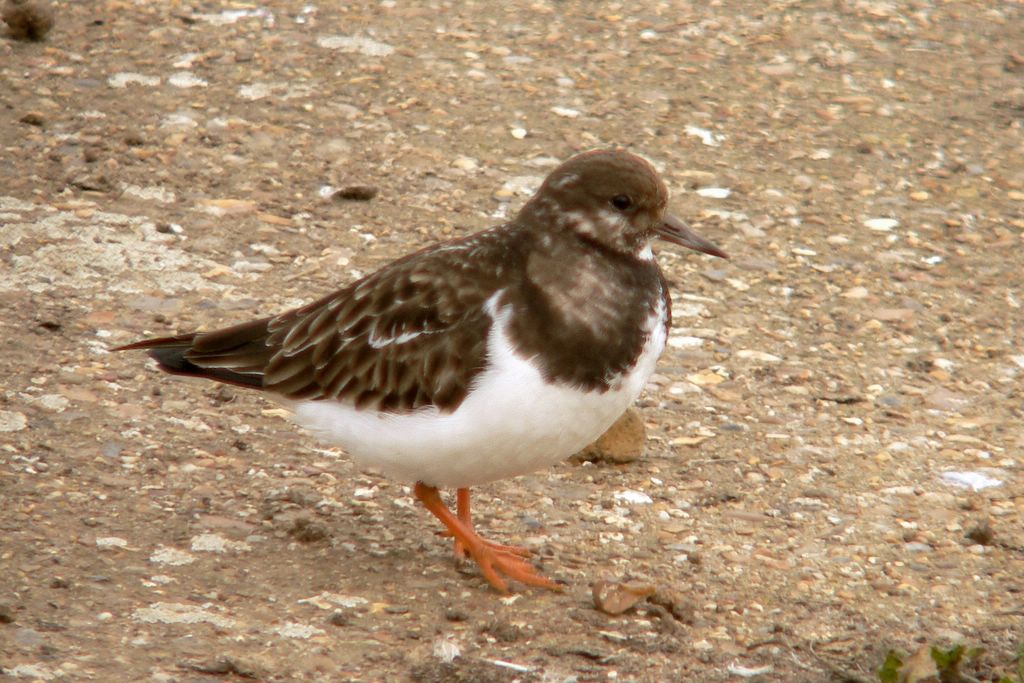
I rounded the day off by returning to Abberton Reservoir. From its main causeway I found my first Turnstones of the year - most obliging they were too, coming within a few feet of the roadside enabling the photograph you see here. I'd rather have had the chance to take pictures of the Hen Harrier, but even without photos I know that particular moment will linger long in the memory.

An awful lot of Coots

We visited the in-laws in Essex this weekend, and as well as being delighted to see that side of the family, I was also quite pleased to get some very good birdwatching in.

Friday afternoon saw me arrive, drop off the wife and child, and head straight off for Abberton Reservoir, one of the area's premier birding spots.

I arrived to be confronted by well in excess of 3,000 Coots - rafts of them spread all over this massive water, impressive when stationary but breathtaking when they scooted low across the water en masses, wings beating together and feet skimming the surface.

There were plenty of other treats to be savoured - impressive numbers of Goldeneye, a lovely pair of Goosander, a couple of Common Sandpipers that have apparently over-wintered here (usually they're migrant birds that that leaves our shores in the winter and only come back in March / April), and neighbouring fields full of Wigeon, Lapwing, Fieldfare, Redwing, Starling and Rook.

6 February 2006

Napton Reservoir and nothing to say

Sunday morning, overslept, walked round Napton Reservoir - nothing much to say. No Bearded Tit, no Cetti's, no rare waterfowl. Nice bacon sandwich when I got home though.

3 February 2006

A little bit of Charlie

OK, I know, The Hornet's Nest (or should that be thehornetsnest) is supposed to be a blog about birding (or birdwatching) in Warwickshire.

But I just couldn't resist one more shot of Charlie - just to showcase the capabilities of the new camera of course ;-)

Besides, he's very relevant to the subject in hand, because he's part of the reason why I'm not actually doing any birdwatching in Warwickshire!

Still, at least I can keep my hand in with a bit of photography - he's a bit bigger than the average birding subject, but no more inclined to stay still long enough to photograph.