29 September 2005

A 'Rouzel' for Breakfast and Cley for the day

We finished our Norfolk weekend with a trip to Cley, one of the most famous birding hotspots in the world.

It was not Cley, however, which produced our first thrill of the day. Instead it was breakfast in Hunstanton - no, not the sausages, but a young male Ring Ouzel in the back garden of our B&B.

This was the first 'rouzel' I'd ever seen, and it was clearly identifiable by the pale cresent on its chest (otherwise, to all intents and purposes, this thrush is identical in appearance to a Blackbird). I was delighted (and thus made a berk of myself by 'shouting' it to a room full of disinterested breakfasters - ho hum).


A great start to the day then, and Cley did not disappoint.

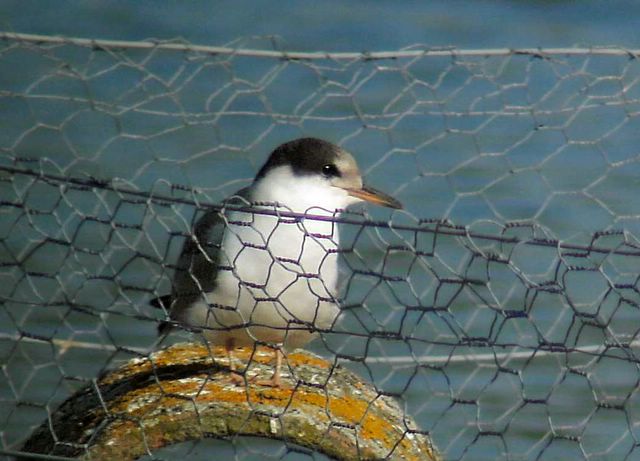
The grey weather soon cleared and we were into a good array of migrant birds - a Whimbrel, Wheatear, Whinchat and more Spotted Redshank being among the highlights (plus the Common Redshank in the photo, above left). Half-a-dozen Egyptian Geese were a nice find (above right), as was the Marsh Harrier flying low over the reeds - a magnificent sight of which one could never get bored.

24 September 2005

Red-Necked Phalarope and other Norfolk delights

Norfolk in September is reckoned to be about as good as it gets in birding terms, so I've been looking forward to this weekend for quite some time.

We arrived Friiday lunchtime and headed straight to the RSPB reserve at Titchwell. Bang - straight into my first Red-Necked Phalarope and the weekend's off to a flier!

Along with this very rare wader there was also a Temminck's Stint, some Curlew Sandpiper, a Marsh Harrier, Golden and Grey Plover, six female Pintail and two Little Egret. A lifer, some reasonably rare waders and an assortment of other favourites. Could the day get any better?

Well yes, it did. We popped into the Mariner pub for a pint on the way back to teh B&B, only to find a Barn Owl patrolling the field opposite. I even managed a rushed photograph as a record.


Thank you, birding gods. Dinner certainly went down well last night.

Today (Saturday) was still better in once sense at least - the weather was glorious. We headed off to a couple of places we'd never visited before - Wells Woods and then Holme. Wells was a lovely walk, but nothing too exciting on the birding front. Loads of Goldcrest (sadly no Firecrest or Yellow Browed Warbers among them), more Jays than I'd ever previously seen in one place, Chiffchaff, Willow Warblers, Long-tailed and Coal Tits and a Great Spotted Woodpecker represented the highlights of the morning.

So off we headed to the Holme reserve. We were expecting a lot, but to be honest, the less said about the birding here the better. I've rarely encountered fewer birds.

So it was back to Titchwell to round the day off with something a little more interesting. This we acheived with Spotted Redshank, Greenshank and a long spell watching a Sparrowhawk flap-flap-glide high over the pools.

Time for a well-deserved curry.

18 September 2005

The spectacular Blue Tit


Just because the Blue Tit is one of our most common garden birds, it doesn't make it any less stunning. Good looks, interesting behavious and bags of personality all add up to make the Blue Tit a fabulous creature in anyone's book - and I am well chuffed with this photo.

11 September 2005

Missed yellow brow, Curlew and Pec Sand at Draycote!

Started late at Draycote, and after a slow start on a chilly and grey autumnal morning I found some nice, if unspectacular birds. Plenty of Yellow Wagtails, my first county Greenshank of the year, the first returning Wigeon, and a couple of Common Sandpipers for example. Plenty to keep me interested at least.


Then I met an acquaintance who advised me of a Yellow Browed Warbler he'd just found on the opposite side of the reservoir, plus Curlew Sandpiper and Ruff. Later I browsed the internet to discover that a Pectoral Sandpiper had been added to the day list. Good job I'm not competitive - talk about missing out!

8 September 2005

Going, going, gone?

As expected, the Swallows and House Martins now seem to have left the village and surrounding fields.

Ironically, for the first time this summer a pair of Hobby flew through last night - no doubt wondering where their favourite prey items had gone. Just too late fellas!

Footnote: It's now Friday 9th September, and the Swallows and martins were high over the garden again this morning, chattering furiously as they fed. One last hurrah for the summer?

Footnote 2: It's now Friday, 16th September, and with the temperature starting to drop, they're still around - albeit in much smaller numbers. The House Martins are still near their nests at the far end of the village, a handful flying around the houses this afternoon. You can also still find the occasional Swallow in the village, but these are likely to be birds moving down from the north, rather than our original 'village' birds.

Footnote 3: OK, so this is getting silly. Wednesday, 21st September and the last few House Martins in the village are still here. Presumably a late, or second, brood must be about to fledge and move on - otherwise they are leaving it very late indeed.

5 September 2005

Goodbye to the hirundines

Awoke this morning to find more than 50 House Martins feeding frantically over my house. Yesterday I arrived home to find 20 or so Swallows chattering furiously on the telegraph wires outside the front of the house.

Both are signs that the birds (both from the hirundine family) are gathering in numbers to feed, build up strength and prepare for their long journey home - the House Martins to north west Africa and the Swallows all the way to South Africa.

4 September 2005

A morning in Leam Valley

A trip to my local patch this morning turned up a few nice birds.

There were Green Woodpeckers, skies full of Swallows and House Martins gathering food and strength for their long flight home to Africa, Chiffchaff, a male Blackcap, three Kingfishers (great views of one as close as 10 metres), and five Moorhen (including one youngster).

A Common Sandpiper was only my second for the area, so too a Little Egret, seemingly hooked up with a young Grey Heron for company.

And the highlight of the morning? A Grey Wagtail, my first for the patch. Replendent in is grey and yellow plumage, it preened and stretched for a minute or so, sitting on a discarded piece of metal in a nearly-dried muddy pool not far from the river.

29 August 2005

Rutland without Birdfair

Two weeks ago I visited Rutland Water during Birdfair, a three-day long festival of birding which attracts around 20,000 visitors to this magnificent reservoir each year. It is a great event, but with one possible downside - no one gets much birding done! So today I was back to make amends. It was certainly quieter, although with it being a Bank Holiday Monday, it was by no means empty. However, the real difference was the birds.

First up, the Ospreys for which Rutland is renowned. No sign of their 'homegrown' birds, the pair which have raised three young here this year. Instead I was treated to wonderful views of one of the youngsters that have been translocated here from Scotland this year. An excellent lifer, and long overdue.


Second were the Curlew Sandpipers. These were at the far side of the reservoir, feeding with Ruff and Dunlin, the latter making for a tricky half-hour of identification. However, eventually I was able to confirm to myself which were Dunlin and which Curlew Sands - the elongated and more curved bills, longer legs and bodies, and perhaps most notably of all, their pale cream supercillums (stripes above the eyes). These are amazing birds, having so recently bred in a short summer on the very edge of the Siberian arctic. The adults have gone through to Africa already, and here were the juveniles following on. And for me, that made two lifers in a day!


There were other good birds around too - a Greenshank, a Black-tailed Godwit, several Green Sandpiper and perhaps a dozen Snipe for example. All signs that return passage (autumn migration) is well underway, and contributors to a great day's birding.

28 August 2005

Black Terns in Essex

I visited Abberton Reservoir in Essex today for the first time - my in-laws live over that way so it was about time I got out a bit and explored that fine county.

Abberton is splendid, a huge water just south of Colchester, boasting a first class visitor centre and a track record of rare birds.

When I arrived I found a group of twitchers looking for a White-Winged Tern. Sadly they had no luck, but I was much easier to please - the flock of 20 or so Black Terns that were clearly on display represented a lifer for me!

18 August 2005

An early Sunday morning

You really can't beat a proper early morning. With the sun just coming up and few other people around it is the most serene of times.

After a full day's DIY on Saturday (just about the polar opposite of serene in my book) I headed off on this particular Sunday morning to two favoured local reserves. First up was Draycote Reservoir, where although it was a little cold, I was delighted to walk straight into 7 or 8 Yellow Wagtails, lovely birds which I rarely find anywhere but here. The last were in April, dropping in on their migration north, and now here were the fruits of that long journey - mostly juvenile birds on their way south for the first time. This bird is becoming increasingly hard to find, so it is always nice to find young uns.

Other birds at Draycote included an Oystercatcher, 4 Common Sandpipers (again returning south), a Swift (there are none left in my village now so sightings are becoming sporadic, Swifts being early returners to their African wintering grounds), a Sparrowhawk (great views as it flew in low over my head) and a Hobby (rubbish views of its tail disappearing over some trees).

Posted by Picasa Posted by Picasa

I then moved on to Brandon Marsh where, finally, I found the female Common Scoter that had been there for a week or so - a lifer for me!

Alongside this bird there was a Kingfisher, another Common Sandpiper, Green and Great Spotted Woodpecker, a pair of Lesser Black-Backed Gulls with their huge chick, and the last two Common Terns, their chick now old enough to fly but still reluctant. I would guess the three of them will be heading south again within a fortnight if not a week.

Autumn is well and truly upon us.

9 August 2005

An evening for photography

After the disappointment of a quiet patch walk on Saturday I took refuge at Brandon Marsh, a local reserve near Coventry where something of interest is almost guaranteed. I was not disappointed.

Of a recently recorded Common Scoter there was no sight, but I was soon enjoying watching the Lapwing (more than 270 in all), a Common Tern pair feeding a plump little chick, plenty of Grey Heron, assorted wildfowl, Coot and Moorhen (most with chicks), juvenile Willow Warbler and Chiffchaff feeding in the willow scrub, and best of all, two Green Sandpiper down on the Newlands scrape.

With good light and my new digiscoping gear to hand, this was an evening for photography. First up were the terns, adult and juvenile.

Posted by Picasa Posted by Picasa

Then I turned by attention to the Green Sandpipers, lovely little birds with brilliant white underparts and rumps, and a distinctive bobbing action as they walk.

Posted by Picasa

And finally, to set the seal on a lovely evening, a Kingfisher flew into a nearby perch to pose for me. The light had faded a little by then, but I was still able to take my best-ever pictures of this fabulous little ball of colour.

Posted by Picasa

8 August 2005

Over the garden

Another night of flying ants. The sun came out, and with the blue skies so did the ants. That of course meant open season for the birds - first House Martins (perhaps 20 or more), then Swallows (fewer, no more than 6), Black-headed Gulls (a large flock of a dozen or more) and finally a few Starlings getting in on the act (sadly it seems the Swifts have pretty much left the village already).

Some are better adapted to flycatching than others, but all were determined not to miss out on this annual harvest.

7 August 2005

And all was quiet

I've always said that no matter how quiet the birding, there is always something magical that makes it worthwhile.

Today was the exception to prove that rule.

Posted by Picasa Posted by Picasa

A three-hour walk around Leam Valley, Welches Meadow and Newbold Comyn turned up just about nothing. Highlights? I wish. Perhaps three Grey Heron on the scrape, and having the time and opportunity to take my first decent pictures of a Wood Pigeon (one of the most common birds in this part of the world, so I've never bothered before).

Still, bring on autumn passage.

31 July 2005

A quick Sunday morning at Brandon

Managed 90 minutes at Brandon Marsh this morning, partly birding and partly giving a new self-made digiscoping adaptor the once over.

The adaptor worked brilliantly, but sadly the light wasn't all that it could have been. Still, I managed some reasonable pictures of a Great Crested Grebe chick, a male Ruddy Duck (one of two on site, with a female), and two Snipe, feeding on East Marsh Pool.

Posted by PicasaPosted by Picasa

Apart from these birds it was a quiet morning, but I did linger to enjoy good numbers of Lapwing, a Lesser Black-Backed Gull pair with two juveniles, a few Green Woodpecker, and a family of Kestrels (male, female and juvenile) playing together near the Carlton Hide.

30 July 2005

Corn Bunting and more local 'treeps'

A morning walk in and around Cubbington Wood turned up some nice birds this morning. On my way there I stopped off near another local village, Long Itchington, to look for Corn Bunting. Although these are basically brown birds with few distinguishing features (apart from a nice 'jangling keys' call), they are a good sighting for most birders because their numbers have plummeted over recent years - a victim of changing agricultural practices. It is probable that the bird only managed to establish itself in NW Europe thanks to new farming practices introduced way back (ie centuries ago). Now farming practices are changing again and they are in serious trouble in the UK.

Because of this I was delighted to see two birds, and hear several more calling. One thing that you can't accuse the Corn Bunting of doing is skulking - they have a preference for high, obvious song posts - telegraph wires in this case.

On to Cubbington, where the wood itself was deathly quiet - none of the usual woodland suspects.

The hedges and fields around it threw up better birds - a family of 8 or more Tree Sparrows (including juveniles, and my first 'treeps' in this area), various warblers (Chiffchaff including young, Whitethroat and a female Blackcap with a juvenile), at least four Buzzards at a nearby site (three flying low out of woods calling loudly and another calling from within), Yellowhammer and Green Woodpecker.

Good butterflies too, with Painted Lady, Peacock, Red Admiral and Gatekeeper among the few I was able to identify.

28 July 2005

They're flying tonight

The sky over my garden was buzzing with House Martin (and a few Swift) tonight, all performing the same strange flight patterns. And the reason? Well, a quick look at my records from this time last year provides the clue.

Last year it was Starlings not House Martins but they were doing exactly the same thing - catching the large number of flying ants which have evidently just hatched. Due to the slow airspeed of these insects, the birds catching them behave in an unusual manner, slowing right down to pluck them from the sky, almost stalling as they hover for a few micro seconds to feed. And it is not just Starlings and martins that behave in this manner - I have seen House Sparrows do likewise on other occasions (also when the Mayflys first appear over the nearby River Leam, a month or so earlier).

The similarity of habit between these very different birds species is amazing, as is the coincidence of date. Last year I noted the Starling behaviour over my garden on July 27th, and today's display was of course on July 28th.

24 July 2005

Local 'treeps'

A good local birding walk today, two hours on a slightly overcast Saturday morning (which made a pleasant change from the recent blast-furnace heat we have been 'enjoying').

I walked all around the fields of Radford Semele, a combination of arable and sheep farming land with some areas of scrub, good shaggy hedges and a couple of farm ponds. Just about everything I was hoping for turned up - Linnet, Sky Lark (despite the iffy weather), Buzzard, Whitethroat, a Great Spotted Woodpecker, loads of Yellowhammer (more than 20 in all), a male Sparrowhawk gliding into some scrubby woodland near the village pond, and perhaps best of all, half a dozen or more Tree Sparrow (also know as 'treeps' by some), including some youngsters. These are much much rarer than they should be, and to see them so close to home is a real treat.

22 July 2005

Egrets? I've had a few (sorry)

Amazingly, another Little Egret turned up tonight, and this time even closer to home. Leam Valley is my local nature reserve, a stretch of water with woodland, parks, arable farmland and a 'scrape', an area of shallow open water overlooked by a hide. This can often be completely devoid of birdlife, but has also provided me with much local birding pleasure (the scrape is less than a mile from my house).

Tonight we arrived to find a Little Egret patrolling the margins, a wonderful bird giving great views.

Posted by Picasa

One of its most notable characteristics is that although its long legs are black, its feet are bright yellow (when they are not covered with mud!). The overall impression is of a skinny ballerina in yellow socks. This is quite striking and fascinating to look at, as is the birds habit of agitating the mud with his feet to stir up food items. I could watch them for hours, and tonight I did.

18 July 2005

South by South West

The latest stage of our holidays around the British coast took us from the New Forest in Hampshire to St Ive's in Cornwall. Last year's trip down the east and across part of the south coast was a birding bonanza, taking in hotspots such as the Farne Islands, Bempton Cliffs, Titchwell, Minsmere and Dungeoness.

This year, for whatever reason, we managed to miss out on most of the birdlife, but enjoyed our holiday nevertheless. There were some birding highlights however - Redstart in the New Forest, Sand Martin and Little Egret at Poole Harbour, a brief glimpse of Pied Flycatcher in Yarner Wood, Devon, and plenty of Wheatear on nearby Dartmoor.

Posted by Picasa Posted by Picasa

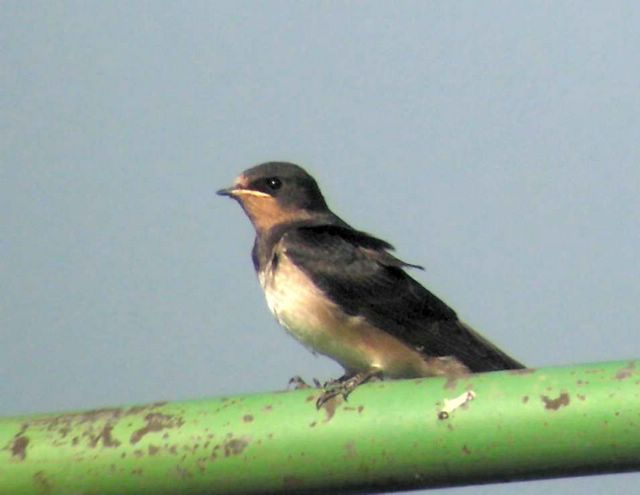
These Swallows on our Devon campsite were also wonderful to watch, swooping low around the tent and perching on a nearby farm gate.

17 July 2005

The first returners

A quick trip to nearby Brandon Marsh today, and a chance to catch up with my first early returning migrants.

Green Sandpiper have been breeding in the far north and east for the last few months (Arctic Circle? Siberia? too lazy to look it up I'm afraid). Now they are on their way south again and there is every chance of finding them in shallow water across the UK. There were two today on the Teal Pool, although I'm sure there are more around - Brandon is a well-known spot for them.

Less expected was the Little Egret that first perched high in a tree overlooking East Marsh Pool, and then flew down to feed. These wonderful white heron-like birds disperse widely after breeding, and there are a fair few around on inland freshwater sites at the moment. But even so, this is far from a common bird in these parts - only my second ever in Warwickshire.