24 June 2006

Birding back home again

I made the usual mistake I afraid - I came back from holiday and threw myself into work, exams, DIY, more work etc etc. And the result? A very stressed hornet indeed.

As usual, the antidote was an early Sunday morning and a walk around the local patch.

Leam Valley was quiet at 6.30am, just the way I like it. Chaffinches and Wrens called out everywhere, joined by a Sedge Warbler as I moved along the River Leam and several Chiffchaffs. A Great Spotted Woodpecker near the river was nice, but a Green Woodpecker drinking from the scrape right in front of me was better.

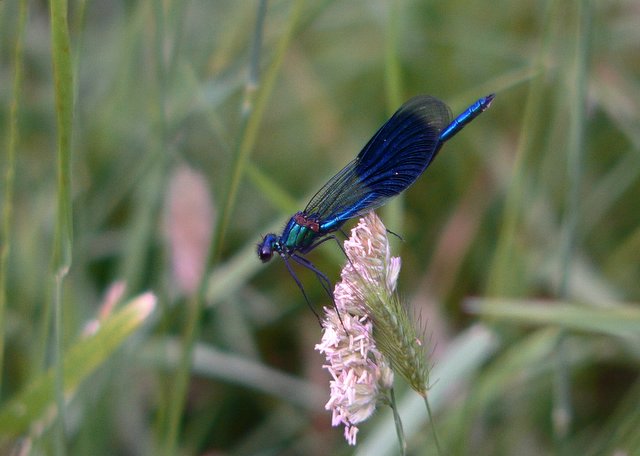
Skylarks sang high over Offchurch Bury, the land turned blue with flax (also known as linseed). Jackdaws called vigourously, and a lone Swallow flew past. The weir was quiet, all wintering Cormorants long since gone, but male Banded Demoiselles erupted from the riverside grasses, a lovely sight.

Posted by Picasa

A quiet morning by the standards of many birders, but a perfect one for me.

23 May 2006

Some more holiday photos

Having progressed from digiscoping (fun, but quite hard work) to more conventional photography, I am really enjoying the new found freedom. I took nearly a thousand photos on holiday (edited down to a modest 50 or so with which to bore friends) - including some of my favourite bird photos to date.

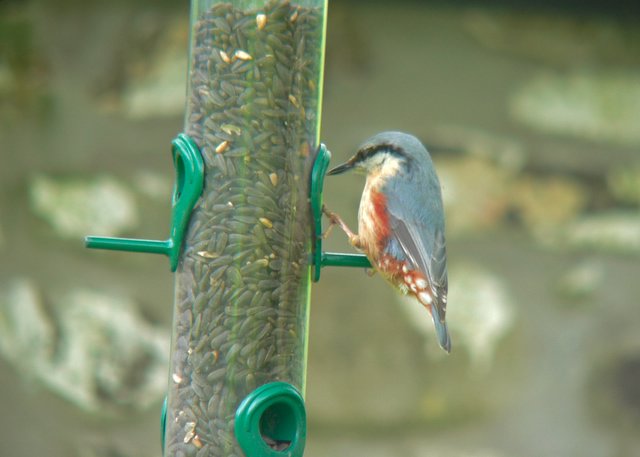
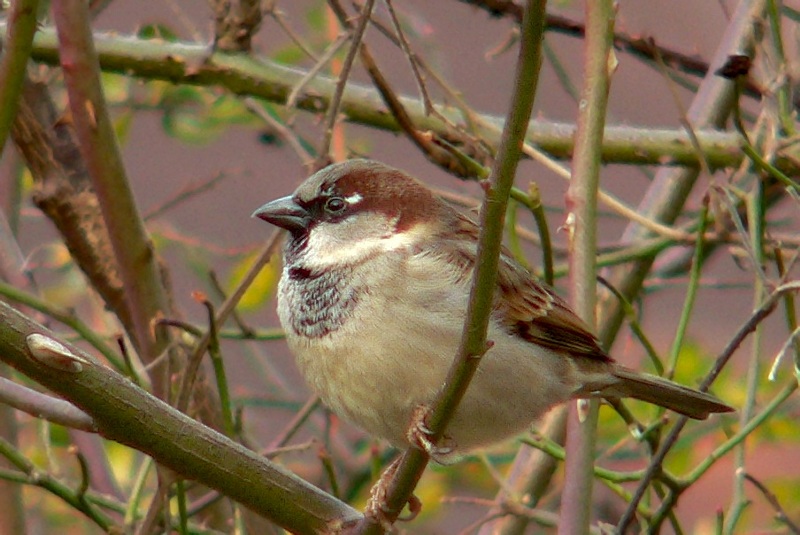
Here is a small selection of those bird photos in addition to those already published - a Skylark on Skomer with a Chough in flight overhead, a female House Sparrow at WWT, and a Nuthatch at Dinas.


16 May 2006

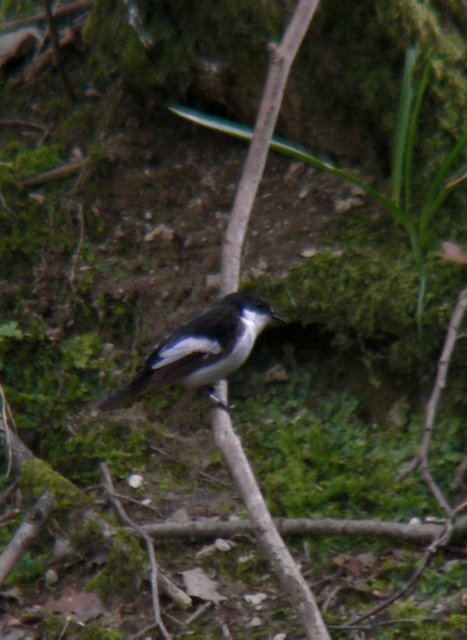
Dinas - Lesser Spot and Pied Fly

What a day. Dinas is an RSPB reserve located in hilly woodland to the north of Llandeilo, and plenty of birders on Skomer had recommended it to me. I arrived with high hopes, but our eventual haul exceeded every expectation.

The car park had Siskin (20 or more around the feeders) along with a very friendly Nuthatch. Along a boardwalk we found the promised Pied Flycatchers, with Spotted Flycatchers, Willow Warblers and plenty of more common woodland birds (tits, Robins, Blackbirds and so on). We moved on and found another Nuthatch, Treecreepers, a Redstart, and a Tree Pipit along with many Meadow Pipits.

Posted by Picasa

Along the cliff faces we found one of the nesting Ravens, although sadly not the local Peregrines. However, it was once I went back to photograph the nesting Pied Flycatchers that the day hit its real high point. Unusually for me, I had a feeling I knew what it was as soon as I saw the dark shape fly into some nearby trees.

A few minutes waiting and it finally showed itself – great views of a Lesser Spotted Woodpecker. This tiny, rare and perfect little bird only let me glimpse it for perhaps 10 seconds, but that may still be my birding highlight of this year.

15 May 2006

Around the Cabin

The small estate on which our cabin is located, plus the surrounding countryside, are themselves packed with wildlife. Day one saw several Spotted Flycatcher outside the window, and we are awakened by a Song Thrush or two every morning.

On the road outside we found a Red-legged Partridge, and today our first Red Kite soared in a nearby field (fortunately there was nothing behind me as I slammed excitedly on the brakes).

Swallows are everywhere, as are some of the more common warblers such as Willow Warbler and Chiffchaff.

14 May 2006

Skomer - an island paradise

Skomer is perhaps the best known of the islands off the Pembrokeshire coast. Just 15 minutes away by boat, it is home to a wonderful array of seabirds. Almost certainly the most notable of these is the Manx Shearwater - the island is in fact home to half the world's population of this nocturnal marvel.


With our good weather continuing, I stole a day away from the family to enjoy the island and all it had to offer - and what a day it was. As we made the short crossing we were surrounded by Puffins, Guillemots and Razorbills - there were plenty more on the island itself to photograph and enjoy. Grey seals basked on the rocks as we arrived at low tide, and before long I was watching a Peregrine Falcon hunting along a rocky outcrop full of gulls, Guillemots and even a few Chough.

12 May 2006

Welsh WWT - unexpected lifers

Close to our cabin is the Welsh home of the Wildfowl and Wetlands Trust (owners of Slimbridge and many other highly regarded reserves). So along with some beautiful castles and gardens (of which I won't bore you in a birding blog) this seemed like an obvious destination.

Posted by Picasa

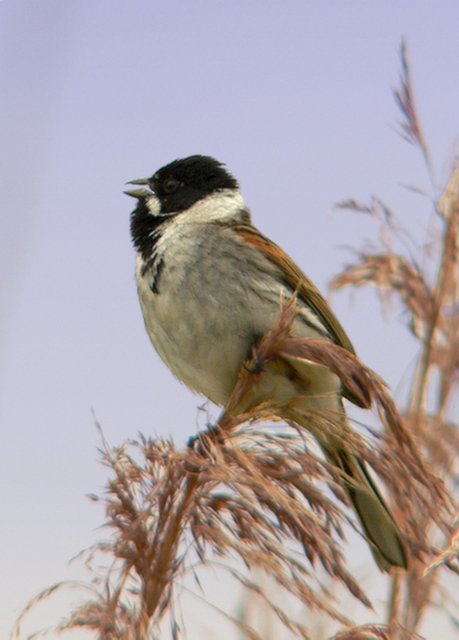
The reserve is in a format familiar to all WWT visitors - first the wildfowl collection, captive birds that form part of the WWT's conservation and research work. Second is the wild bird reserve, a series of scrapes, pools, reedbeds (see Reed Bunting photo above) and scrublands overlooking the estuary.

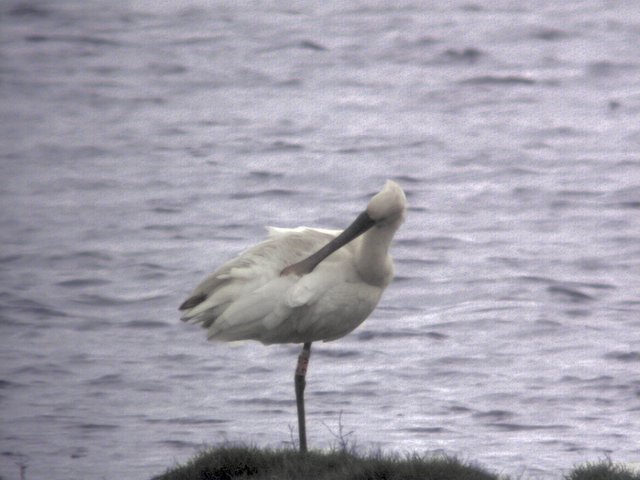
Charlie seemed to enjoy the wonderful wildfowl collection, but probably not as much as I enjoyed the wild areas - in a brief 15 minute visit my first thrill was a Spoonbill (photo below), and my second a drake Garganey. Both are pretty spectacular birds, and both were lifers. Unexpected and thrilling.

Posted by Picasa

10 May 2006

Our first family holiday

Ravens, Peregrine Falcons, Spotted and Pied Flycatchers, Redstarts, Choughs, Puffins, Red Kite, Wood Warblers and Lesser Spotted Woodpecker - and I thought I'd have no time for birding on a family holiday in Wales!

We are staying in a log cabin tucked away in woodlands near Llandeilo, a lovely little market town in Carmarthenshire. This is the first time I have been able to spend a decent amount of time with Charlie since he was born some four-and-a-bit months ago, so that was always my main priority. However, if birding opportunities arises... who am I to turn them down?

3 April 2006

Leam Valley firsts - and spring is here

Now is the time that birders feel the sap rising - it's early spring and the migrants are coming back.

Sadly, while other birders were enjoying untold riches elsewhere, I was confined to a couple of hours at my local reserve, Leam Valley on the edge of Leamington Spa. Sadly because for the first hour or so, my return migrants were confined to a couple of (heard only) Chiffchaffs - until things picked up a little.

The first sign of an upturn was what appeared to be a female Pochard - nothing unusual you might think, except I've never seen one of these diving ducks on the shallow waters of Leam Valley scrape before. A patch tick in fact.

Even more excitement followed as I sat and waited for this sonambulent bird to confirm its identity by lifting its head - in flew two Sand Martins. Famously early returners, these were my first real signs of spring. They did a couple of circuits over the shallow pool, caught a couple of insect, and were gone.

Another patch first, and something to stir the blood for the month ahead. Not bad for 90 minutes local birding.

5 March 2006

A few Leam Valley moments

As you might expect, since the birth of my son I've done less and less birding. However, what I have realised is that I get correspondingly more and more out of the few moments I do get to snatch for birding.

Today at Leam Valley was no exception. Average weather (a bit cold), nothing really novel on the bird front, but huge pleasure nevertheless.

A Meadow Pipit (my first on the north side of my patch), Bullfinch, Yellowhammer, drumming Great Spotted Woodpeckers and a Song Thrush - these are a few of my favourite things.

23 February 2006

Shelduck and Ringed Plover at Brandon

A Sunday trip to Brandon to try out Charlie's new three-wheel off-road pushchair. It performed brilliantly, and could be one of the best bits of birding kit I've bought in a long time!

Relatively quiet on the birdwatching front, but a few nice birds to warm the heart on a cold, grey day. A Shelduck was unusual, though not totally unexpected - my records for the last few years show they tend to turn up here in ones or twos, although only in February through April.

A Ringed Plover was an early surprise, the only wader apart from two Lapwing. Good numbers of Gadwall (12), Pochard (10) and Shoveller (9) were also in evidence, along with a dozen Cormorant. We glimpsed Great Spotted Woodpecker and Song Thrush on the way back to the tearoom, and from the comfort of a cooked breakfast we watched perhaps half-a-dozen Reed Buntings fighting over food on the bird table.

Spring is springing in my garden

Although the weather hasn't been great of late, there have been definite sights of spring in and around my garden.

Alongside the bulbs (daffodils, crocuses and snowdrops) bursting out of the ground, a couple of familiar heralds have been in full song - well, sort of.


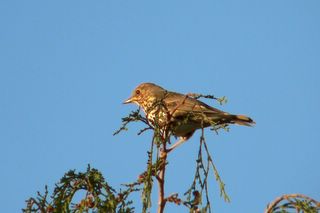
The Song Thrush has definitely been singing, loud and clear using a tall conifer in our garden as a song post. The Great Spotted Woodpecker hasn't been singing as such, but has been much in evidence with his drumming sounds reverberating around the neighbourhood.

15 February 2006

The majestic Hen Harrier

A magic moment, surely one of my best ever birding experiences - watching an adult male Hen Harrier sweeping along the coast, up and across the salt flats and through a flock of startled Golden Plover. Lazily this large, pale grey raptor with distinctive black wingtips floated through the plovers until SNAP - with a quick twist and burst of acceleration he grabbed one out of the air and forced it to the ground.

All was not as it seemed however - after a moment he rose again, empty-clawed, and instead of feeding was forced to carry on gliding along the coast. Successful or not, it was a wonderful thing to watch.

The action happened at Fingeringhoe, a wonderful location on the coast of Essex where tidal marshes combine with mature woodland and several other types of habitat to ensure a rich birding experience. The Hen Harrier (my first) was a highlight, but it was a marvellous day all round. Thousands of Dunlin, Golden and Grey Plover, Shelduck, Redshank, Black-tailed Godwit, Wigeon, and Oystercatcher were joined by other birds throughout the morning - such as three Red-breasted Merganser, a Buzzard, and 400 beautiful glittering Avocet which swept up the tidal channel just a few feet above the water.
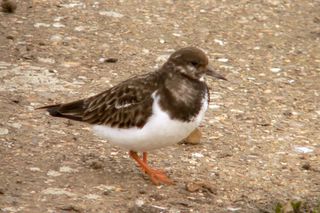


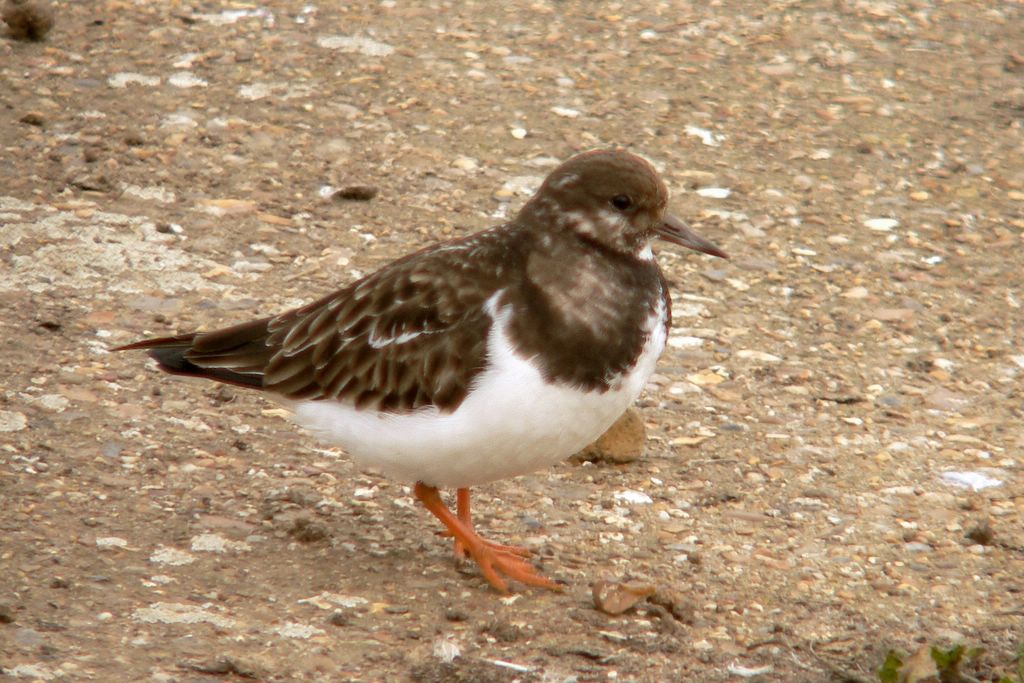
I rounded the day off by returning to Abberton Reservoir. From its main causeway I found my first Turnstones of the year - most obliging they were too, coming within a few feet of the roadside enabling the photograph you see here. I'd rather have had the chance to take pictures of the Hen Harrier, but even without photos I know that particular moment will linger long in the memory.
An awful lot of Coots

We visited the in-laws in Essex this weekend, and as well as being delighted to see that side of the family, I was also quite pleased to get some very good birdwatching in.

Friday afternoon saw me arrive, drop off the wife and child, and head straight off for Abberton Reservoir, one of the area's premier birding spots.

I arrived to be confronted by well in excess of 3,000 Coots - rafts of them spread all over this massive water, impressive when stationary but breathtaking when they scooted low across the water en masses, wings beating together and feet skimming the surface.

There were plenty of other treats to be savoured - impressive numbers of Goldeneye, a lovely pair of Goosander, a couple of Common Sandpipers that have apparently over-wintered here (usually they're migrant birds that that leaves our shores in the winter and only come back in March / April), and neighbouring fields full of Wigeon, Lapwing, Fieldfare, Redwing, Starling and Rook.

6 February 2006

Napton Reservoir and nothing to say

Sunday morning, overslept, walked round Napton Reservoir - nothing much to say. No Bearded Tit, no Cetti's, no rare waterfowl. Nice bacon sandwich when I got home though.

3 February 2006

A little bit of Charlie

OK, I know, The Hornet's Nest (or should that be thehornetsnest) is supposed to be a blog about birding (or birdwatching) in Warwickshire.

But I just couldn't resist one more shot of Charlie - just to showcase the capabilities of the new camera of course ;-)

Besides, he's very relevant to the subject in hand, because he's part of the reason why I'm not actually doing any birdwatching in Warwickshire!

Still, at least I can keep my hand in with a bit of photography - he's a bit bigger than the average birding subject, but no more inclined to stay still long enough to photograph.

29 January 2006

Leam Valley - a rare outing

I've been confined to barracks a fair bit of late, so it was bliss to take an early morning stroll around Leam Valley today.

Cold, clear and empty - just the way I like it. It was one of those mornings where even the ordinary seemed extraordinary and wonderful - no rare birds, but a Jay, Great Spotted and Green Woodpeckers, Cormorants roosting near the weir, a Yellowhammer along the riverside and a tight little flock of Redwing all enlivened my morning.


I even got this snapshot of a Jay - not a great photo by any means, but my best yet of this elusive but magnificent bird.

22 January 2006

Great Spotted Woodpecker - a herald of spring

One of the early heralds of a new spring is the Great Spotted Woodpecker.

Even now in the depths of January, the GSW is already making preparations for the coming season, marking out his territory and advertising for a new mate.

The way they do this is by 'drumming' on tree trunks, rapidly banging their bills to create a noise not unlike a wooden ruler being twanged off the end of a desk.

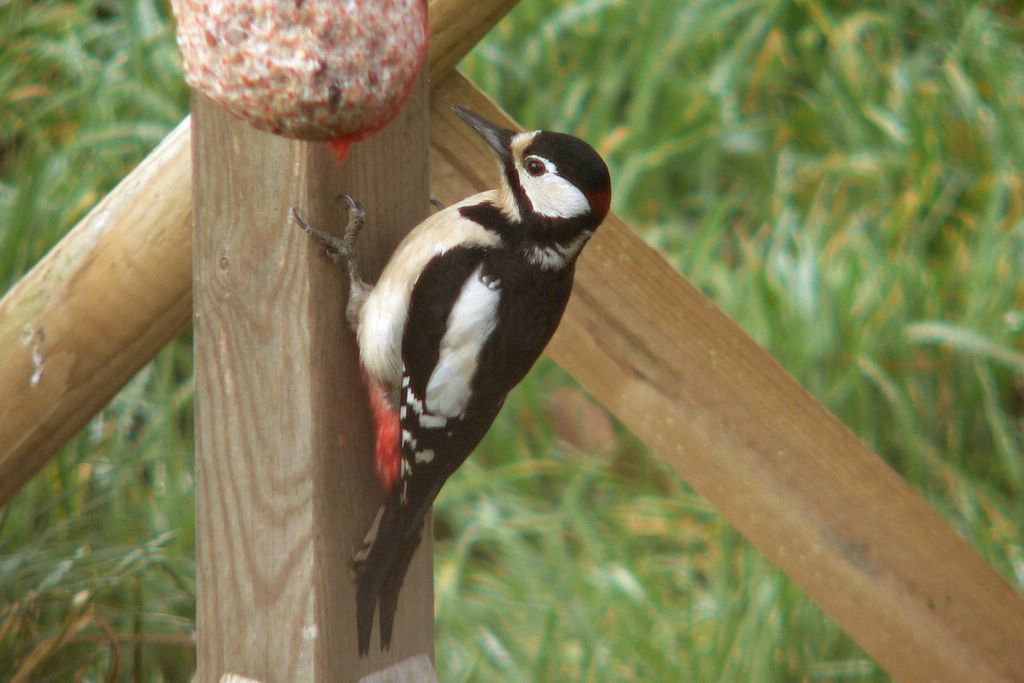
I've heard this from my back garden for the last couple of weeks, and as I stood and watched my garden feeders this morning I finally caught sight of the bird himself. This was a garden first, and very exciting - even more so for having a camera to hand (the pictures were taken through the window on a foggy morning, so not bad considering).


A patch of red on the back of the head (just visible in this photo) means this is definitely a male by the way.

Up up and away

There were several reasons for treating myself to the new camera.

First was the opportunity for snatched shots - no more frantically setting up the digiscoping gear (tripod, scope, camera, adaptor, shutter release and battery pack) to try to capture that sudden and unexpected encounter. This Siskin which I found at Ryton Pools this weekend is a classic example.


The second was the variety and diversity of photography possible - to all intents and purposes this is basically a DSLR minus the interchangeable lenses. It has full automatic or manual controls, a great Leica f2.8 lens which runs from 35-432mm or so, and is at home taking portraits or landscapes as it is taking bird photos.

Here is Charlie to prove the point.


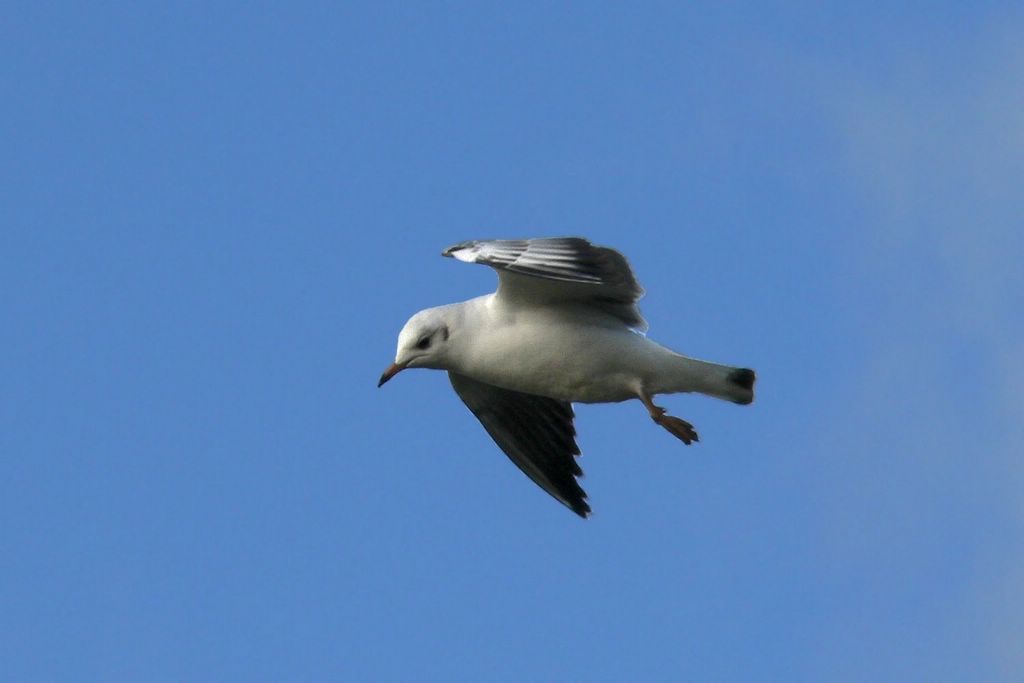
And finally, it can do things you could never do with digiscoping in a thousand year of trying. This quick flight shot of a Black-headed Gull at Draycote is a case in point - easy to take with a few minutes practice and I'm looking forward to plenty more like it.

Where did January go?

Or perhaps titled: "Becoming a father - what happened next".

At last I find a few moments to post and catch up on the last few weeks.

As I already mentioned, I became a father just before Christmas. I think it's fair to say that this has put something of a crimp on my birding.

Not that I'm complaining mind - I couldn't be happier about it- but it's worth recording here in my birding diary since it has undoubtedly had a significant effect on the style and substance of my birding.

Trips out have certainly been few and far between, but I have had a few opportunities to play with my new camera, a Panasonic FZ20 with TCON-17 teleconverter - giving me a cost-effective 730mm zoom lens on a 5mp camera.


I have set a hide up in the garage, and started to adjust the array of feeders for better photographic opportunities. These Greenfinch and House Sparrow photos show what is possible given a bit of decent light and a little bit of planning.

28 December 2005

New arrivals on the home front

The last ten days have seen three new arrivals at Chez Hornet. In order of importance then...

My son, Charles (Charlie) Francis, was born on 22nd December 2006 at 9.20pm, a beautiful baby boy and the most wonderful moment of my life. This is a clear winner, and dwarfs any birding news. However...

There have been two new birds in my garden of late (as you might imagine, I haven't done any 'real' birding since 22nd December!). The first is a striking male Blackcap which has been a regular every day for the last week or so (allowing me to test my new camera, albeit at extreme range from the bedroom window). We have had one of these in the garden each winter we have been here, but they never lose their power to thrill as one of our few winter warblers.


Second has been the pair of Bullfinches which have graced our garden on several occasions, attacking our fruit trees but not yet reaching the bird table. These are also occasional visitors with the power to brighten up any day.

Addendum: Dec 31st - a Jay landed on our trellis today, a welcome garden 'first'. There aren't many mature trees around this part of the village, making this bird a rare occurence locally. Sadly it didn't hang around long enough to have its photo taken.