I haven't stopped blogging, I've just stopped birding - temporarily at least.
Not that I've stopped watching birds, you understand. Or butterflies, bees, dragonflies, fish, plants and everything else from the world around me. It's just that I've not had any time over the last couple of months to settle down for an hour or more to study, appreciate and record them in detail - hence the lack of posts on The Hornet's Nest.
Instead I've been doing what I always do - taking every opportunity to pause for a moment and look at what's around me. So while I've been working, travelling, camping, cycling or gardening I've had loads of great little finds and encounters.
So I've been (literally) buzzed by a buzzard; marvelled at marbled whites; bewitched by brown trout; and entranched by a canalside kingfisher. I've lain on the grass and watched swifts scream overhead; I've found chub gently holding their position against the flow of a lazy summer stream; and I've struggled, as I do every year, to tell my small whites from my green veined, my gatekeepers from my meadow browns.
All of which means that despite the lack of 'proper' birding trips, 2010 has been a vintage summer for me in Warwickshire. Long may it last.
21 July 2010


27 May 2010
Rambles at lunchtime
I'm lucky enough to work close to hills, fields, some fragments of woodland, a stream and a canal; and while the wildlife they hold isn't generally remarkable, it does provide a very pleasant backdrop for lunchtime strolls (whenever work allows).
This week has been a case in point. As I have wandered through the fields and along the stream I have seen and heard species including: kestrel, buzzard, carrion crow, jackdaw, green woodpecker, great spotted woodpecker, nuthatch, chaffinch, goldfinch, chiffchaff, blue tit, great tit, robin, whitethoat, pied wagtail, grey wagtail, blackbird, song thrush, chub, rainbow trout, various butterflies (sorry, can't remember which, but it's a good spot for marbled white later in the summer) and, just as I was about to head back to the office today, the loud clear call of a cuckoo.
It's not a bad haul for a little lunchtime ramble.
Bird of the week: Cuckoo (Cuculus canorus), one of the most distinctive sights and sounds of May, now sadly all too uncommon.
This week has been a case in point. As I have wandered through the fields and along the stream I have seen and heard species including: kestrel, buzzard, carrion crow, jackdaw, green woodpecker, great spotted woodpecker, nuthatch, chaffinch, goldfinch, chiffchaff, blue tit, great tit, robin, whitethoat, pied wagtail, grey wagtail, blackbird, song thrush, chub, rainbow trout, various butterflies (sorry, can't remember which, but it's a good spot for marbled white later in the summer) and, just as I was about to head back to the office today, the loud clear call of a cuckoo.
It's not a bad haul for a little lunchtime ramble.
Bird of the week: Cuckoo (Cuculus canorus), one of the most distinctive sights and sounds of May, now sadly all too uncommon.
Senses working overtime
This morning was too perfect to spoil with anything as frantic as listing or twitching or even 'proper' birding – I resolved instead to simply wander around Fingringoe Reserve and embrace the sights, sounds and smells of the Colne Estuary in May.
The whole place was alive in the sunshine. The very first field that I wandered across held two red-legged partridges, two moorhens and a song thrush. Swallows swooped low over the rough grass and in the distance a little egret flapped past.
Over at the nearby lake, two red-jewelled birds swam briefly on the surface before diving under – little grebes in their finest plumage. Nearby, the first of the chaffinches, whitethoats and blackcaps sang – then suddenly the nightingale song started. It is an explosive, distintive and beautiful sound and, here at least, it is everywhere.
I strolled down to Robbie's Hide to check the tide: it was just heading out, already exposing a wide expanse of undulating mudflat, silvery in the sun. Herring gulls passed lazily by, black-headed gulls busied themselves, and a pair of shelduck just sat, their terracotta panels vivid against the silvery blue all around them.
As I headed back up the hill I started to hear more of the common birds I might expect: a dunnock, a wren, a green woodpecker and a chiffchaff. Then another familiar sound joined in: a turtle dove, drawing me back towards to the trees. Sadly I didn't find it – and it was the same story when a cuckoo started calling just a few minutes later.
Down in the far corner, where the reserve meets farmland, I found familiar farmland birds including skylarks and yellowhammer. Reed warblers sang in nearby reedbeds, and a male marsh harrier made several magnificent overhead passes.
Bird of the day: Marsh harrier (Circus aeruginosus), a magnificent sight which is all too uncommon for those of us living in the west – fortunately they are increasingly common along the east coast.
The whole place was alive in the sunshine. The very first field that I wandered across held two red-legged partridges, two moorhens and a song thrush. Swallows swooped low over the rough grass and in the distance a little egret flapped past.
Over at the nearby lake, two red-jewelled birds swam briefly on the surface before diving under – little grebes in their finest plumage. Nearby, the first of the chaffinches, whitethoats and blackcaps sang – then suddenly the nightingale song started. It is an explosive, distintive and beautiful sound and, here at least, it is everywhere.
I strolled down to Robbie's Hide to check the tide: it was just heading out, already exposing a wide expanse of undulating mudflat, silvery in the sun. Herring gulls passed lazily by, black-headed gulls busied themselves, and a pair of shelduck just sat, their terracotta panels vivid against the silvery blue all around them.
As I headed back up the hill I started to hear more of the common birds I might expect: a dunnock, a wren, a green woodpecker and a chiffchaff. Then another familiar sound joined in: a turtle dove, drawing me back towards to the trees. Sadly I didn't find it – and it was the same story when a cuckoo started calling just a few minutes later.
Down in the far corner, where the reserve meets farmland, I found familiar farmland birds including skylarks and yellowhammer. Reed warblers sang in nearby reedbeds, and a male marsh harrier made several magnificent overhead passes.
Bird of the day: Marsh harrier (Circus aeruginosus), a magnificent sight which is all too uncommon for those of us living in the west – fortunately they are increasingly common along the east coast.
20 May 2010
Brandon in the evening
After a long day at work I decided to make an evening trip to Brandon Marsh for the first time this year, picking up a few wonderful sightings in the process.
The headline birds were a temminck's stint (my first since 2005, that also at Brandon) and the pair of garganey (my first of the year, the male already well into moult).
But alongside these I had a generally wonderful evening in the sunshine, passing a tranquil hour watching lapwing flying lazily over teal pool, a redshank sweeping the far bank, three separate sightings of cuckoos in flight (again, my first of the year), a female great crested grebe carrying at least one youngster on her back, little ringed plovers running all around the main island on east marsh pool, and loads more besides.
I normally do my birding in the morning, but there is something special about a summer evening. This one was no exception.
Bird of the day: Temminck's Stint (Calidris temminckii), a tiny but elongated wader which breeds mainly in the arctic - fewer than 100 are seen every year in England as they pass through on migration, so every sighting is a little bit special.
The headline birds were a temminck's stint (my first since 2005, that also at Brandon) and the pair of garganey (my first of the year, the male already well into moult).
But alongside these I had a generally wonderful evening in the sunshine, passing a tranquil hour watching lapwing flying lazily over teal pool, a redshank sweeping the far bank, three separate sightings of cuckoos in flight (again, my first of the year), a female great crested grebe carrying at least one youngster on her back, little ringed plovers running all around the main island on east marsh pool, and loads more besides.
I normally do my birding in the morning, but there is something special about a summer evening. This one was no exception.
Bird of the day: Temminck's Stint (Calidris temminckii), a tiny but elongated wader which breeds mainly in the arctic - fewer than 100 are seen every year in England as they pass through on migration, so every sighting is a little bit special.
19 May 2010
Wonderful moments in May

Lunchtime walks in the fields around my office have provided particularly fruitful this week: a best-ever nuthatch experience on Tuesday as one of these little blue gems failed to notice me less than three metres away; trees and hedges full of warbler song; not one but two pairs of grey wagtails on the little stream behind my office; and kestrels and buzzards hunting over the rough fields that make up the land around the 'mount'.
And it's a similar story in the garden, with house sparrows and starlings busy making nests and getting ready to feed their young, blue tits dashing hither and thither, and this magnificent male bullfinch (see picture) making a prolonged appearance outside my french doors tonight as I settled down to watch some tv.
Bird of the day(s): Nuthatch (Sitta europaea), a wonderful woodpecker-like bird which never fails to delight on the rare occasions it shows itself - generally it is easier to hear than to see.
16 May 2010
A day 'off patch'
I joined up with a friend today for a morning's birding away from my usual haunts.
 The early rain as I drove to our meeting point turned out to be a false alarm - the shower passed over, the chill north wind quickly died down and we were left with a superb morning.
It turned out to be even more superb as the birds turned up: as many as 10 ringed plover, three pairs of little ringed plover, skies full of swifts and sand martins, a pair of summer plumaged dunlin, a redshank, plenty of warblers in full song (including several lesser whitethroat and a particularly showy sedge warbler), linnets and meadow pipits aplenty, and lot more besides.
Alongside these were butterflies and dragonflies enjoying the steadily rising temperatures: orange-tip, speckled wood, small copper and brimstone, plus several superb broad-bodied chasers (pictured).
Bird of the day: Swift (Apus apus); despite all the waders and warblers, it was the low flying and ever-wonderful swifts that did most to captivate me this morning.
 The early rain as I drove to our meeting point turned out to be a false alarm - the shower passed over, the chill north wind quickly died down and we were left with a superb morning.
It turned out to be even more superb as the birds turned up: as many as 10 ringed plover, three pairs of little ringed plover, skies full of swifts and sand martins, a pair of summer plumaged dunlin, a redshank, plenty of warblers in full song (including several lesser whitethroat and a particularly showy sedge warbler), linnets and meadow pipits aplenty, and lot more besides.
Alongside these were butterflies and dragonflies enjoying the steadily rising temperatures: orange-tip, speckled wood, small copper and brimstone, plus several superb broad-bodied chasers (pictured).
Bird of the day: Swift (Apus apus); despite all the waders and warblers, it was the low flying and ever-wonderful swifts that did most to captivate me this morning.
13 May 2010
And a nightingale sang...
 Another weekend away from home, so again no Warwickshire birding (missing in the process a pair of Wood Sandpiper at Brandon :-( good job I've long since given up worrying about the size of my patch and county lists).
Instead I was back in Essex, and so took a couple of quick trips to Fingringoe, the Essex Wildlife Trust reserve on the shores of the Colne Estuary, not far from Colchester.
 The reserve is famous for its nightingales - perhaps 30 or 40 singing birds each spring. This weekend they were in full voice, and I finally managed to lock on to one for good views as well - sadly the only photograph I managed was massively out of focus through the foliage.
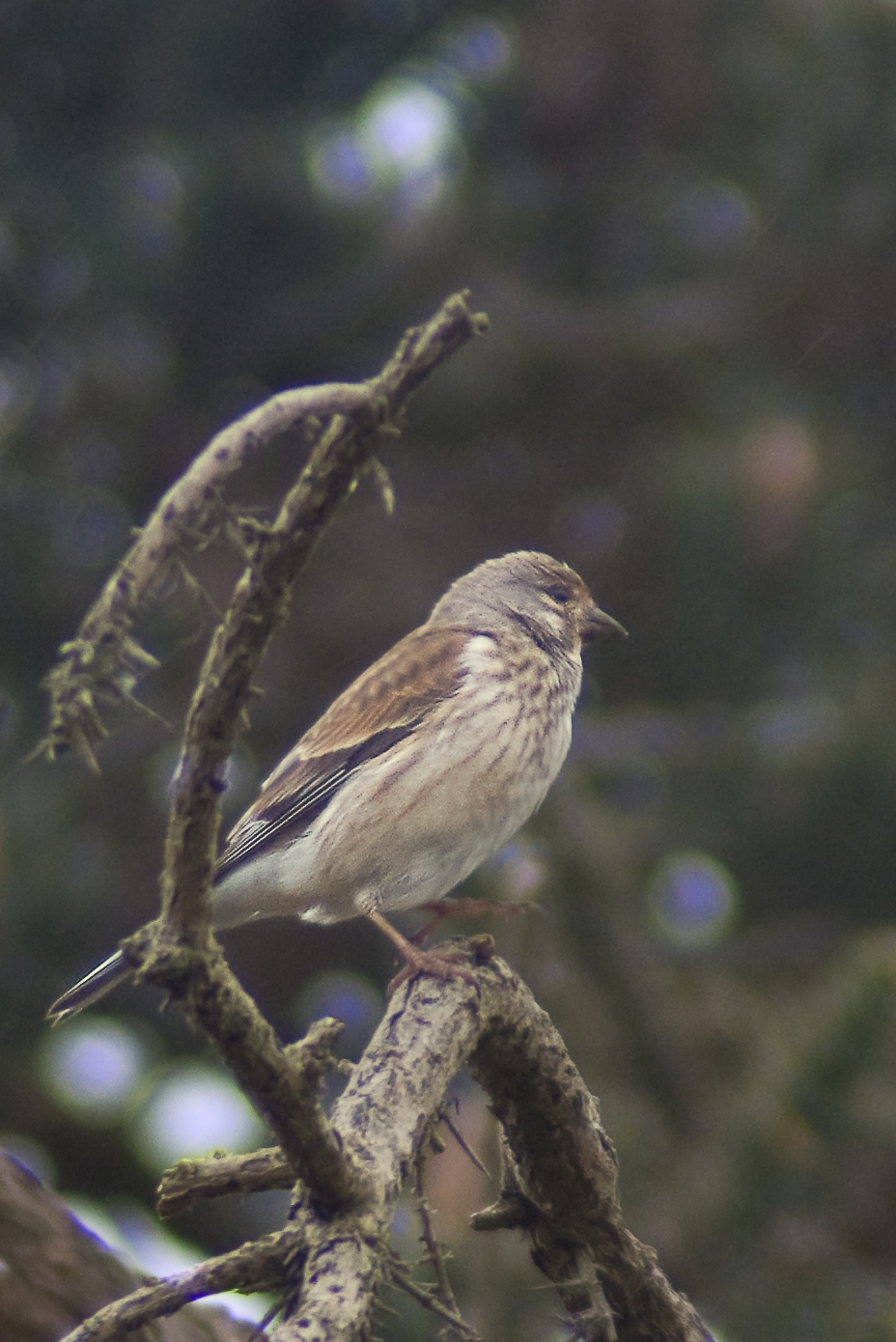 There were, however, good photo opps for two birds I don't often get that close to - first a red-legged partridge, of which there were dozens running around the site, and second a pair of linnets, perched on gorse near the salt marshes.
Other decent birds across the two days including a pair of marsh harriers, a cettis, a lone reed warbler, and among the shoreline waders a pair each of summer plumaged dunlin and grey plover, neither birds I see much of in Warwickshire at this time of year.
Bird of the day: Nightingale (Luscinia megarhynchos), dull brown and skulky little birds, about the size of a robin: a bird who's ordinariness is forgiven and forgotten the moment it starts to sing an astonishing array of songs and noises.
26 April 2010
A week of firsts
No 'proper' birding this week, but spring rolled on without me and I still had opportunities to snatch a few minutes here and find a succession of 'firsts' for the year.
Last Friday (16th April), I saw my first swallow in Radford Semele, a male who flashed low past my bedroom window. Within a week there were a few of them about, swooping regularly over my garden, and the first house martins had also arrived to join then (first noticed Saturday 27th).
The first pink blooms opened on the red campion in my garden on Saturday; and on Sunday I took a brief family trip to Brandon Marsh and found my first bluebells of the year.
Brandon itself was alive with bird song, the wood (New Hare Covert?) being particularly noiseome with blackcap, chiffchaff, willow warbler, wren and an active great spotted woodpecker. I also found my first whitethroats of the year, and heard my first sedge and reed warblers.
I'm guessing / hoping it will be the swifts next - I know there are a few around, but I've yet to spot one. Assuming this year follows the pattern of recent times, the air right over my work car park usually starts to deliver about now, so fingers crossed.
Last Friday (16th April), I saw my first swallow in Radford Semele, a male who flashed low past my bedroom window. Within a week there were a few of them about, swooping regularly over my garden, and the first house martins had also arrived to join then (first noticed Saturday 27th).
The first pink blooms opened on the red campion in my garden on Saturday; and on Sunday I took a brief family trip to Brandon Marsh and found my first bluebells of the year.
Brandon itself was alive with bird song, the wood (New Hare Covert?) being particularly noiseome with blackcap, chiffchaff, willow warbler, wren and an active great spotted woodpecker. I also found my first whitethroats of the year, and heard my first sedge and reed warblers.
I'm guessing / hoping it will be the swifts next - I know there are a few around, but I've yet to spot one. Assuming this year follows the pattern of recent times, the air right over my work car park usually starts to deliver about now, so fingers crossed.
18 April 2010
It's a wonderful world
Just a lovely morning's birding and walking; I simply couldn't have asked for more.
 The remnant of a late frost was still on the ground when I arrived just after 7am at Leam Valley, with mist rising from the river and a slight chill in the air. All of this quickly burned off as the clear blue sky and brilliant sun set about their work; by 9am I was in shirt sleeves.
The most notable change from a couple of weeks ago was the number of chiffchaffs calling - the one that greeted me in the car park was the first of five in all. The other notably 'spring-y' birds were a lone willow warbler and two singing blackcaps - the first of which gave me my first decent sighting of one for quite some time (see photo).
Aside from these classic spring sightings, there was bird song and frantic activity to enjoy right the way across the reserve: song thrushes in full voice; a sparrowhawk cruising overhead; a couple of treecreeper (nearly got a photo of one of the buggers at last, see attempt below); and a pair of snipe on the scrape.
A total of 31 species represents a good morning's birding at Leam Valley, but actually my favourite sighting of the morning wasn't a bird at all - it was a small cluster of fritillaries in a little clearing in the woods. These are stunning little flowers, and a huge favourite of mine that I rarely see.
 So, a great morning, and set to get better. I went to Brandon for a quick walk with the family, and as usual I dashed off down to East Marsh for a quick look-see on my own. Half way down the track I was pointed in the direction of the day's surprise visitor - the avocet from earlier in the week had returned! I hot-footed it down to River Pool and sure enough, there it was. A wonderful bird wherever you see it, but all the more wonderful in Warwickshire (I might be biased here).
And there was plenty more on East Marsh pool including little ringed plovers (3), snipe (5), oystercatchers (3), a redshank, and a freshly returned common tern.
 The grand total for the day reached 51 species, a pretty decent haul for a bit of gentle wandering round two of my favourite reserves.
 Bird of the day: Avocet (Recurvirostra avosetta), it simply has to be. A symbol of hope for the conservation movement and a beautiful elegant bird to-boot.
 Flower of the day: Snake's head fritillary (Fritillaria meleagris); it is so unusual and beautiful it is hard to believe that it's a genuinely natural and native wildflower, rather than an exotic import or some specially-bred garden centre special. Rather rare these days, so a real gem of a find.
Oh, a just a word on the photographs. The usual hotchpotch, some OK, others little more than record shots. The treecreeper and cetti's warbler are included because I've been trying to photograph these little %^**&ers for years, and these are both the closest I've come - in both cases I couldn't get a clear focus because of intervening foliage (plus slow lenses plus no talent).
The willow warbler was at least clearly visible, if distant; but the award for obliging behaviour goes to the dunnock, who sat about two metres in front of me singing his little heart out while I photographed him. Thanks fella.

 The remnant of a late frost was still on the ground when I arrived just after 7am at Leam Valley, with mist rising from the river and a slight chill in the air. All of this quickly burned off as the clear blue sky and brilliant sun set about their work; by 9am I was in shirt sleeves.
The most notable change from a couple of weeks ago was the number of chiffchaffs calling - the one that greeted me in the car park was the first of five in all. The other notably 'spring-y' birds were a lone willow warbler and two singing blackcaps - the first of which gave me my first decent sighting of one for quite some time (see photo).
Aside from these classic spring sightings, there was bird song and frantic activity to enjoy right the way across the reserve: song thrushes in full voice; a sparrowhawk cruising overhead; a couple of treecreeper (nearly got a photo of one of the buggers at last, see attempt below); and a pair of snipe on the scrape.
A total of 31 species represents a good morning's birding at Leam Valley, but actually my favourite sighting of the morning wasn't a bird at all - it was a small cluster of fritillaries in a little clearing in the woods. These are stunning little flowers, and a huge favourite of mine that I rarely see.
 So, a great morning, and set to get better. I went to Brandon for a quick walk with the family, and as usual I dashed off down to East Marsh for a quick look-see on my own. Half way down the track I was pointed in the direction of the day's surprise visitor - the avocet from earlier in the week had returned! I hot-footed it down to River Pool and sure enough, there it was. A wonderful bird wherever you see it, but all the more wonderful in Warwickshire (I might be biased here).
And there was plenty more on East Marsh pool including little ringed plovers (3), snipe (5), oystercatchers (3), a redshank, and a freshly returned common tern.
 The grand total for the day reached 51 species, a pretty decent haul for a bit of gentle wandering round two of my favourite reserves.
 Bird of the day: Avocet (Recurvirostra avosetta), it simply has to be. A symbol of hope for the conservation movement and a beautiful elegant bird to-boot.
 Flower of the day: Snake's head fritillary (Fritillaria meleagris); it is so unusual and beautiful it is hard to believe that it's a genuinely natural and native wildflower, rather than an exotic import or some specially-bred garden centre special. Rather rare these days, so a real gem of a find.
Oh, a just a word on the photographs. The usual hotchpotch, some OK, others little more than record shots. The treecreeper and cetti's warbler are included because I've been trying to photograph these little %^**&ers for years, and these are both the closest I've come - in both cases I couldn't get a clear focus because of intervening foliage (plus slow lenses plus no talent).
The willow warbler was at least clearly visible, if distant; but the award for obliging behaviour goes to the dunnock, who sat about two metres in front of me singing his little heart out while I photographed him. Thanks fella.

16 April 2010
Spring rolls out
 Spring continues to bloom in Radford Semele, although I am only getting a few fleeting opportunities to see it unfold :-(
In the garden, the daffodils are gradually fading; in a matter of days they will be replaced by the few tulips that I have. Bird song still wakes me every morning, most notably our resident song thrush. He might be a bit early for my liking, but at least he is more musical than the house sparrows living in my loft space!
Meanwhile the two jays have become regular garden visitors for the first time ever (one pictured left), and there are signs that we might have breeding blue tits again, possibly in our bird box.
This morning saw a real spring landmark though - my first village swallow of the year, flashing past the front of our house at 10am this morning.
Bird of the week: Barn Swallow (Hirundo rustica); agile, beautiful and a quintissential bird of the British spring and summer.
11 April 2010
A big spring morning
With the family away for the weekend, it was just like the old days today - an early start, five hours 'in the field', four sites, 50 odd species of birds - bloody marvellous.
 I started at Ufton Fields, always a lovely walk if not always the easiest site for birding. I quickly found my first Willow Warblers of the year; they were showing well along with 4/5 song thrushes, a similar number of chiffchaffs and other favourites such as green and great spotted woodpeckers, three jays, two bullfinch pairs, a treecreeper and a reed bunting. As I packed up to leave, I was chuffed to hear my first blackcap of the year, singing near the car park.
I moved on to Napton Reservoir, which was rammed with fishermen (presumably taking part in a match; they all looked very serious). A stroll from one end to the other added the usual (tufted ducks, mallards and coots, two pairs of great crested grebes and a total of 11 mute swans) as well as at least one cetti's warbler, skylarks over nearby fields, two more bullfinch pairs and two swallows.
I drew an almost complete blank on nearby Napton Hill, adding only stock dove and kestrel to my morning haul. So I moved on to Brandon Marsh where there was plenty about for a big finale: scores of sand martins (my first of the year) buzzing around the artificial nesting bank; a pair each of ringed plover, oystercatcher and redshank; nine snipe; and good numbers of lapwings.
Bird of the day: Willow warbler (Phylloscopus trochilus), although it's a tough call between these and the sand martins, both favourite arrivals at this time of year. The soft floating call of the willow warbler carries the day though; from now until September this will be my favourite sound of the English countryside.

I moved on to Napton Reservoir, which was rammed with fishermen (presumably taking part in a match; they all looked very serious). A stroll from one end to the other added the usual (tufted ducks, mallards and coots, two pairs of great crested grebes and a total of 11 mute swans) as well as at least one cetti's warbler, skylarks over nearby fields, two more bullfinch pairs and two swallows.
I drew an almost complete blank on nearby Napton Hill, adding only stock dove and kestrel to my morning haul. So I moved on to Brandon Marsh where there was plenty about for a big finale: scores of sand martins (my first of the year) buzzing around the artificial nesting bank; a pair each of ringed plover, oystercatcher and redshank; nine snipe; and good numbers of lapwings.
Bird of the day: Willow warbler (Phylloscopus trochilus), although it's a tough call between these and the sand martins, both favourite arrivals at this time of year. The soft floating call of the willow warbler carries the day though; from now until September this will be my favourite sound of the English countryside.
2 April 2010
Napton - fantasy vs reality
When I close my eyes and picture Napton in the springtime, I see a vibrant, bustling migration hotspot; a hillside and reservoir alive with opportunity. I see wheatear hopping on every quarry rock; whinchat bouncing on every fence post; bushes dripping with firecrest; and the water alive with the spectacle of a hundred dancing sand martin (with a few more wheatear and perhaps an early wader thrown in for good measure). Unfortunately, when I open my eyes and actually go there, it tends not to live up to this fantasy.
Not that it's a poor place to go birding: far from it in fact. Napton Hill has already thrown up one of the best birds of early spring; one of the aforementioned firecrests. It's just that... well, it's inevitable that if you get very few opportunities to go birding, then you invest each and every visit with the kind of wishful thinking that is unlikely to ever come true.
Having said all of that, and despite today's lack of firecrest and whinchat (not to mention passage waders, rare warblers and even sand martin), I rather enjoyed my little visit to Napton Hill and the nearby reservoir today.
First of all there was the sheer joy of being out and about in the springtime, even if it did feel a little autumnal at times. Second was the satisfaction of being safely back home by the time the forecast rain set in for the day. And third, there were enough birds around to at least satisfy, if not to truly set the pulse racing.
At the top of the hill there were plenty of goldfinch, greenfinch, chaffinch, blackbird and wren. There was loud birdsong all around, including several singing song thrushes (easier to write than to say). On the hillsides there were great tits, blue tits and long-tailed tits aplenty; a treecreeper scurrying through them; a male reed bunting down in the quarry; and a few redwing and largish flocks of fieldfare and starling, presumably preparing to set off 'home' for the summer. Not one but two pairs of buzzards circled overhead, and four singing chiffchaffs confirmed that this was definitely time to celebrate spring.
That sentiment was given a further boost when I arrived at the reservoir and found two male swallows criss-crossing the surface. For all the talk of a return to a 'normal' (i.e. later) spring this year, April 2nd equals my earliest sighting for a swallow across the six years I have kept records. Other birds around the reservoir included: ten mute swans (an unusually high number; I also found 24 in a nearby field); a pair of reed buntings; three lapwings in a neighbouring field; skylarks in the same field; two calling Cettis Warblers; and two pairs of great crested grebes.
Bird of the day: Barn Swallow (Hirundo rustica); one of iconic birds of a British summer, newly arrived back from its south african wintering grounds.
Not that it's a poor place to go birding: far from it in fact. Napton Hill has already thrown up one of the best birds of early spring; one of the aforementioned firecrests. It's just that... well, it's inevitable that if you get very few opportunities to go birding, then you invest each and every visit with the kind of wishful thinking that is unlikely to ever come true.
Having said all of that, and despite today's lack of firecrest and whinchat (not to mention passage waders, rare warblers and even sand martin), I rather enjoyed my little visit to Napton Hill and the nearby reservoir today.
First of all there was the sheer joy of being out and about in the springtime, even if it did feel a little autumnal at times. Second was the satisfaction of being safely back home by the time the forecast rain set in for the day. And third, there were enough birds around to at least satisfy, if not to truly set the pulse racing.
At the top of the hill there were plenty of goldfinch, greenfinch, chaffinch, blackbird and wren. There was loud birdsong all around, including several singing song thrushes (easier to write than to say). On the hillsides there were great tits, blue tits and long-tailed tits aplenty; a treecreeper scurrying through them; a male reed bunting down in the quarry; and a few redwing and largish flocks of fieldfare and starling, presumably preparing to set off 'home' for the summer. Not one but two pairs of buzzards circled overhead, and four singing chiffchaffs confirmed that this was definitely time to celebrate spring.
That sentiment was given a further boost when I arrived at the reservoir and found two male swallows criss-crossing the surface. For all the talk of a return to a 'normal' (i.e. later) spring this year, April 2nd equals my earliest sighting for a swallow across the six years I have kept records. Other birds around the reservoir included: ten mute swans (an unusually high number; I also found 24 in a nearby field); a pair of reed buntings; three lapwings in a neighbouring field; skylarks in the same field; two calling Cettis Warblers; and two pairs of great crested grebes.
Bird of the day: Barn Swallow (Hirundo rustica); one of iconic birds of a British summer, newly arrived back from its south african wintering grounds.
21 March 2010
Early spring at Leam Valley and Napton Reservoir
The slight mist that greeted me as I opened the curtains in Radford Semele
had reached ridiculously dense levels by the time I reached Napton. Realising that I'd need radar to find anything in the gloom, I turned around and headed to Leam Valley instead.
Good move. There was a little mist when I arrived, but that soon burned off and left me with a perfect spring morning. At first I could only see the larger birds in the mist - the carrion crows, wood pigeons and magpies. Then the 'tinies' appeared - singing wrens, a treecreeper and a goldcrest. Soon everything was singing in the sunshine.
 Four lesser redpolls were among the goldfinches in the alder trees, dunnocks sang everwhere and two song thrushes were in good voice. The scrape looked fantastic, and although there were initially few birds on view, a little time revealed plenty. A snipe lurked deep in the reeds, a male sparrowhawk flashed by, a pair of reed bunting were 'courting' in the reeds and scrub, a male tufted duck floated out, my first ever Leam Valley little grebe appeared, and then, at 8.37am my first chiffchaff of the year started singing at the back of the scrape.
 A fantastic haul for this little reserve, and one which bodes very well for the future here - the scrape in particular is definitely starting to mature.
With the mist now gone, I decided to make a dash for Napton Reservoir. The trip added plenty to my morning - common gull, pochard, lapwing, cettis warbler, skylark, another chiffchaff, and then, in a definite case of saving the best 'til last, a barn owl. Despite the bright mid-morning sun it burst out of a hedgerow then sat watching me for half an hour, giving me my best views for ages of this fabulous bird.
In fact, it would have been a perfect day if I hadn't had to miss Napton Hill for reasons of urgent DIY commitments. Annoying enough in itself, but super-annoying when I read several hours later that a firecrest had been up there all day. Hmm, still never seen one of those then...
Bird of the day: Barn owl (Tyto alba), a familar but quite superb bird; elegant, ghostlike, haunting.
had reached ridiculously dense levels by the time I reached Napton. Realising that I'd need radar to find anything in the gloom, I turned around and headed to Leam Valley instead.
Good move. There was a little mist when I arrived, but that soon burned off and left me with a perfect spring morning. At first I could only see the larger birds in the mist - the carrion crows, wood pigeons and magpies. Then the 'tinies' appeared - singing wrens, a treecreeper and a goldcrest. Soon everything was singing in the sunshine.
 Four lesser redpolls were among the goldfinches in the alder trees, dunnocks sang everwhere and two song thrushes were in good voice. The scrape looked fantastic, and although there were initially few birds on view, a little time revealed plenty. A snipe lurked deep in the reeds, a male sparrowhawk flashed by, a pair of reed bunting were 'courting' in the reeds and scrub, a male tufted duck floated out, my first ever Leam Valley little grebe appeared, and then, at 8.37am my first chiffchaff of the year started singing at the back of the scrape.
With the mist now gone, I decided to make a dash for Napton Reservoir. The trip added plenty to my morning - common gull, pochard, lapwing, cettis warbler, skylark, another chiffchaff, and then, in a definite case of saving the best 'til last, a barn owl. Despite the bright mid-morning sun it burst out of a hedgerow then sat watching me for half an hour, giving me my best views for ages of this fabulous bird.
In fact, it would have been a perfect day if I hadn't had to miss Napton Hill for reasons of urgent DIY commitments. Annoying enough in itself, but super-annoying when I read several hours later that a firecrest had been up there all day. Hmm, still never seen one of those then...
Bird of the day: Barn owl (Tyto alba), a familar but quite superb bird; elegant, ghostlike, haunting.
19 March 2010
'My' Spring is here
Today is the first day of 'my' Spring. It actually looked pretty 'springy' yesterday, but frankly I was too tired to care (late night working and early starts). Today was different.
I woke up full of the joys. The sun was out, the first daffodils were out in my garden, and a woodpecker tapped away in nearby trees.
At lunchtime I trotted down to the Preston Bagot section of the canal, and found the very earliest signs of Spring - not the chiffchaffs I was hoping for, but bumblebees, wild garlic bursting through the river banks, song thrushes in full throat. Then I got back to the computer and watched the reports coming in - chiffchaffs, sand martin and the rest.
Bring it on.
I woke up full of the joys. The sun was out, the first daffodils were out in my garden, and a woodpecker tapped away in nearby trees.
At lunchtime I trotted down to the Preston Bagot section of the canal, and found the very earliest signs of Spring - not the chiffchaffs I was hoping for, but bumblebees, wild garlic bursting through the river banks, song thrushes in full throat. Then I got back to the computer and watched the reports coming in - chiffchaffs, sand martin and the rest.
Bring it on.
15 March 2010
Waiting for 'the change'
At the risk of sounding like a bunch of menopausal women, all birders are currently waiting for The Change.
 Nothing to do with our own biology or time of life of course (well not for most of us anyway). Instead it is the changing of the birding season, as winter gives way to spring and the birds start their mass migrations.
It is an event which sees our over-wintering birds - the fieldfares and redwings, the geese and wildfowl, and the millions of 'foreign' blackbirds, robins and starlings which spend winter in our gardens - return north and east to their own breeding territories. And to fill the void we receive in turn our summer birds, newly returned from Africa and the south - our chiffchaffs, willow warblers, common terns, swifts, martins and, of course, our swallows.
Unfortunately it's taking its time this year.
The mild winters of recent years have set a pattern of early springs, with everything kicking off in earnest from mid February onwards. Now, following a decidedly wintery winter, it's back to normal, and so birders are left staring at pretty much the same birds that they've been staring at for weeks. In short, most of us are a bit bored.
 So, despite feeling a little under the weather on Sunday morning, I was pleased to be back at Fingringhoe in Essex to see at close quarters one 'change' that can be relied on every single day - the turning of the tide. The last half-an-hour of the tide coming in nearly always offers the best birding at estuary locations, with huge flocks of waders, wildfowl and geese being forced closer and closer to the shore (and to the birder in his hide), jostling for position on the diminishing mudflats and finally settling down to wait until the mud flats are opened again.
I was particularly lucky with my timing on Sunday, settling down in the shoreline hide just as this spectacle started.
I was therefore in the best place to enjoy great views of hundreds of dunlins, knots, redshank, curlews, grey plover, brent geese, shelduck, wigeon, lapwing, oystercatchers and more. Among them were a few scarcer birds - a couple of turnstones were my first of 2010, likewise the marsh harrier that soared overhead.
 And once the excitement was over, I settled down with scope and Canon G9 to see if digiscoping was viable with this less-than-perfect combination. It was, up to a point, so I spent a happy half hour photographing birds including a grey plover, one species I had never photographed before.
Bird of the day: Marsh harrier (Circus aeruginosus), a magnificent broad-winged raptor which is getting more and more common along the east of the country (still a long way to go before it becomes more than an occasional sighting in Warwickshire though).

It is an event which sees our over-wintering birds - the fieldfares and redwings, the geese and wildfowl, and the millions of 'foreign' blackbirds, robins and starlings which spend winter in our gardens - return north and east to their own breeding territories. And to fill the void we receive in turn our summer birds, newly returned from Africa and the south - our chiffchaffs, willow warblers, common terns, swifts, martins and, of course, our swallows.
Unfortunately it's taking its time this year.
The mild winters of recent years have set a pattern of early springs, with everything kicking off in earnest from mid February onwards. Now, following a decidedly wintery winter, it's back to normal, and so birders are left staring at pretty much the same birds that they've been staring at for weeks. In short, most of us are a bit bored.
 So, despite feeling a little under the weather on Sunday morning, I was pleased to be back at Fingringhoe in Essex to see at close quarters one 'change' that can be relied on every single day - the turning of the tide. The last half-an-hour of the tide coming in nearly always offers the best birding at estuary locations, with huge flocks of waders, wildfowl and geese being forced closer and closer to the shore (and to the birder in his hide), jostling for position on the diminishing mudflats and finally settling down to wait until the mud flats are opened again.
I was particularly lucky with my timing on Sunday, settling down in the shoreline hide just as this spectacle started.
I was therefore in the best place to enjoy great views of hundreds of dunlins, knots, redshank, curlews, grey plover, brent geese, shelduck, wigeon, lapwing, oystercatchers and more. Among them were a few scarcer birds - a couple of turnstones were my first of 2010, likewise the marsh harrier that soared overhead.
 And once the excitement was over, I settled down with scope and Canon G9 to see if digiscoping was viable with this less-than-perfect combination. It was, up to a point, so I spent a happy half hour photographing birds including a grey plover, one species I had never photographed before.
Bird of the day: Marsh harrier (Circus aeruginosus), a magnificent broad-winged raptor which is getting more and more common along the east of the country (still a long way to go before it becomes more than an occasional sighting in Warwickshire though).
28 February 2010
Not thinking about bitterns
I must not dwell on the bitterns, I must not dwell on the bitterns, I must not... oh, I give up. Hell and damnation, those blasted bitterns evaded me again at Brandon.
Right, now I've got that out of the my system, I can confess to having quite enjoyed my morning vigil at Brandon, even if the bitterns failed to show up, again.
This was my third or fourth lengthy attempt to see one this winter, a task you wouldn't think was so hard, given there are believed to be at least three on the site. I was informed when I arrived at 8am that one had recently crossed the cut channel and walked into the reedbed just below the hide window - surely good news.
Sadly it was not to be, and two-and-a-half hours later it had still not reappeared. While I bow to no one in my admiration of the bittern's amazing powers of camouflage and concealment, a quick trot back across the channel would have been welcome.
 Anyway, aside from going cross-eyed watching reedbeds for non-appearing bitterns, it was a good morning. Out on east marsh pool there were the usual good numbers of shovellers and lapwing (c 250 of the latter), a large number of snipe (I found 16 but heard reports of up to 31), and brilliant views of two water rail - a bird I hear far more often that I see (indeed it's probably more than a year since I got views anywhere near this good - sadly the poor light meant poor shutter speed meant... well, you can see for yourself, disappointing photos).
Around the margins were at least two loudly singing cettis warblers, and a male reed bunting which showed well in reeds in front of the hide.
However, the highlight of the morning, aside from everyone helpfully sharing their best bittern photos with me, was catching the arrival of the year's first Ringed Plover. It circled the water twice, landed on the main island, stayed for long enough for everyone to lock on to it and confirm its identity, and then headed off towards the river. Fingers crossed it was an early recce by one of Brandon's regular nesting waders (the oystercatchers apparently having been back for 10 days or so).
Oh, and one last thing. If you're an occasional visitor to Brandon, or even a seasoned regular, you might find the excellent Brandon Googlemap prepared by Keith Yates of interest:. He is the author of the Birding Afloat blog and a regular with the conservation team at Brandon, so is well placed to help you find some of the less well-known corners of this excellent reserve ps. if you read this Keith, I suspect we spoke on Sunday morning for quite some time without either of us knowing the other!
Bird of the day: Ringed Plover (Charadrius hiaticula), a small and distinctively marked wading bird which has increasingly moved inland and taken advantage of flooded gravel pits like Brandon for its summer breeding grounds.
Right, now I've got that out of the my system, I can confess to having quite enjoyed my morning vigil at Brandon, even if the bitterns failed to show up, again.
This was my third or fourth lengthy attempt to see one this winter, a task you wouldn't think was so hard, given there are believed to be at least three on the site. I was informed when I arrived at 8am that one had recently crossed the cut channel and walked into the reedbed just below the hide window - surely good news.
Sadly it was not to be, and two-and-a-half hours later it had still not reappeared. While I bow to no one in my admiration of the bittern's amazing powers of camouflage and concealment, a quick trot back across the channel would have been welcome.

Around the margins were at least two loudly singing cettis warblers, and a male reed bunting which showed well in reeds in front of the hide.
However, the highlight of the morning, aside from everyone helpfully sharing their best bittern photos with me, was catching the arrival of the year's first Ringed Plover. It circled the water twice, landed on the main island, stayed for long enough for everyone to lock on to it and confirm its identity, and then headed off towards the river. Fingers crossed it was an early recce by one of Brandon's regular nesting waders (the oystercatchers apparently having been back for 10 days or so).
Oh, and one last thing. If you're an occasional visitor to Brandon, or even a seasoned regular, you might find the excellent Brandon Googlemap prepared by Keith Yates of interest:. He is the author of the Birding Afloat blog and a regular with the conservation team at Brandon, so is well placed to help you find some of the less well-known corners of this excellent reserve ps. if you read this Keith, I suspect we spoke on Sunday morning for quite some time without either of us knowing the other!
Bird of the day: Ringed Plover (Charadrius hiaticula), a small and distinctively marked wading bird which has increasingly moved inland and taken advantage of flooded gravel pits like Brandon for its summer breeding grounds.
20 February 2010
Other commitments
As I sit and write this quick update at 12.30pm on a glorious saturday afternoon, it looks increasingly likely that I am going to miss out on birding this weekend :-(
 Family, friends, jobs to do, places to be, drinks and fine dining, blah blah blah - all very nice of course, but are they any substitute for a freezing cold reservoir on a wintery morning? Erm....
Anyway, not very much birding action to report then, except to note that I've just had a jay in the garden, an extremely uncommon sighting for me (only the second I can recall in the garden, and the first for a couple of years). Frankly it did pretty well just to force its way through the perpetual state of warfare that exists in my garden between the starlings and the house sparrows, a conflict that has been heightened in recent weeks by their mutual appreciation of a new fat ball recipe I've been using. The starlings are particular fans, and have taken up a near permanent position around the two feeders, much to everyone else's chagrin - including mine. I only started making the damn things to reduce the cost of feeding the birds. Now that the homemade variety are are proving twice as popular as the shop-bought variety, I'm pretty much back where I started - half the price but twice as many.
Right then, I'm off to the shops - I need a wheelbarrow full of suet, lard, dried fruit...
Bird of the day: Jay (Garrulus glandarius), one of the world's most beautiful crows, vivid of colour and yet surprisingly hard to see, especially for non birdwatchers.
 Family, friends, jobs to do, places to be, drinks and fine dining, blah blah blah - all very nice of course, but are they any substitute for a freezing cold reservoir on a wintery morning? Erm....
Anyway, not very much birding action to report then, except to note that I've just had a jay in the garden, an extremely uncommon sighting for me (only the second I can recall in the garden, and the first for a couple of years). Frankly it did pretty well just to force its way through the perpetual state of warfare that exists in my garden between the starlings and the house sparrows, a conflict that has been heightened in recent weeks by their mutual appreciation of a new fat ball recipe I've been using. The starlings are particular fans, and have taken up a near permanent position around the two feeders, much to everyone else's chagrin - including mine. I only started making the damn things to reduce the cost of feeding the birds. Now that the homemade variety are are proving twice as popular as the shop-bought variety, I'm pretty much back where I started - half the price but twice as many.
Right then, I'm off to the shops - I need a wheelbarrow full of suet, lard, dried fruit...
Bird of the day: Jay (Garrulus glandarius), one of the world's most beautiful crows, vivid of colour and yet surprisingly hard to see, especially for non birdwatchers.
14 February 2010
Back on patch: winter in Leam Valley
As well as the plentiful bounty of estuary watching and twitching, there is a third type of birding to be enjoyed / endured at this time of year - the dutiful trudge round the local patch to make sure nothing unexpected is overwintering there.
 I say endured because a local patch like mine, an inland mosaic of river, wood, shallow pools, scrub and meadows, is not at its birding best in mid-February - far from it in fact. But I cannot imagine anything more soul destroying than missing some scarcity or other so close to home, and so I try to make as many visits as weather and enthusiasm allow.
Given all my reservations, this morning at Leam Valley was fine. Uneventful, true, but the weather was bright and there were at least a few birds on offer. Great and blue tits were most in evidence, along with blackbirds wherever there was a patch of thawed mud to be probed. Dunnock and chaffinch song hailed the very earliest glimmers of spring, as did a couple of singing song thrushes (although I would have expected more based on previous years).
Less commonly, a pair of mistle thrushes were vocal in trees high above me, two cormorants were in a tree down by the Offchurch Bury weir, and eight teal, a record for me at Leam Valley, sailed out of reeds at the far end of the scrape. Three goldcrest were feeding furiously having survived the recent freezes, and a solitary skylark let forth a brief snatch of song.
 The reserve itself was in fine fettle, with the three main reedbeds looking much more solid and well-established than in their early years. New fencing around the scrape should also help keep breeding birds safe come the spring, so fingers crossed for more wading birds and wildfowl records. On a less positive note, as well as the relative paucity of song thrush song compared with previous years, I was sad to see no discernable activity at the small rookery on the edge of the playing fields. From 14 nests in 2007 we now appear to have just six derelict nests left, and I can only assume the site has been abandoned.
Bird of the day: Cormorant (Phalacrocorax carbo), a distinctive, almost reptilian coastal bird which has ventured inland more and more over recent years, particularly in winter. A most welcome addition to the River Leam in recent winters (unless you're a fish of course).
 I say endured because a local patch like mine, an inland mosaic of river, wood, shallow pools, scrub and meadows, is not at its birding best in mid-February - far from it in fact. But I cannot imagine anything more soul destroying than missing some scarcity or other so close to home, and so I try to make as many visits as weather and enthusiasm allow.
Given all my reservations, this morning at Leam Valley was fine. Uneventful, true, but the weather was bright and there were at least a few birds on offer. Great and blue tits were most in evidence, along with blackbirds wherever there was a patch of thawed mud to be probed. Dunnock and chaffinch song hailed the very earliest glimmers of spring, as did a couple of singing song thrushes (although I would have expected more based on previous years).

Less commonly, a pair of mistle thrushes were vocal in trees high above me, two cormorants were in a tree down by the Offchurch Bury weir, and eight teal, a record for me at Leam Valley, sailed out of reeds at the far end of the scrape. Three goldcrest were feeding furiously having survived the recent freezes, and a solitary skylark let forth a brief snatch of song.
 The reserve itself was in fine fettle, with the three main reedbeds looking much more solid and well-established than in their early years. New fencing around the scrape should also help keep breeding birds safe come the spring, so fingers crossed for more wading birds and wildfowl records. On a less positive note, as well as the relative paucity of song thrush song compared with previous years, I was sad to see no discernable activity at the small rookery on the edge of the playing fields. From 14 nests in 2007 we now appear to have just six derelict nests left, and I can only assume the site has been abandoned.
Bird of the day: Cormorant (Phalacrocorax carbo), a distinctive, almost reptilian coastal bird which has ventured inland more and more over recent years, particularly in winter. A most welcome addition to the River Leam in recent winters (unless you're a fish of course).
12 February 2010
Still not bittern
Business took me to Brandon for a 9.30am meeting today, so I took advantage with an ultra-early start and two hours on the reserve beforehand.
It's a while since I've been anywhere around sun-up, and today reminded me why it's nearly always worth the extra effort. Having avoided my own rush hour, I was at liberty to wander in solitude and watch the birds tackle their own version. Gulls were particularly busy, leaving roosts in big numbers to spread around the towns and countryside looking for food. Joining them in the 'skyway' were huge flocks of wood pigeons and a regular criss-cross of crows.
Out on east marsh pool there was plenty to see. More than 80 lapwings huddled on the muddy, churned up islands. There were four flavours of gull, including an adult and first winter great black-backed gull, a species not seen all that often on my patch. Around the water were the usual good numbers of shoveller (80+), teal, tufted ducks, a few pochard and wigeon, mallards, three mute swan pairs, three cormorant and plenty of both greylag and canada geese.
In the areas around the water I found a treecreeper, green woodpecker, cettis warbler, long-tailed tits and a male sparrowhawk offering up a glorious low, slow flyby.
Sadly, one bird eluded me. It is the same bird that has eluded me all winter; a bird which I imagine every Warwickshire birder but me will have seen at Brandon and/or Ladywalk. Yup, still no bittern. I spent an hour watching the east marsh reed bed and channel, but all in vain. All I got was a cold bottom and a nagging feeling that this isn't going to be my winter for bitterns.
Bird of the day: Great black-backed gull (Larus marinus), a powerful, thick-set gull which is much scarcer than its smaller cousins.
It's a while since I've been anywhere around sun-up, and today reminded me why it's nearly always worth the extra effort. Having avoided my own rush hour, I was at liberty to wander in solitude and watch the birds tackle their own version. Gulls were particularly busy, leaving roosts in big numbers to spread around the towns and countryside looking for food. Joining them in the 'skyway' were huge flocks of wood pigeons and a regular criss-cross of crows.
Out on east marsh pool there was plenty to see. More than 80 lapwings huddled on the muddy, churned up islands. There were four flavours of gull, including an adult and first winter great black-backed gull, a species not seen all that often on my patch. Around the water were the usual good numbers of shoveller (80+), teal, tufted ducks, a few pochard and wigeon, mallards, three mute swan pairs, three cormorant and plenty of both greylag and canada geese.
In the areas around the water I found a treecreeper, green woodpecker, cettis warbler, long-tailed tits and a male sparrowhawk offering up a glorious low, slow flyby.
Sadly, one bird eluded me. It is the same bird that has eluded me all winter; a bird which I imagine every Warwickshire birder but me will have seen at Brandon and/or Ladywalk. Yup, still no bittern. I spent an hour watching the east marsh reed bed and channel, but all in vain. All I got was a cold bottom and a nagging feeling that this isn't going to be my winter for bitterns.
Bird of the day: Great black-backed gull (Larus marinus), a powerful, thick-set gull which is much scarcer than its smaller cousins.
5 February 2010
A sorry effort
A sorry half-arsed effort at Brandon last weekend, and a woefully late post to accompany it. I think I'm ready for spring now.
The trip failed to turn up either of my 'target' birds, the green-winged teal or a bittern (although the latter was seen about half an hour before I got there, and an hour or so later). East Marsh Pool was lively enough though - plenty of shoveller, a good flock of wigeon, a few teal dotted around and a female goldeneye right at the back.
But sadly my heart wasn't in it and I soon sloped off for a bacon buttie.
Breakfast of the day: Bacon sandwich (Lardum cardum), always with white bread, butter not margarine, and tomato ketchup.
The trip failed to turn up either of my 'target' birds, the green-winged teal or a bittern (although the latter was seen about half an hour before I got there, and an hour or so later). East Marsh Pool was lively enough though - plenty of shoveller, a good flock of wigeon, a few teal dotted around and a female goldeneye right at the back.
But sadly my heart wasn't in it and I soon sloped off for a bacon buttie.
Breakfast of the day: Bacon sandwich (Lardum cardum), always with white bread, butter not margarine, and tomato ketchup.
Subscribe to:
Posts (Atom)