13 May 2010

And a nightingale sang...

Another weekend away from home, so again no Warwickshire birding (missing in the process a pair of Wood Sandpiper at Brandon :-( good job I've long since given up worrying about the size of my patch and county lists).

Instead I was back in Essex, and so took a couple of quick trips to Fingringoe, the Essex Wildlife Trust reserve on the shores of the Colne Estuary, not far from Colchester.

The reserve is famous for its nightingales - perhaps 30 or 40 singing birds each spring. This weekend they were in full voice, and I finally managed to lock on to one for good views as well - sadly the only photograph I managed was massively out of focus through the foliage.
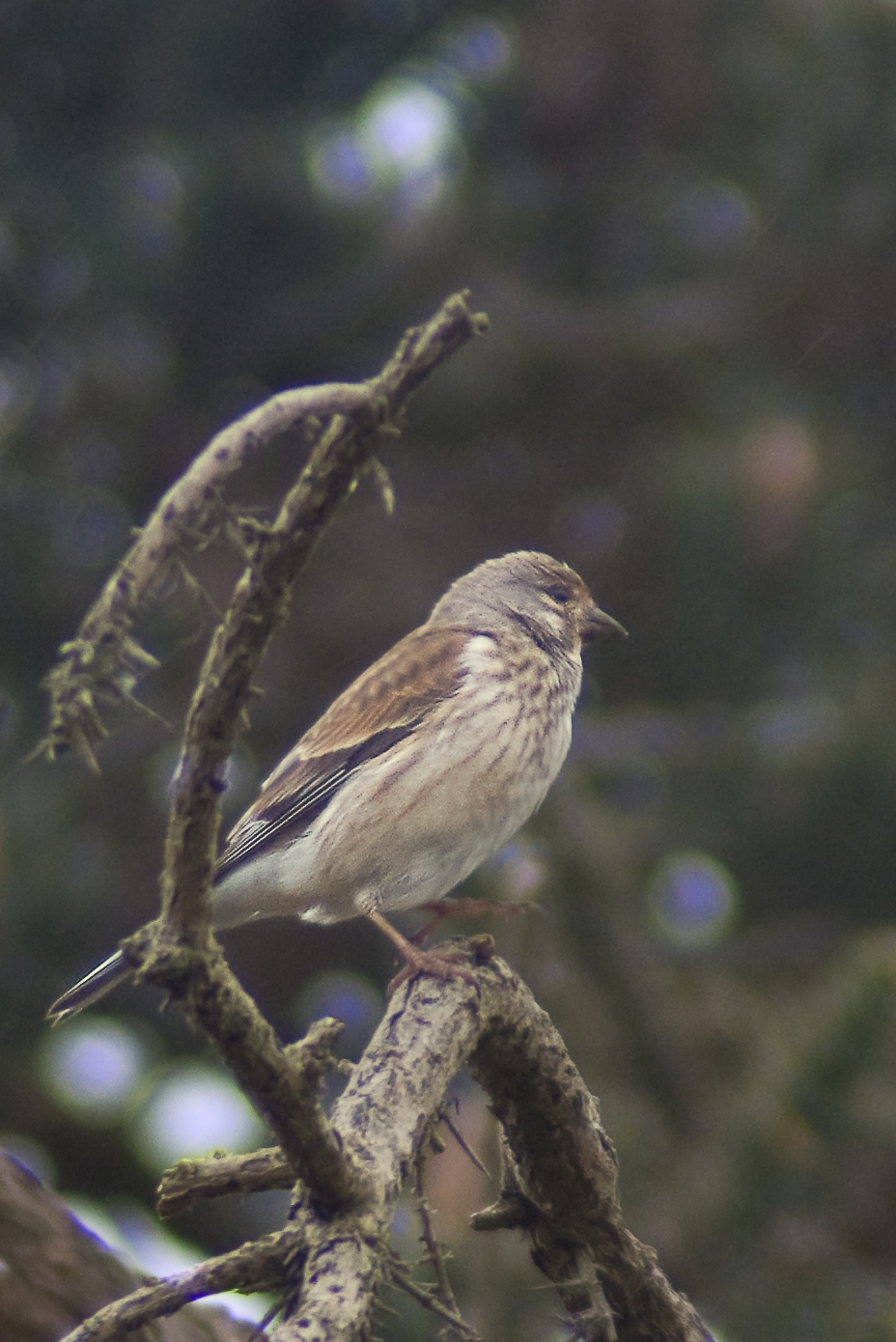
There were, however, good photo opps for two birds I don't often get that close to - first a red-legged partridge, of which there were dozens running around the site, and second a pair of linnets, perched on gorse near the salt marshes.

Other decent birds across the two days including a pair of marsh harriers, a cettis, a lone reed warbler, and among the shoreline waders a pair each of summer plumaged dunlin and grey plover, neither birds I see much of in Warwickshire at this time of year.

Bird of the day: Nightingale (Luscinia megarhynchos), dull brown and skulky little birds, about the size of a robin: a bird who's ordinariness is forgiven and forgotten the moment it starts to sing an astonishing array of songs and noises.

26 April 2010

A week of firsts

No 'proper' birding this week, but spring rolled on without me and I still had opportunities to snatch a few minutes here and find a succession of 'firsts' for the year.

Last Friday (16th April), I saw my first swallow in Radford Semele, a male who flashed low past my bedroom window. Within a week there were a few of them about, swooping regularly over my garden, and the first house martins had also arrived to join then (first noticed Saturday 27th).

The first pink blooms opened on the red campion in my garden on Saturday; and on Sunday I took a brief family trip to Brandon Marsh and found my first bluebells of the year.

Brandon itself was alive with bird song, the wood (New Hare Covert?) being particularly noiseome with blackcap, chiffchaff, willow warbler, wren and an active great spotted woodpecker. I also found my first whitethroats of the year, and heard my first sedge and reed warblers.

I'm guessing / hoping it will be the swifts next - I know there are a few around, but I've yet to spot one. Assuming this year follows the pattern of recent times, the air right over my work car park usually starts to deliver about now, so fingers crossed.

18 April 2010

It's a wonderful world

Just a lovely morning's birding and walking; I simply couldn't have asked for more.

The remnant of a late frost was still on the ground when I arrived just after 7am at Leam Valley, with mist rising from the river and a slight chill in the air. All of this quickly burned off as the clear blue sky and brilliant sun set about their work; by 9am I was in shirt sleeves.

The most notable change from a couple of weeks ago was the number of chiffchaffs calling - the one that greeted me in the car park was the first of five in all. The other notably 'spring-y' birds were a lone willow warbler and two singing blackcaps - the first of which gave me my first decent sighting of one for quite some time (see photo).

Aside from these classic spring sightings, there was bird song and frantic activity to enjoy right the way across the reserve: song thrushes in full voice; a sparrowhawk cruising overhead; a couple of treecreeper (nearly got a photo of one of the buggers at last, see attempt below); and a pair of snipe on the scrape.

A total of 31 species represents a good morning's birding at Leam Valley, but actually my favourite sighting of the morning wasn't a bird at all - it was a small cluster of fritillaries in a little clearing in the woods. These are stunning little flowers, and a huge favourite of mine that I rarely see.

So, a great morning, and set to get better. I went to Brandon for a quick walk with the family, and as usual I dashed off down to East Marsh for a quick look-see on my own. Half way down the track I was pointed in the direction of the day's surprise visitor - the avocet from earlier in the week had returned! I hot-footed it down to River Pool and sure enough, there it was. A wonderful bird wherever you see it, but all the more wonderful in Warwickshire (I might be biased here).

And there was plenty more on East Marsh pool including little ringed plovers (3), snipe (5), oystercatchers (3), a redshank, and a freshly returned common tern.

The grand total for the day reached 51 species, a pretty decent haul for a bit of gentle wandering round two of my favourite reserves.

Bird of the day: Avocet (Recurvirostra avosetta), it simply has to be. A symbol of hope for the conservation movement and a beautiful elegant bird to-boot.

Flower of the day: Snake's head fritillary (Fritillaria meleagris); it is so unusual and beautiful it is hard to believe that it's a genuinely natural and native wildflower, rather than an exotic import or some specially-bred garden centre special. Rather rare these days, so a real gem of a find.

Oh, a just a word on the photographs. The usual hotchpotch, some OK, others little more than record shots. The treecreeper and cetti's warbler are included because I've been trying to photograph these little %^**&ers for years, and these are both the closest I've come - in both cases I couldn't get a clear focus because of intervening foliage (plus slow lenses plus no talent).

The willow warbler was at least clearly visible, if distant; but the award for obliging behaviour goes to the dunnock, who sat about two metres in front of me singing his little heart out while I photographed him. Thanks fella.

16 April 2010

Spring rolls out

Spring continues to bloom in Radford Semele, although I am only getting a few fleeting opportunities to see it unfold :-(

In the garden, the daffodils are gradually fading; in a matter of days they will be replaced by the few tulips that I have. Bird song still wakes me every morning, most notably our resident song thrush. He might be a bit early for my liking, but at least he is more musical than the house sparrows living in my loft space!

Meanwhile the two jays have become regular garden visitors for the first time ever (one pictured left), and there are signs that we might have breeding blue tits again, possibly in our bird box.

This morning saw a real spring landmark though - my first village swallow of the year, flashing past the front of our house at 10am this morning.

Bird of the week: Barn Swallow (Hirundo rustica); agile, beautiful and a quintissential bird of the British spring and summer.

11 April 2010

A big spring morning

With the family away for the weekend, it was just like the old days today - an early start, five hours 'in the field', four sites, 50 odd species of birds - bloody marvellous.

I started at Ufton Fields, always a lovely walk if not always the easiest site for birding. I quickly found my first Willow Warblers of the year; they were showing well along with 4/5 song thrushes, a similar number of chiffchaffs and other favourites such as green and great spotted woodpeckers, three jays, two bullfinch pairs, a treecreeper and a reed bunting. As I packed up to leave, I was chuffed to hear my first blackcap of the year, singing near the car park.

I moved on to Napton Reservoir, which was rammed with fishermen (presumably taking part in a match; they all looked very serious). A stroll from one end to the other added the usual (tufted ducks, mallards and coots, two pairs of great crested grebes and a total of 11 mute swans) as well as at least one cetti's warbler, skylarks over nearby fields, two more bullfinch pairs and two swallows.


I drew an almost complete blank on nearby Napton Hill, adding only stock dove and kestrel to my morning haul. So I moved on to Brandon Marsh where there was plenty about for a big finale: scores of sand martins (my first of the year) buzzing around the artificial nesting bank; a pair each of ringed plover, oystercatcher and redshank; nine snipe; and good numbers of lapwings.

Bird of the day: Willow warbler (Phylloscopus trochilus), although it's a tough call between these and the sand martins, both favourite arrivals at this time of year. The soft floating call of the willow warbler carries the day though; from now until September this will be my favourite sound of the English countryside.

2 April 2010

Napton - fantasy vs reality

When I close my eyes and picture Napton in the springtime, I see a vibrant, bustling migration hotspot; a hillside and reservoir alive with opportunity. I see wheatear hopping on every quarry rock; whinchat bouncing on every fence post; bushes dripping with firecrest; and the water alive with the spectacle of a hundred dancing sand martin (with a few more wheatear and perhaps an early wader thrown in for good measure). Unfortunately, when I open my eyes and actually go there, it tends not to live up to this fantasy.

Not that it's a poor place to go birding: far from it in fact. Napton Hill has already thrown up one of the best birds of early spring; one of the aforementioned firecrests. It's just that... well, it's inevitable that if you get very few opportunities to go birding, then you invest each and every visit with the kind of wishful thinking that is unlikely to ever come true.

Having said all of that, and despite today's lack of firecrest and whinchat (not to mention passage waders, rare warblers and even sand martin), I rather enjoyed my little visit to Napton Hill and the nearby reservoir today.

First of all there was the sheer joy of being out and about in the springtime, even if it did feel a little autumnal at times. Second was the satisfaction of being safely back home by the time the forecast rain set in for the day. And third, there were enough birds around to at least satisfy, if not to truly set the pulse racing.

At the top of the hill there were plenty of goldfinch, greenfinch, chaffinch, blackbird and wren. There was loud birdsong all around, including several singing song thrushes (easier to write than to say). On the hillsides there were great tits, blue tits and long-tailed tits aplenty; a treecreeper scurrying through them; a male reed bunting down in the quarry; and a few redwing and largish flocks of fieldfare and starling, presumably preparing to set off 'home' for the summer. Not one but two pairs of buzzards circled overhead, and four singing chiffchaffs confirmed that this was definitely time to celebrate spring.

That sentiment was given a further boost when I arrived at the reservoir and found two male swallows criss-crossing the surface. For all the talk of a return to a 'normal' (i.e. later) spring this year, April 2nd equals my earliest sighting for a swallow across the six years I have kept records. Other birds around the reservoir included: ten mute swans (an unusually high number; I also found 24 in a nearby field); a pair of reed buntings; three lapwings in a neighbouring field; skylarks in the same field; two calling Cettis Warblers; and two pairs of great crested grebes.

Bird of the day: Barn Swallow (Hirundo rustica); one of iconic birds of a British summer, newly arrived back from its south african wintering grounds.

21 March 2010

Early spring at Leam Valley and Napton Reservoir

The slight mist that greeted me as I opened the curtains in Radford Semele
had reached ridiculously dense levels by the time I reached Napton. Realising that I'd need radar to find anything in the gloom, I turned around and headed to Leam Valley instead.

Good move. There was a little mist when I arrived, but that soon burned off and left me with a perfect spring morning. At first I could only see the larger birds in the mist - the carrion crows, wood pigeons and magpies. Then the 'tinies' appeared - singing wrens, a treecreeper and a goldcrest. Soon everything was singing in the sunshine.

Four lesser redpolls were among the goldfinches in the alder trees, dunnocks sang everwhere and two song thrushes were in good voice. The scrape looked fantastic, and although there were initially few birds on view, a little time  revealed plenty. A snipe lurked deep in the reeds, a male sparrowhawk flashed by, a pair of reed bunting were 'courting' in the reeds and scrub, a male tufted duck floated out, my first ever Leam Valley little grebe appeared, and then, at 8.37am my first chiffchaff of the year started singing at the back of the scrape.

A fantastic haul for this little reserve, and one which bodes very well for the future here - the scrape in particular is definitely starting to mature.

With the mist now gone, I decided to make a dash for Napton Reservoir. The trip added plenty to my morning - common gull, pochard, lapwing, cettis warbler, skylark, another chiffchaff, and then, in a definite case of saving the best 'til last, a barn owl. Despite the bright mid-morning sun it burst out of a hedgerow then sat watching me for half an hour, giving me my best views for ages of this fabulous bird.

In fact, it would have been a perfect day if I hadn't had to miss Napton Hill for reasons of urgent DIY commitments. Annoying enough in itself, but super-annoying when I read several hours later that a firecrest had been up there all day. Hmm, still never seen one of those then...

Bird of the day: Barn owl (Tyto alba), a familar but quite superb bird; elegant, ghostlike, haunting.

19 March 2010

'My' Spring is here

Today is the first day of 'my' Spring. It actually looked pretty 'springy' yesterday, but frankly I was too tired to care (late night working and early starts). Today was different.

I woke up full of the joys. The sun was out, the first daffodils were out in my garden, and a woodpecker tapped away in nearby trees.

At lunchtime I trotted down to the Preston Bagot section of the canal, and found the very earliest signs of Spring - not the chiffchaffs I was hoping for, but bumblebees, wild garlic bursting through the river banks, song thrushes in full throat. Then I got back to the computer and watched the reports coming in - chiffchaffs, sand martin and the rest.

Bring it on.

15 March 2010

Waiting for 'the change'

At the risk of sounding like a bunch of menopausal women, all birders are currently waiting for The Change.

Nothing to do with our own biology or time of life of course (well not for most of us anyway). Instead it is the changing of the birding season, as winter gives way to spring and the birds start their mass migrations.

It is an event which sees our over-wintering birds - the fieldfares and redwings, the geese and wildfowl, and the millions of 'foreign' blackbirds, robins and starlings which spend winter in our gardens - return north and east to their own breeding territories. And to fill the void we receive in turn our summer birds, newly returned from Africa and the south - our chiffchaffs, willow warblers, common terns, swifts, martins and, of course, our swallows.

Unfortunately it's taking its time this year.

The mild winters of recent years have set a pattern of early springs, with everything kicking off in earnest from mid February onwards. Now, following a decidedly wintery winter, it's back to normal, and so birders are left staring at pretty much the same birds that they've been staring at for weeks. In short, most of us are a bit bored.

So, despite feeling a little under the weather on Sunday morning, I was pleased to be back at Fingringhoe in Essex to see at close quarters one 'change' that can be relied on every single day - the turning of the tide. The last half-an-hour of the tide coming in nearly always offers the best birding at estuary locations, with huge flocks of waders, wildfowl and geese being forced closer and closer to the shore (and to the birder in his hide), jostling for position on the diminishing mudflats and finally settling down to wait until the mud flats are opened again.

I was particularly lucky with my timing on Sunday, settling down in the shoreline hide just as this spectacle started.

I was therefore in the best place to enjoy great views of hundreds of dunlins, knots, redshank, curlews,  grey plover, brent geese, shelduck, wigeon, lapwing, oystercatchers and more. Among them were a few scarcer birds - a couple of turnstones were my first of 2010, likewise the marsh harrier that soared overhead.

And once the excitement was over, I settled down with scope and Canon G9 to see if digiscoping was viable with this less-than-perfect combination. It was, up to a point, so I spent a happy half hour photographing birds including a grey plover, one species I had never photographed before.

Bird of the day: Marsh harrier (Circus aeruginosus), a magnificent broad-winged raptor which is getting more and more common along the east of the country (still a long way to go before it becomes more than an occasional sighting in Warwickshire though).

28 February 2010

Not thinking about bitterns

I must not dwell on the bitterns, I must not dwell on the bitterns, I must not... oh, I give up. Hell and damnation, those blasted bitterns evaded me again at Brandon.

Right, now I've got that out of the my system, I can confess to having quite enjoyed my morning vigil at Brandon, even if the bitterns failed to show up, again.

This was my third or fourth lengthy attempt to see one this winter, a task you wouldn't think was so hard, given there are believed to be at least three on the site. I was informed when I arrived at 8am that one had recently crossed the cut channel and walked into the reedbed just below the hide window - surely good news.

Sadly it was not to be, and two-and-a-half hours later it had still not reappeared. While I bow to no one in my admiration of the bittern's amazing powers of camouflage and concealment, a quick trot back across the channel would have been welcome.

Anyway, aside from going cross-eyed watching reedbeds for non-appearing bitterns, it was a good morning. Out on east marsh pool there were the usual good numbers of shovellers and lapwing (c 250 of the latter), a large number of snipe (I found 16 but heard reports of up to 31), and brilliant views of two water rail - a bird I hear far more often that I see (indeed it's probably more than a year since I got views anywhere near this good - sadly the poor light meant poor shutter speed meant... well, you can see for yourself, disappointing photos).

Around the margins were at least two loudly singing cettis warblers, and a male reed bunting which showed well in reeds in front of the hide.

However, the highlight of the morning, aside from everyone helpfully sharing their best bittern photos with me, was catching the arrival of the year's first Ringed Plover. It circled the water twice, landed on the main island, stayed for long enough for everyone to lock on to it and confirm its identity, and then headed off towards the river. Fingers crossed it was an early recce by one of Brandon's regular nesting waders (the oystercatchers apparently having been back for 10 days or so).

Oh, and one last thing. If you're an occasional visitor to Brandon, or even a seasoned regular, you might find the excellent Brandon Googlemap prepared by Keith Yates of interest:. He is the author of the Birding Afloat blog and a regular with the conservation team at Brandon, so is well placed to help you find some of the less well-known corners of this excellent reserve ps. if you read this Keith, I suspect we spoke on Sunday morning for quite some time without either of us knowing the other!

Bird of the day: Ringed Plover (Charadrius hiaticula), a small and distinctively marked wading bird which has increasingly moved inland and taken advantage of flooded gravel pits like Brandon for its summer breeding grounds.

20 February 2010

Other commitments

As I sit and write this quick update at 12.30pm on a glorious saturday afternoon, it looks increasingly likely that I am going to miss out on birding this weekend :-(

Family, friends, jobs to do, places to be, drinks and fine dining, blah blah blah - all very nice of course, but are they any substitute for a freezing cold reservoir on a wintery morning? Erm....

Anyway, not very much birding action to report then, except to note that I've just had a jay in the garden, an extremely uncommon sighting for me (only the second I can recall in the garden, and the first for a couple of years). Frankly it did pretty well just to force its way through the perpetual state of warfare that exists in my garden between the starlings and the house sparrows, a conflict that has been heightened in recent weeks by their mutual appreciation of a new fat ball recipe I've been using. The starlings are particular fans, and have taken up a near permanent position around the two feeders, much to everyone else's chagrin - including mine. I only started making the damn things to reduce the cost of feeding the birds. Now that the homemade variety are are proving twice as popular as the shop-bought variety, I'm pretty much back where I started - half the price but twice as many.

Right then, I'm off to the shops - I need a wheelbarrow full of suet, lard, dried fruit...

Bird of the day: Jay (Garrulus glandarius), one of the world's most beautiful crows, vivid of colour and yet surprisingly hard to see, especially for non birdwatchers.

14 February 2010

Back on patch: winter in Leam Valley

As well as the plentiful bounty of estuary watching and twitching, there is a third type of birding to be enjoyed / endured at this time of year - the dutiful trudge round the local patch to make sure nothing unexpected is overwintering there.

I say endured because a local patch like mine, an inland mosaic of river, wood, shallow pools, scrub and meadows, is not at its birding best in mid-February - far from it in fact. But I cannot imagine anything more soul destroying than missing some scarcity or other so close to home, and so I try to make as many visits as weather and enthusiasm allow.

Given all my reservations, this morning at Leam Valley was fine. Uneventful, true, but the weather was bright and there were at least a few birds on offer. Great and blue tits were most in evidence, along with blackbirds wherever there was a patch of thawed mud to be probed. Dunnock and chaffinch song hailed the very earliest glimmers of spring, as did a couple of singing song thrushes (although I would have expected more based on previous years).

Less commonly, a pair of mistle thrushes were vocal in trees high above me, two cormorants were in a tree down by the Offchurch Bury weir, and eight teal, a record for me at Leam Valley, sailed out of reeds at the far end of the scrape. Three goldcrest were feeding furiously having survived the recent freezes, and a solitary skylark let forth a brief snatch of song.

The reserve itself was in fine fettle, with the three main reedbeds looking much more solid and well-established than in their early years. New fencing around the scrape should also help keep breeding birds safe come the spring, so fingers crossed for more wading birds and wildfowl records. On a less positive note, as well as the relative paucity of song thrush song compared with previous years, I was sad to see no discernable activity at the small rookery on the edge of the playing fields. From 14 nests in 2007 we now appear to have just six derelict nests left, and I can only assume the site has been abandoned.

Bird of the day: Cormorant (Phalacrocorax carbo), a distinctive, almost reptilian coastal bird which has ventured inland more and more over recent years, particularly in winter. A most welcome addition to the River Leam in recent winters (unless you're a fish of course).

12 February 2010

Still not bittern

Business took me to Brandon for a 9.30am meeting today, so I took advantage with an ultra-early start and two hours on the reserve beforehand.

It's a while since I've been anywhere around sun-up, and today reminded me why it's nearly always worth the extra effort. Having avoided my own rush hour, I was at liberty to wander in solitude and watch the birds tackle their own version. Gulls were particularly busy, leaving roosts in big numbers to spread around the towns and countryside looking for food. Joining them in the 'skyway' were huge flocks of wood pigeons and a regular criss-cross of crows.

Out on east marsh pool there was plenty to see. More than 80 lapwings huddled on the muddy, churned up islands. There were four flavours of gull, including an adult and first winter great black-backed gull, a species not seen all that often on my patch. Around the water were the usual good numbers of shoveller (80+), teal, tufted ducks, a few pochard and wigeon, mallards, three mute swan pairs, three cormorant and plenty of both greylag and canada geese.

In the areas around the water I found a treecreeper, green woodpecker, cettis warbler, long-tailed tits and a male sparrowhawk offering up a glorious low, slow flyby.

Sadly, one bird eluded me. It is the same bird that has eluded me all winter; a bird which I imagine every Warwickshire birder but me will have seen at Brandon and/or Ladywalk. Yup, still no bittern. I spent an hour watching the east marsh reed bed and channel, but all in vain. All I got was a cold bottom and a nagging feeling that this isn't going to be my winter for bitterns.

Bird of the day: Great black-backed gull (Larus marinus), a powerful, thick-set gull which is much scarcer than its smaller cousins.

5 February 2010

A sorry effort

A sorry half-arsed effort at Brandon last weekend, and a woefully late post to accompany it. I think I'm ready for spring now.

The trip failed to turn up either of my 'target' birds, the green-winged teal or a bittern (although the latter was seen about half an hour before I got there, and an hour or so later). East Marsh Pool was lively enough though - plenty of shoveller, a good flock of wigeon, a few teal dotted around and a female goldeneye right at the back.

But sadly my heart wasn't in it and I soon sloped off for a bacon buttie.

Breakfast of the day: Bacon sandwich (Lardum cardum), always with white bread, butter not margarine, and tomato ketchup.

25 January 2010

An estuary 'full house'

After the snow, some more familiar january weather - overcast, gloomy, still cool but blessedly free of snow, ice or arctic winds.

I took advantage of another family trip to Essex to visit Fingringhoe, the Essex Wildlife Trust reserve which overlooks the Colne Estuary and salt marshes. Famous for its nightingales during spring / summer, the winter outlook focuses much more on the coastal and water birds - a welcome change for a normally landlocked birder like myself.

Today did not disappoint, with the tide out and just about every species of estuary bird I could have hoped for. My haul of nearly 50 species included plenty I would be lucky to find at home, including: knot, redshank, curlew, oystercatcher, grey plover (half a dozen), dunlin (100+), avocet (50+), little egret (4), red-breasted merganser (5), bar-tailed godwits (30+), brent geese (initially a single bird, then perhaps 500 as the rest flew in en masse), and a single ringed plover.

Bird of the day: Grey plover (Pluvialis squatarola), an unusual and unglamorous choice perhaps, but they really stood out among the various wading birds. It is the first time I've really noticed there large size and their lone feeding habits - while the other waders tend to cluster in groups, each grey plover stalks alone across the mud. In some ways their shape and colouring struck me as reminiscent of juvenile herring gulls.

17 January 2010

A local twitch or two

I finally out this morning to go for some of the great birds that have been in the area throughout the bad weather - thank goodness they turned out to be long-staying.

The first challenge was negotiating the black ice which covered the roads in sheets, making for the most dangerous driving conditions I think I've ever encountered. But fearlessly I pressed on, sometimes reaching up to 30mph, until finally I reached the A428 and 16 bewick's swans. Great start.

By 8.30am I was at Grandborough to find the great great shrike - success number two as it turned up after about an hour. What a bird - a long time favourite of mine, sitting atop telegraph wires in the brilliant morning sun. Sadly, despite the fact that there were still plenty of linnets there (perhaps 200, giving the lie to my 23rd December post complaining that they're hard to find in the area!) there had been no show from the oft-reported merlin by the time my toes had finally had enough (it was still pretty cold despite the thaw).

So I headed on to Draycote for some exercise, and to find (succesfully again) the drake smew and great northern diver. A female scaup in among the pochards off Hensborough Bank was an added bonus.

That already represented a great day's birding for me, but perhaps the best was saved till last. I popped back to Draycote after lunch to take my boy out on his bike - bins and small scope to hand in case anything interesting cropped up. And sure enough, as we headed home down Toft Bank, four dark-bellied brent geese dropped into the field and started feeding. Definitely a county tick for me - indeed I can't remember seeing them on any inland site before - and yet another highlight from a great day.

Bird of the day: Great grey shrike (Lanius excubitor), I can't quite explain why, but it's been one of my favourite birds since childhood. It would have to be to beat today's other great birds as my favourite of the day.

16 January 2010

'Snow fun if you're a bird

The fact that bad weather causes more and more wild birds to head into gardens has been well reported in recent weeks. The ice and snow has resulted in two or three 'phone calls from family and friends, asking what the new birds are in their gardens (redwings and fieldfare in the main).

My own garden has been no exception - so while I haven't been able to get out birding for what seems like weeks, the garden has offered some recompense.

My own roll call of less common species in the recent weeks has included: reed bunting, blackcap (a splendid male, still at the front garden feeders this morning), several bullfinches (male and female), long-tailed tits (generally in pretty small groups, which is a concern), redwings, fieldfares (just a couple), song thrushes, and this evening's star attraction - a male sparrowhawk happily ripping something to pieces (by the time I found it the prey was too far gone to identify).

And meanwhile, in the distance, I have been able to hear great spotted woodpecker drumming pretty much every day - my favourite signal that things are inevitably, albeit slowly, taking a turn for the warmer and brighter.

Garden bird of the month: Blackcap (Sylvia atricapilla), a delicate little grey warbler with, as the name implies, a distinctive black cap atop its head (brown on the female). While our own summer blackcaps tend to head south for the winter (like most other warblers) we are lucky enough to host overwintering blackcaps from the continent - making them one of the few warblers you can find year-round.

2 January 2010

Under ice

Nearly four months after my last birding-by-bike trip, I chose today in all its freezing glory to get back on my bike and head to Napton.

The day was about the cycling as much as the birding - battling the freezing temperatures, icy roads, aching knees and a complete lack of fitness, all with the help of a very welcome stop-off at the Long Itch diner.

At least there were actually some birds when I finally got to Napton. The reservoir was largely, and unsuprisingly, frozen, with just three holes left open on the main water. The first of these featured six mute swans (three adults, three first winter), five little grebes and a mix of common and black-headed gulls. The second was home to perhaps 80 mallards, along with a few tufties and a solitary pair of wigeon (possibly the same pair that have been here for most of the winter so far). The final, and largest, hole was home to the the coots, about 160 in all.

On the ice itself were six lapwing (unusual for the reservoir itself, usually they are a fly over sighting) and three snipe huddled by the reeds at the back.

On the way there and back I was kept company by the usual mix - finches and tits darting along hedgerows, none more conspicuous than the many bullfinches I rolled past; fieldfare, redwing and blackbirds everywhere, gulls and rook sp. in all the fields, and a couple of kestrels.

Bird of the day: Lapwing (Vanellus vanellus), a common wader at their regular wintering spots (such as Brandon and Draycote), I don't often see them on the ground on my patch. A longstanding favourite of mine, they look and sound great.

20 December 2009

Ice Station Draycote

It's 8am and minus 5 degrees centigrade. I'm wearing all my winter clothing at once, I'm standing on sheet ice, and I'm scanning the surface of Draycote Reservoir through my spotting scope. The reservoir is filled with thousands of gulls (which are basically white birds), and I'm looking for a solitary small white duck.

And I'm thinking to myself: "Can't see why anyone would think this is a weird hobby."

Actually I can and I can't. On the weird side, it was cold, early and the duck (a reported male smew) is very small. On the sane side, it was beautifully clear, bright and peaceful, the light was bringing out the colours of all the birds superbly and there was arguably nowhere else on earth I'd have rather been. So, was it worth it? Certainly was.

The walk towards Tofts revealed huge numbers of ducks and gulls on the water, along with a field full of lapwing and golden plover (about 30 of the latter, hundreds of the former). As well as the ever-present pied wagtails there were half a dozen meadow pipits, and up in the shallows themselves were a grey wagtail (one of two) and a green sandpiper.

Walking across the top end of the reservoir revealed the woodland birds - blue, great and long-tailed tits, loads of blackbirds and redwings, many bullfinch and a small flock of goldfinch and siskins.

And then, heading back down Draycote Bank, I finally found a couple of rarer birds as icing on the cake. First it was an unexpected female common scoter, with its unmistakeable dusky cheek catching my attention as I scanned for grebes. And then, just as I'd given up hope of a diver, a great northern diver bobbed into view close by. Both firsts for the year, and both sending me happily on my way to the local diner.

Bird of the day: Common scoter (Melanitta nigra), a common enough sea duck (although on the conservation Red List), but much less common at inland waters.

13 December 2009

Gotta be Linnet to Win It ;-)

Cool, clear and still today at Napton, with a classic haul of winter birds.

On the water there were the usual good numbers of coots, tufties, mallards, moorhen, mute swans and black-headed gulls, along with a a few common gulls, a couple of shovellers, five teal, a pair of gadwall and half a dozen wigeon.

Snipe flew in and out of the reed bed, still very evident with the low water levels, and 25 lapwing flew overhead towards the north.

But perhaps the main interest was around the edges, in the fields and hedges that surround this small reservoir. Still plenty of starlings, redwing and fieldfare of course, along with small flocks of finches (chaffinch, greenfinch and bullfinch on show today). Today's nice surprise was a pair of linnet. Although they are reputed to be common enough, I don't often get a decent view of them so every sighting is a welcome one.

Bird of the day: Linnet (Carduelis cannabina), a small, nervous finch which is hard to get close views of. It is still relatively common, but as with many farmland birds it is in steep decline and is therefore a conservation Red List species.

10 December 2009

Barn Owl peril

I wrote a couple of days ago about the set-aside field near Napton which used to host barn owls, but not now - it has been ploughed and reverted to agricultural use.

Sadly it seems not to be an isolated case: http://www.express.co.uk/posts/view/145109/Barn-owl-numbers-fall-as-grasslands-are-lost

Another clash between the needs of man and nature - more homegrown food, or space for animals, birds and plants? Unfortunately I think I know how that will end.

9 December 2009

The secretive Cetti's Warbler

The nature lover has to work harder for his pleasures in winter.

The boldly coloured plumages have generally gone (ducks, you are an honorable exception), the floral displays have died back, and even the fiery reds of autumn are fading from memory. In their place come more subtle delights - the sheer scale of winter flocks (coastal waders, roosting starlings, wetland lapwings), the spiders' webs clinging tenaciously to dying foliage, the stark silhouettes of newly-naked trees. Perhaps even the occasional unexpected gull species among huge inland flocks of black-headed gulls (one for the connoisseur, this!).

But one joy remains - there is still birdsong. Today at Brandon I was largely led by my ears, following the melancholic song of the robins, the strident declarations of wrens, the soft piping of bullfinches, the cacophony of lapwing and the toy-squeaking of a large mixed flock of siskin, lesser redpoll and goldfinch.

Even among all of this though, one voice stood out - that of the Cetti's Warbler. If you haven't heard it, then follow the link below to the RSPB site and listen to their recording. It's an extraordinary sound, explosive, melodic, electronic, perhaps even frightening. But perhaps most extraordinary of all is the fact that I have heard it on every single visit to Brandon over the last seven or so years (we're lucky to have them breeding there), but I have never until today actually seen one there.

They are legendarily secretive, even furtive, so as you can imagine, the sighting was the highlight of my short morning visit. A decent glimpse, broad cocked tail and all, to go with the pair of goldeneye, the seven snipe and the lovely mixed finch flock I've already alluded to.

Bird of the day: Cetti's Warbler (Cettia cetti), ordinary looking but extraordinary sounding. Nice to finally bag a sighting at Brandon.

And then the sun came out...

It poured down last night, and was still pouring at 6 o'clock. And at 7 o'clock. By 8 o'clock I was reluctantly loading my waterproofs in the car, and by half-past eight I was struggling into them near Napton reservoir. I was about five minutes from the car when the sun came out and I found myself wearing wellies, waterproof coat, waterproof trousers, hat, gloves, uncle-tom-cobbly-and-all on what had become a lovely sunny morning. I didn't half feel a nana.

Still, the birding was nice if uneventful. The fields where barn owls could be found last year have been ploughed and planted, so that's stuffed then. There was nothing much new on the water at the reservoir - a couple of extra wigeon, similar numbers of everything else, and Ufton was very queit indeed.

Bird of the day: Fieldfare (Turdus pilaris), easily found at close range on the fields near Ufton, a striking and powerful looking winter thrush with bold colours.

29 November 2009

Winter... and so it begins

The howling gales and heavy rain which woke me early this morning had largely dissipated by 9am, so I dragged myself out to Napton Reservoir for a 'quickie'. A good decision as it turned out.

It was bright, cold but largely still when I arrived - always a bonus at 'ice station napton', where the wind tends to blow strong and very, very cold. As I scanned the water I found a wonderful winter assortment (sounds like a christmas biscuit box) including some of the less common birds on my patch - a male and female wigeon, two male pochard, a cormorant, three snipe together on the edge of the reedbed, and a large gathering of 60+ common gulls. And in among those was even a patch first, a male goldeneye.

But despite the richness of the waterbirds on offer, I spent most of my time scanning the hedges and trees around the edge of the reservoir, watching huge flocks of starlings intermingled with redwing, fieldfare, blackbirds and a few song thrush. The starlings were everywhere - feeding on the floor, stripping berries from trees and flying from tree to tree in large flocks. Despite everything else which was around today (it was particularly nice to hear Cetti's Warbler song again), it was the starlings which were the star of a very pleasant morning.

Bird of the day: Starling (Sturnus vulgaris), an under-appreciated species which generally attracts little more than indifference. Look closer however and you'll find a bird which is beautiful in its own right and stunning in large groups.

22 November 2009

All things great, but particularly small

After a pretty quiet morning at Leam Valley, I'll dwell (albeit briefly) on two of the reserve's smaller residents - the treecreeper and the goldcrest.

Both are resident breeders in the little woodland patches along this stretch of the River Leam, and both are more often heard than seen. The treecreeper, which I saw twice today, is an extraordinary little bird. With its mottled brown back and white belly, and its habit of creeping and darting up tree trunks, it looks for all the world like a little mouse - apart from the distinctive decurved bill that is.

The goldcrest is officially Britain's smallest bird, and it's habit of feeding high in the dense branches of conifer trees doesn't make it easy to see. Its little high pitch seep-seep calls are the giveaway though, and when you do catch sight of one you'll see the most beautiful delicate little creature.

So, apart from good views of both these elusive birds today there wasn't much else to report. The scrape is still running ridiculously dry (with nothing on it but a pair of grey herons), the woods are full of blue, great and long-tailed tits, a flock of goldfinch and siskins flashed by at one point, I got good views of a small bullfinch group, and there are plenty of thrushes around, including blackbirds, song, redwing and fieldfares.

Oh, and one final point worth mentioning - not one but two song thrushes were in full song today. This is either by some margin the latest or earliest singing I have ever heard from this species - unseasonal warm weather, another crazy climate change symptom? Who knows?

Bird of the day: Treecreeper (Certhia familiaris), a common bird that is elusive enough to make each and every sighting a special one.

21 November 2009

Back for the spoonbill

After 48 hours in bed with the nastiest little bug, I was looking forward to some fresh air and birding this morning - until the strength in my legs (or lack thereof) and the state of the weather convinced me otherwise. No matter - I have just realised that I forgot to post the sequel to last Saturday's foul-weather birding trip. After the worst that Essex weather had to offer, I vowed to return the next day...

Another day, another weather front. Bright, clear, cold, with just the gentlest of breezes – Abberton Reservoir looked like another world this morning.

Given the vast improvement in the weather, I had popped back to see if I could find some of the birds I missed yesterday. It didn't take long. With a steady scope (as opposed to yesterday when it was rattling around in a hurricane) it was easy to locate, in turn, two ringed plovers, two spoonbill, two little grebes, half a dozen snipe and a spotted redshank. The spoonbills were the highlight, my first for several years and a fitting finale for a weekend at Abberton. These splendid birds are amazing and peculiar in equal measure, particularly while sweeping their distinctive bills through water for food, in a style faintly reminiscent of avocets.

Before leaving Essex and heading back to my land-locked Warwickshire patch, I drove on to the estuary reserve of Fingringhoe to pick up a final few coastal species. As I looked out across the salt marshes and the river I quickly added to my weekend list shelduck, knot, curlew and oystercatcher. Across the two sites and two very different days I found nearly 70 species of bird, many in spectacular numbers, as well as some good company in the various hides and some interesting fungi to photograph on the way back to the car (see fly agaric and shaggy ink cap, pictured). I am a happy bunny.

Bird of the day: Spoonbill (Platalea leucorodia), a tall stork-like bird with a spade-tipped bill. Europe-wide it is a conservation concern, with the vast majority of British sightings being of passage migrants moving south for the winter (although a few might overwinter here). As a result it is quite uncommon and always a pleasure to see - there is nothing else quite like it.

14 November 2009

Heaven is an Essex reservoir

Nice - high winds, driving rain and grey skies. At least the rainbow which greeted my arrival at Abberton Reservoir promised some better weather ahead.

And indeed, in the end there were some patches of sunshine to enjoy between the squalls and the ferocious gales. But it wasn't the weather which defined this trip – it was the sight of vast acres of exposed mud in an eerily dry reservoir.

I had turned up expecting to find a full reservoir covered with ducks, geese and, above all, coots (often several thousand at this time of year). Instead I was watching at an area which looked more like an estuary exposed at low tide – an area absolutely teeming with hundreds of waders.

Several hundred black-tailed godwits dominated the site, with big flocks visible from both causeways plus the main reserve hides. Approximately 80 avocets swept for food, 300 golden plover squatted on a freshly exposed island, dunlins ran around between them all and the redshanks, lapwings and a few ruff finished the picture.

Out on the water there were perhaps 50 pintails (probably the most I've ever seen in one place), a few ruddy ducks, a male goosander, plenty of the more common ducks (mallard, tufted, shoveller, pochard, wigeon and teal), a few goldeneye, gulls (black-header, common, herring and lesser black-backed), a little egret and a single green sandpiper.

The sheer numbers and variety were breathtaking for an inland waterway site – 48 species without really 'working' the woods and nearby fields. Having intended to visit for a couple of hours, I ended up staying nearly six hours, testimony to a great day's birding.

Bird of the day: Pintail (anas acuta), surely one of the world's most beautiful and elegant ducks. How it's legal to shoot them in the winter is an absolute mystery to me, and a travesty.

8 November 2009

Swan wars, or A whooper at Brandon

This morning's entertainment was better than any scripted drama; better by far than the painfully contrived events of 'reality' tv and celebrity competition. This morning was real, it was vital, it was visceral - this was Swan Wars.

The early morning rain quickly convinced me that the six hides of Brandon Marsh were a better bet than trecking round an exposed Napton Reservoir or Ufton Fields. So, ever the adventurer, I struggled into the waterproofs and dashed to the hide nearest the Brandon car park - the Baldwin hide overlooking East Marsh Pool.

And yes, it was bleak at first. As I sat with a few hardy souls I found myself looking out into cold driving rain. I slowly scanned the pool, counting more than 125 shovellers, 150 lapwing and an impressive 15 snipe, along with plenty of pochards, tufted ducks, mallards, a dozen cormorant, and assorted coot, moorhen, grey heron, great crested grebes and mute swans.

Then, as the cold started to set in, I saw a swan flying in towards us and noticed a flash of yellow - fantastic, my first whooper swan in Warwickshire. Sadly, it wasn't to be with us for long.

Add ImageAs soon as the whooper landed, the two resident mute swans went into action. Territorial in the extreme, they lifted their wings behind them, pushed their heads low and homed in on their target. They were an impressive sight, beautiful and menacing in equal measure, circling their arctic cousin like two pocket battleships (the photo, by gradders52, gives a good idea of the overall effect). There was no need for contact or combat though - a few passes, a few circling manouvres, and the whooper got the message - he was off.

It was a wonderful few minutes - nature as it really is: beautiful, exciting, unfair, rarely predictable and never, ever scripted. The return to the car parked yielded treecreeper, nuthatch, siskin, goldfinch, green and great-spotted woodpecker, and a dozen or more redpoll hanging from the alder trees. Well worth getting out in the rain then.

Bird of the day: Lesser Redpoll (Carduelis cabaret), a small streaky finch which is really only a winter visitor to these parts. Despite the excitement with the swans, I haven't seen redpoll for ages so, slightly unexpectedly, the redpolls were my bird of the day.

7 November 2009

The bird table and a special guest

Keeping the bird feeders filled is a bit of a challenge during the winter months - no time in the morning, too dark in the garden at night. As a result it is often the first job on a Saturday morning.

The first five minutes after this chore has been completed are fascinating, with pretty much the same action unfolding every time. First the house sparrows arrive, descending on the fat ball feeder in the back garden and then the two front garden feeders (with a ferocity which will see them emptied by tomorrow morning).

Next will be a pair of collared doves who will set up camp on the biggest feeder, followed by a pair of goldfinches who will do likewise on the niger seed feeder. Blue tits and great tits will arrive next, focusing on the fat balls and peanuts, and underneath it all will be an assortment of robins, dunnocks and starlings fighting over the scraps.

All of this happened this morning, but with one exciting twist - no sooner had they all arrived than a male sparrowhawk flashed through the garden (scattering all and sundry), turned steeply and settled in a neighbour's tree. It's been a long long time since I've seen a 'sprawk' in the garden, and this might even be the first male. It looked magnificent in the morning sun, but sadly just too far away for a photo to really do it justice.

Bird of the day: Sparrowhawk (Accipiter nisus), one of our most common raptors but not often seen well, despite having an obvious attraction to garden bird feeders.

5 November 2009

White-fronted geese and family fun

Slimbridge is a family day out par excellence for a birder. Every year there seems to be more and more for young children to do, while dad (or mum as appropriate) can slope off to enjoy the views over acres of rough grasslands and marshes leading down towards the Severn Estuary. There's also plenty of opportunity to get close to the captive collection - hence the photos here, goldeneye, teal and goldfinch from top to bottom.

Late autumn and winter is the real time to go, when the reserve attracts thousands of white-fronted geese, bewick's swans and other over-wintering wonders. This year the mild weather and prevailing winds seem to have set the Bewick's arrival back a bit, but there were plenty of geese around including barnacle and white-fronted. 'Herds' of shelduck wandered out over the mudflats, little clusters of wigeon whistled everywhere you turned, and big skylark flocks (100+) erupted out of the tussocky grass every few minutes.

As you would expect with all of this birdlife around, there were plenty of raptors in view as well - two buzzards around Holden Tower, followed by a sparrowhawk fly-by. Looking out across the rough ground I then found a peregrine falcon, its briliant white chest and 'moustache' vivid even at long distance. I watched for half an hour, but sadly it wasn't going to move - a pity, because there is nothing more thrilling in nature than a peregrine hunt.

Other sightings including lots of teal and pochard, a good number of pintail, a water rail, great spotted woodpecker, cettis warbler, a close up snipe, and a lot of late, late dragonflies - testimony perhaps to just how mild October has been (it was in fact 17C as I drove home just before 4pm).

Bird of the day: White-fronted goose (Anser albifrons), a grey goose with significant areas of white around the base of the bill and black bars on the belly. The birds at Slimbridge have migrated in from Siberia, and have pink bills. Others, Greenland birds with orange bills, come in to other parts of the country at this time of year, notably to Ireland and West Scotland.

2 November 2009

A House Martin? Now?

Every now and then birding gives you a 'surely not?' moment. This morning was one of those.

As is my general practice on getting up in the morning, I spent a few minutes watching the garden feeders from my landing window with the old pair of binoculars I keep to hand. After watching the starlings, house sparrows and collared doves fighting amongst themselves, I tracked a coal tit from the feeder back to the trees at the far end of the garden. There I spotted a small non-descript warbler picking its way through some old fruit trees - annoyingly I couldn't 100% ID it at that distance, but I'd guess at a late / overwintering chiffchaff. Unusual enough.

Then I put the bins down, looked out again, and a House Martin dashed low over the roof, along the length of my garden and off over the fields to the south. Perfect (if brief) views, white rump and all, but it's November 2nd! Surely some mistake. Some hours later I'm now doubting my sanity and my eyesight, but I'd be amazed if even I could have got that wrong. I've heard there have been some late broods this year, but that fella must be setting some kind of record for setting off late - must be at least at least a month late. Hope he makes it.

Bird of the day: House Martin (Delichon urbica), a common sight over many towns and villages in late spring and summer, but usually back in Africa by now.

28 October 2009

A Yorkshire break (and a 'bogey bird' breakthrough)

Our latest family weekend in Yorkshire afforded an unusually high number of birding opportunities i.e. more than none.

The first of these unexpected opportunities was at Hellifield Flashes, a typical moorland wetland not half an hour from where we were staying. Having persuaded a reluctant child that a short walk might be in order, I was able to enjoy the spectacle of hundreds of birds gathered round this modest pool - plenty of wigeon, teal, pochards, lapwing, common and black-headed gulls and greylag geese, and then, with closer inspection, a group of nearly 50 snipe, easily the largest flock I've ever found.

That was pretty good, but the next evening I was even more excited as I first heard, and then saw, a tawny owl dashing through the woods as I stood contemplating the night sky. Embarrassing though this is after so many years of birdwatching, I had never until that moment clapped eyes on a wild tawny owl (heard plenty of course). So although it was a pretty sketchy view in the dark, that has to go down as a lifer, and one more of my embarrassing bogey birds dealt with.

Finally we dropped into Brandon Marsh on our way home - nothing spectacular, but a really good volume of waterfowl, including notable numbers of shovellers. A couple of kingfishers flashed past and my weekend was complete (unless you count waking up on Monday morning to find a great spotted woodpecker on my neighbour's feeders, that was a nice start to the week).

Bird of the day: Tawny Owl (Strix aluco), a fairly common resident bird which is made somewhat harder to see by its pretty much totally nocturnal habits. Your only chance of finding one in daylight is to find it roosting, and in many years of birding I've not managed that yet. A shadowy glimpse with two calls to verify will have to do for now. Photo courtesy of ClifB on Flickr -

18 October 2009

Stonechat at Leam Valley

Tit flocks are an under-rated feature of autumn wildlife watching. Perhaps it's the name - it's hard to explain this point without someone cracking a smile, if not a nudge-nudge-wink-wink comment. Know what I mean?

Still, the fact remains that while the headlines are grabbed by the rare passage migrants (yesterday's glossy ibis in north Warwickshire for example) and the new arrivals that will stay through our winter (the redwings, fieldfare, siskins and so on), the coming together of the various tit species into sizeable foraging flocks can be a spectacular sight.

This morning's birding at Leam Valley was initially saved by one such flock. It had been a woeful start. There were isolated common species here and there around the reserve itself, but really nothing of note - not helped by the extremely low levels of water on the scrape. But as I left the reserve and headed just a hundred yards or so into the Offchurch Bury estate, I walked underneath an oak tree and was suddenly surrounded by scores of birds.

It was a fantastic flurry of colourful activity, blue tits, great tits and long-tailed tits all together, and I stood there for perhaps 15 minutes, enjoying the spectacle and trying to grab the perfect picture (as you can see, I failed). Such was my enjoyment that long-tailed tit looked a nailed on certainty for my coveted 'bird of the day' title - until, that is, a Marsh Tit turned up, a fairly rare sight round these parts. I had a new 'bird of the day'.

So there I was, my day salvaged and about to turn for home. When...

A stonechat! An actual female / juvenile stonechat sat high on a hedge not 20 yards away. Not rare in birding circles of course, but bloody rare on my patch - in fact it has been top of my patch wish list for five years or so! A quick and distant photograph for the record, and my morning was complete. A decent haul in the end included sparrowhawk, green and great-spotted woodpecker, 40 fieldfares (my first big flock of the year) - and when I got home, I found two coal tits on the feeders as well. 30+ species for the morning is a pretty good local haul.

Bird of the day: Stonechat (Saxicola torquata), an upright little bird, slightly smaller than a robin, which loves to show itself from handy vantage points. The male is striking in red, black and white - my female was a little more subdued, but still a lovely little bird.

12 October 2009

Napton shines


Today at Napton was more like it - half the temperature of a few days ago, but infinitely better visibility, and many times more birding enjoyment.

Up on the hill I immediately heard, then saw, a raven - mobbed by a carrion crow until the raven finally grew bored and headed away to the east. Soon afterwards, four fieldfare flew by, my first of the year. Elsewhere I found more redwings, blackbirds, a pair of meadow pipits and a female blackcap.

Down at the reservoir, a pair of Gadwall were all that was new on the water. But the fields around the edges were stuffed full of birds - male yellowhammers bright in the sun, meadow pipits all around, a small group of dunnocks moving through the hawthorn, and big numbers of skylarks either singing in the autumn skies or chasing each other low over set-aside fields. The mute swan in the main photo wasn't the bird of the day, but he was the photo of the day as he passed low overhead not once, but twice (just as well, the lens cap was on first time around - smooth!).

Bird of the day: Raven (Corvus corax), the largest of our crows, a truly massive black bird, notably larger than a buzzard. Once confined to Wales and the north, its range is starting to spread east, meaning it is by no means uncommon in Warwickshire these days.

10 October 2009

Aha, migration (but where are the rare ones?)

Determined to find the latest arrivals to the area, I headed up to Napton-on-the-hill for a thorough look around - if anywhere in my patch has a record for early / interesting migrants, it's there.

So I arrived at dawn, then scoured the area around the church, the track to the windmill, the embankment, the fishing pools, the quarry and the scrubby woodland. The hour was right, the season was right, what could go wrong?

Well, thick fog for a start. I could see little, and hear even less. Nothing, apart from a very occasional robin and one Mistle Thrush, moved or sounded from 7.30am until 9am. That was 90 minutes of not very much (the deer aside, which nicely broke up the monochrome monotony - anyone know what type it is?)

Still, things livened up a bit from 9am, and I settled in near some berry-laden bushes and watched as first the blackbirds streamed past (20+) and then a similar number of Redwings broke cover and headed across the hill. So, nothing rare, but there they were - the first real evidence of mass migration on my patch this year. And as I left (the sun finally bursting through, typical) I saw one last hurrah from the old guard - a swallow doing two laps near my car before heading off south. Good luck my young friend, see you next year I hope.

Bird of the day: Redwing (Turdus iliacus), a small thrush and one of our earliest mass migrants, visiting us from Scandanavia every winter. Beautifully marked, particularly around the face and eyes.

3 October 2009

Migration fever (must be happening elsewhere)

I thought the brisk NW winds might have brought something fresh to my local patch. I was wrong.

Napton Reservoir was quiet all around. The butcher's who manage it have managed to hack back every single bit of vegetation around the small pool at the entrance (see photo, left), so that was understandably empty. On the two main pools there were about 70 Coot, a dozen Mallards, 5 Tufted Ducks, a pair of Great Crested Grebes with three juveniles (one adult with a particularly vigorous appetite, see photo), a couple of Moorhens and a few Black-headed Gulls. The only thing of interest was when four Wigeon briefly dropped in.

Around the edges there were Goldfinches and tit flocks aplenty, a pattern continued when I trecked up to Napton Hill for a look-see. Certainly nothing rare or migrant-y - the highlight here being a Buzzard which made a low pass as I headed back to the car.

And the less said about Ufton today the better.

Bird of the day: Wigeon (Anas penelope), a beautiful winter duck, the male in particular having striking plumage.